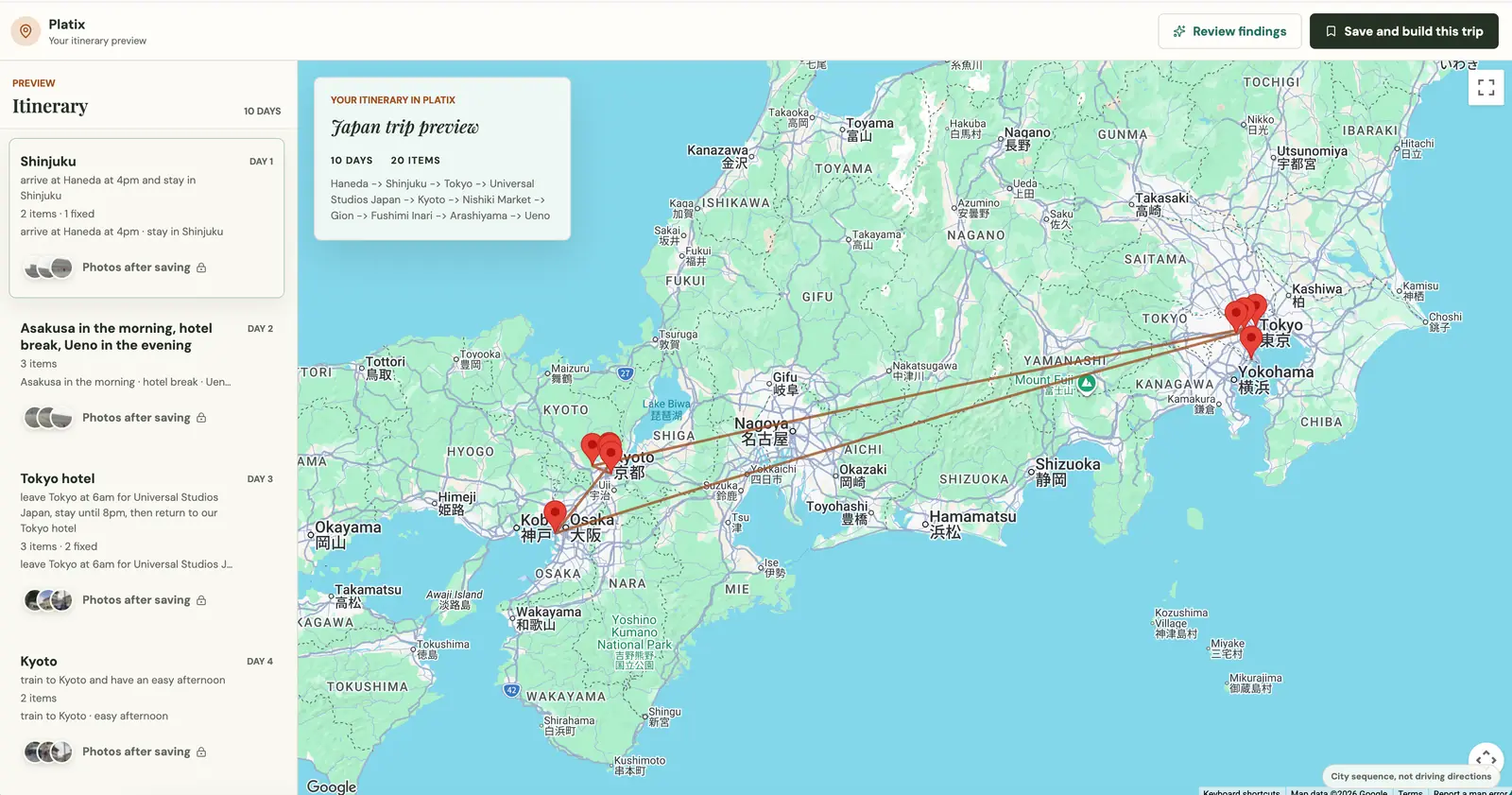
In this fabricated ten-day family trip, two adults and a seven-year-old stay in Tokyo for the first three nights, Kyoto for the next four, and Tokyo again before flying home. They want a moderate pace with breaks. Day 3 proposes leaving a Tokyo hotel at 06:00 for Universal Studios Japan, staying until 20:00, and returning to that same hotel. A cooking class in Kyoto on Day 5 and the flights are fixed.
What is the highest-impact problem?
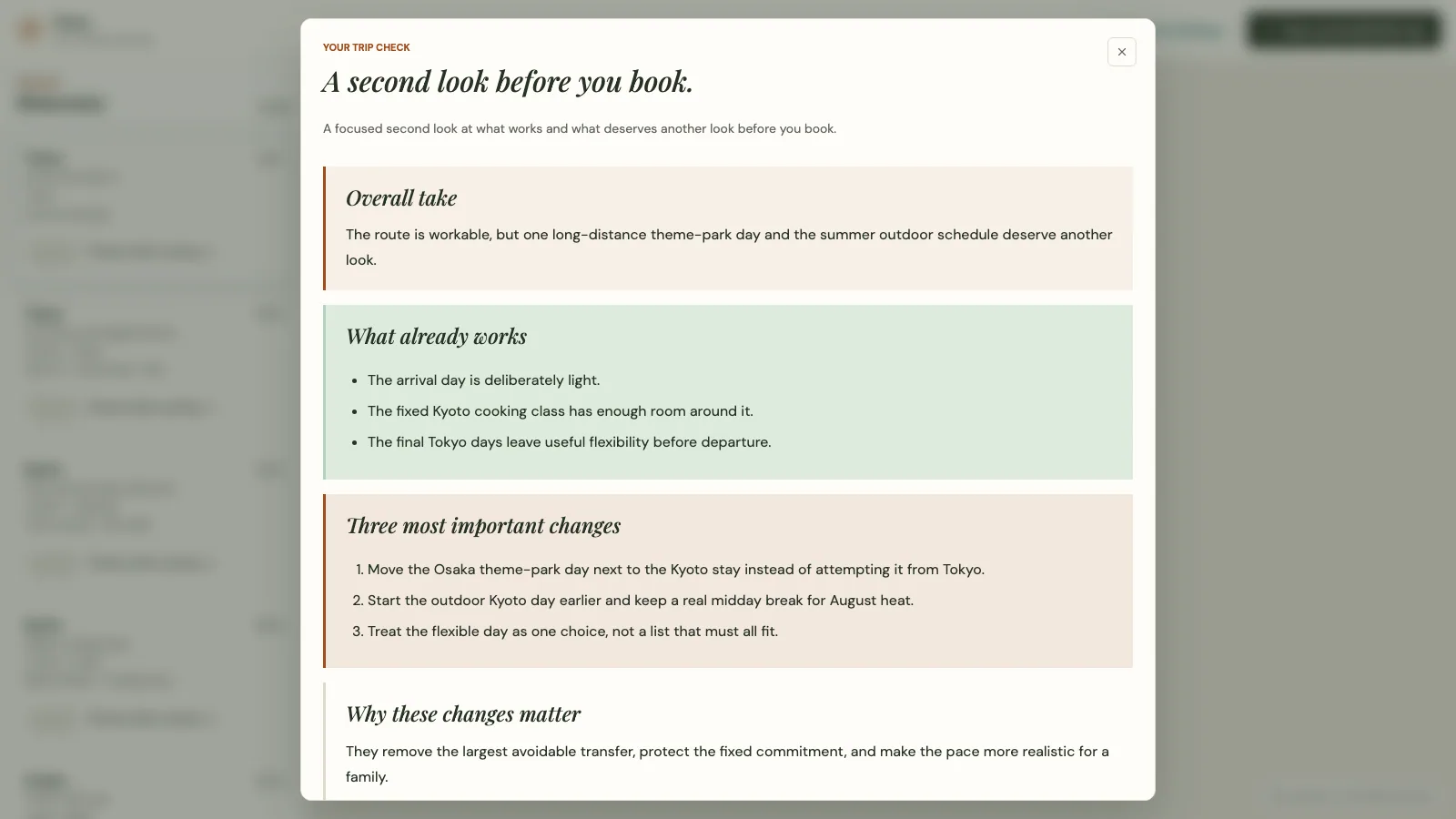
The proposed park day places a full theme-park visit between long intercity transfers in both directions. Universal Studios Japan is reached through the Osaka-area rail network; this is not a nearby Tokyo outing. A reviewer should elevate that mismatch above minor questions about meals or sightseeing order, especially because the group includes a child and explicitly wants a moderate pace.
One possible change is to place the park visit near the Kyoto stay and compare an Osaka-area overnight. But the reviewer must respect the fixed Day 5 cooking class and the international flights; it should show the tradeoff rather than silently rewriting commitments.
What already works?
The arrival day is light, Day 2 includes a hotel break, Day 7 presents Arashiyama or the Railway Museum rather than both, and the final Tokyo days leave room before departure. Those strengths should survive a route correction. For the August outdoor day in Kyoto, the reviewer can also raise heat and break timing without claiming to know the exact weather in 2027.
That is the useful difference between a trip check and a generic replacement itinerary: identify the one structural mistake, preserve what the traveler got right, and explain the smallest credible set of changes.
What do the review and map show?
These screenshots show the fabricated Japan example described above with an editorial example review, not a stored user result. The review appears over the trip preview. Close it to inspect the day list and full city sequence; the lines are not turn-by-turn directions.
You can review your itinerary without signing in; the guest Trip Check guide explains the flow. Confirm current park entry requirements and transport times with the operators before booking.