Product tips
ChatGPT itinerary: what to check before you book
ChatGPT writes a confident day-by-day plan in seconds. Here is what to check before you book it, and how ChatGPT and Platix compare for that job.
Read articleField notes
Itineraries, practical logistics, and what we have learned from planning them.
Product tips
ChatGPT writes a confident day-by-day plan in seconds. Here is what to check before you book it, and how ChatGPT and Platix compare for that job.
Read articleMore reading
For creators
What travelers actually pay for, how to price an itinerary, where to sell it, and how to keep it current after the first sale.
Product tips
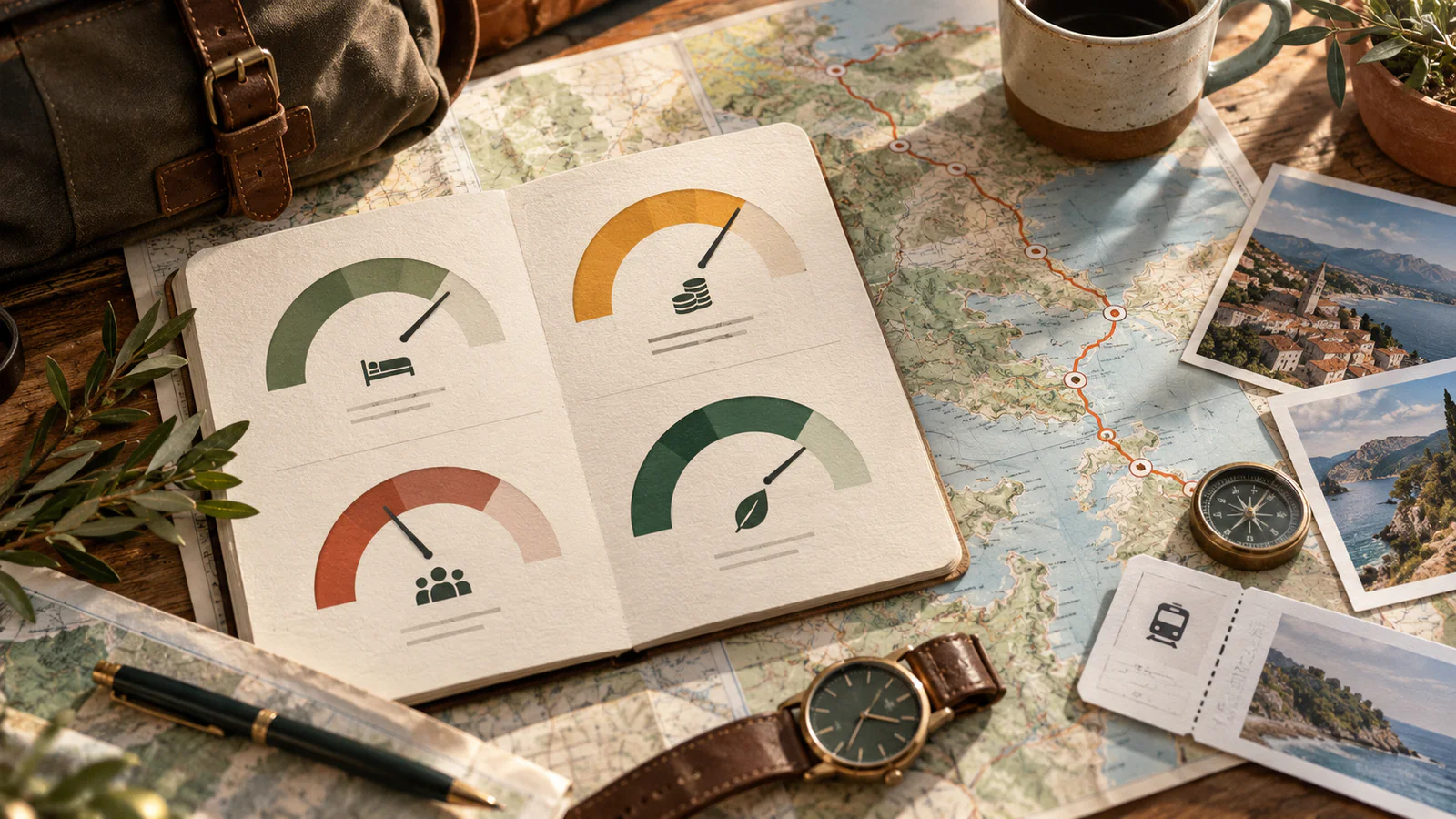
Why an itinerary score barely moves after you fix three problems, and which number to look at instead.

Product tips
A generated itinerary can be flawless and still be the wrong trip. Checking the instructions first is cheaper than fixing the result.

Product tips
Some itinerary warnings describe a plan that is working exactly as you intended. How to tell those apart from the ones that matter.
Engineering
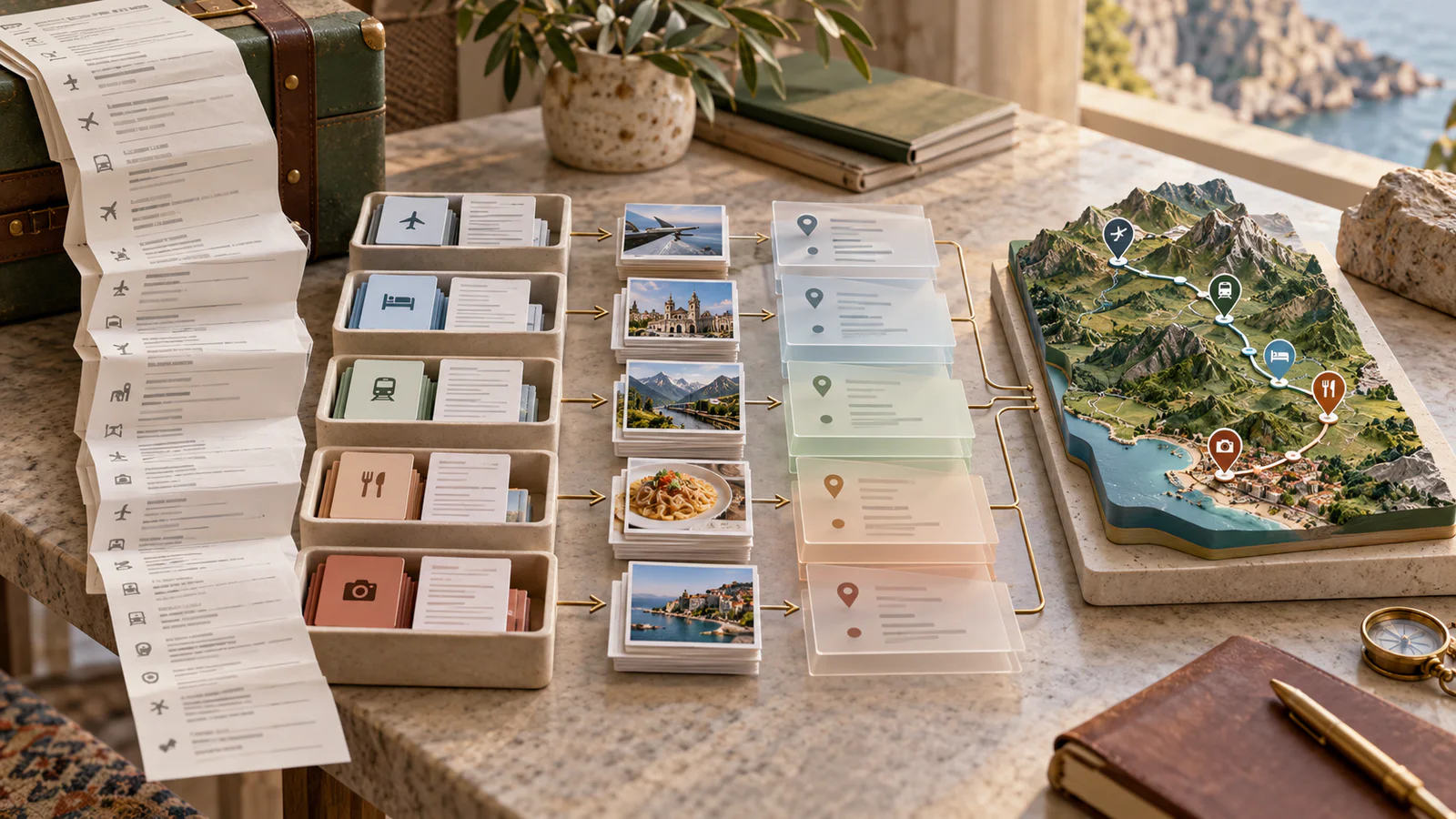
Chunking helps, but reliable itinerary imports also need evidence extraction, reconciliation, traveler confirmation, and a structured handoff to planning.

Engineering
A reliable planning conversation needs versioned requirements, explicit authority, and a safe way to revise the plan without forgetting what came before.

Engineering
Reliable itinerary planning depends on separating model suggestions, traveler-confirmed facts, and volatile evidence from live travel providers.

Engineering
Advice, previews, confirmations, and execution need different permissions when an AI assistant can change a real travel plan.

Engineering
How counterexample-guided synthetic evaluation turns one failure pattern into privacy-safe regression cases, boundary tests, and repeated stability checks.

Engineering
Platix uses an LLM critic for qualitative travel judgment, then keeps hard facts, repair scope, and final acceptance under deterministic control.

Engineering
Long-running AI work needs durable stages, restrained language, and recovery behavior that tells travelers what is actually happening.

Engineering
A practical architecture for testing prompt understanding, routes, and day plans without calling travel providers or writing customer data.

Engineering
Travel memory becomes useful only when a system distinguishes enduring preferences from temporary constraints, protects scope, and gives people control.

Engineering
A map of how Platix turns a loose travel request into a trip you can read, check and change, with links to the article that covers each layer in depth.

Engineering
A travel assistant needs geographic interaction state, provider evidence, and visible route context to make chat and map behavior agree.

Engineering
Agentic systems can learn from cases by improving routing, tools, contracts, and recovery policies even when the underlying model weights never change.

Engineering
How a weekly trip-planning evaluation traced three apparent AI failures to one overly narrow validation rule.

Engineering
One total duration hides the stages, waiting and work that decide how long an AI itinerary takes. How Platix structures trip creation so its time can be explained and shortened.

Engineering
Best-effort trip creation preserves verified work, exposes unresolved details, and reserves total failure for cases where no safe editable plan can exist.

Engineering
How layered weekly labs and monthly operational reviews reveal where an AI itinerary succeeds, fails, or merely looks convincing.

Trip planning
A practical guide to the main types of travel insurance, what changes the price, and which exclusions to read before choosing a policy.

Trip planning
A four-day route through the Christmas markets of Strasbourg, Colmar, Riquewihr, Kaysersberg, and Eguisheim, organized around early dusk and a simple Strasbourg-Colmar-Strasbourg structure.

Trip planning
A practical four-day route from Strasbourg to Colmar through the wine villages of Obernai, Ribeauville, Riquewihr, Eguisheim, Kaysersberg, and Turckheim.

Trip planning
Six days linking Naples, Pompeii, Positano, the Path of the Gods, Amalfi, Ravello, and Herculaneum by train and ferry without adding a car.

Trip planning
A five-day Amalfi honeymoon plan with three nights in Positano, a private Capri boat day, the Path of the Gods, and two quieter nights in Ravello.

Trip planning
Five days based in Amsterdam, combining its major museums and canal neighborhoods with straightforward day trips to the Zaanse Schans, Haarlem, and Utrecht.

Collections
Tokyo's rainy season and typhoon afternoons rule out the streets, not the city. Eight indoor places — art, penguins, a food hall, a bathhouse — that make a wet day better than a dry one.
Trip planning
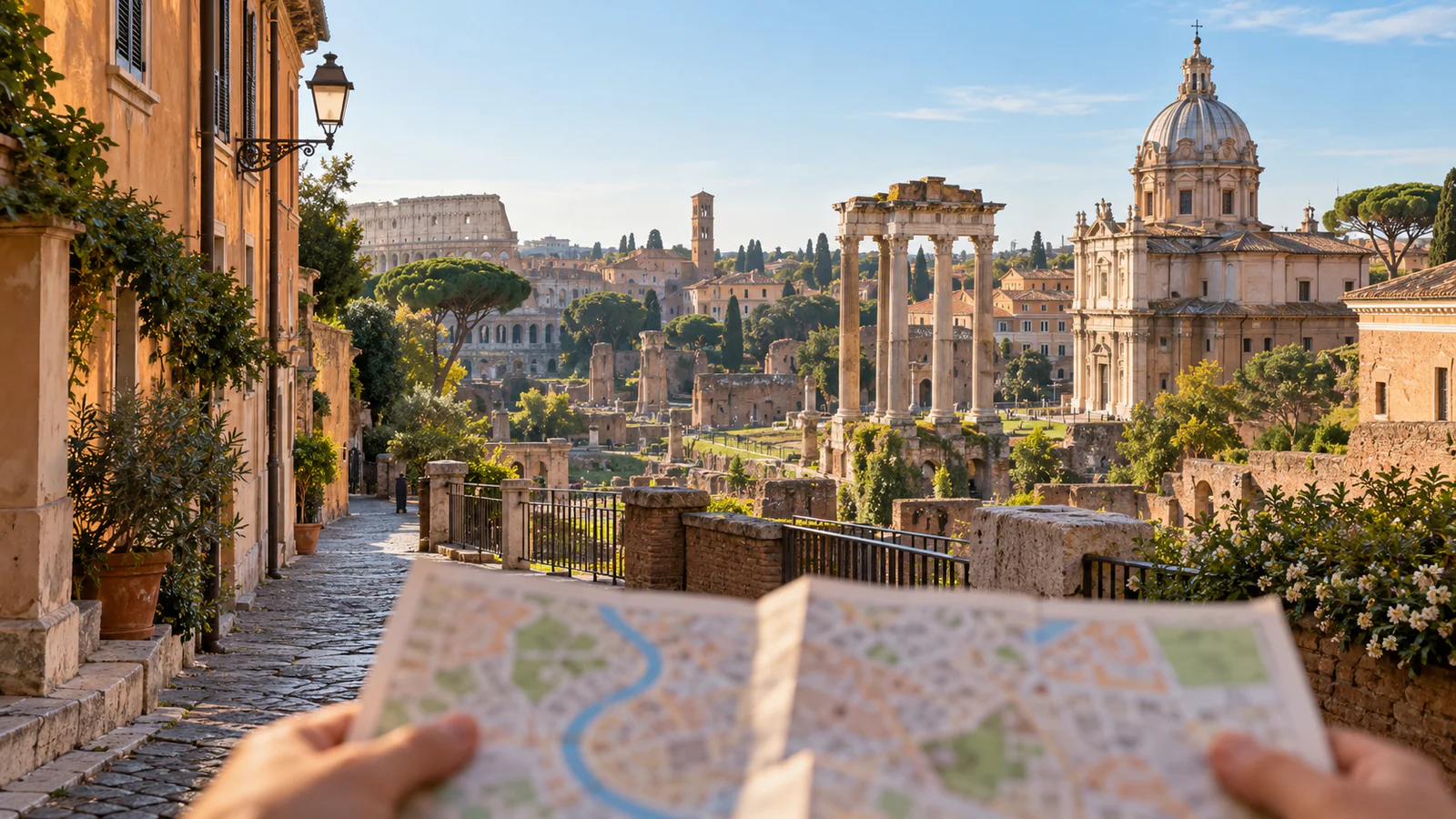
A practical five-day Rome plan that groups ancient sites, the Vatican, the Baroque center, Trastevere, and Testaccio into manageable days.

Collections
Europe's great eating cities differ less in what they serve than in how they want you to eat — standing and moving, sitting and committing, or on a clock you do not control. Choose accordingly.

Trip story
A family road trip through the Netherlands, Belgium, Germany, Czechia, Austria, Hungary, Croatia, Slovenia, and back to Bavaria.

Product tips
A practical way to turn a loose route into a calmer day-by-day plan by anchoring each day around the place you will actually stay.

Product tips
How to move from an exciting Bucket List to a trip plan with fewer compromises and better days.

Product tips
Public trips and collections are best used as starting points: copy the structure, keep what fits, and edit toward your own pace.