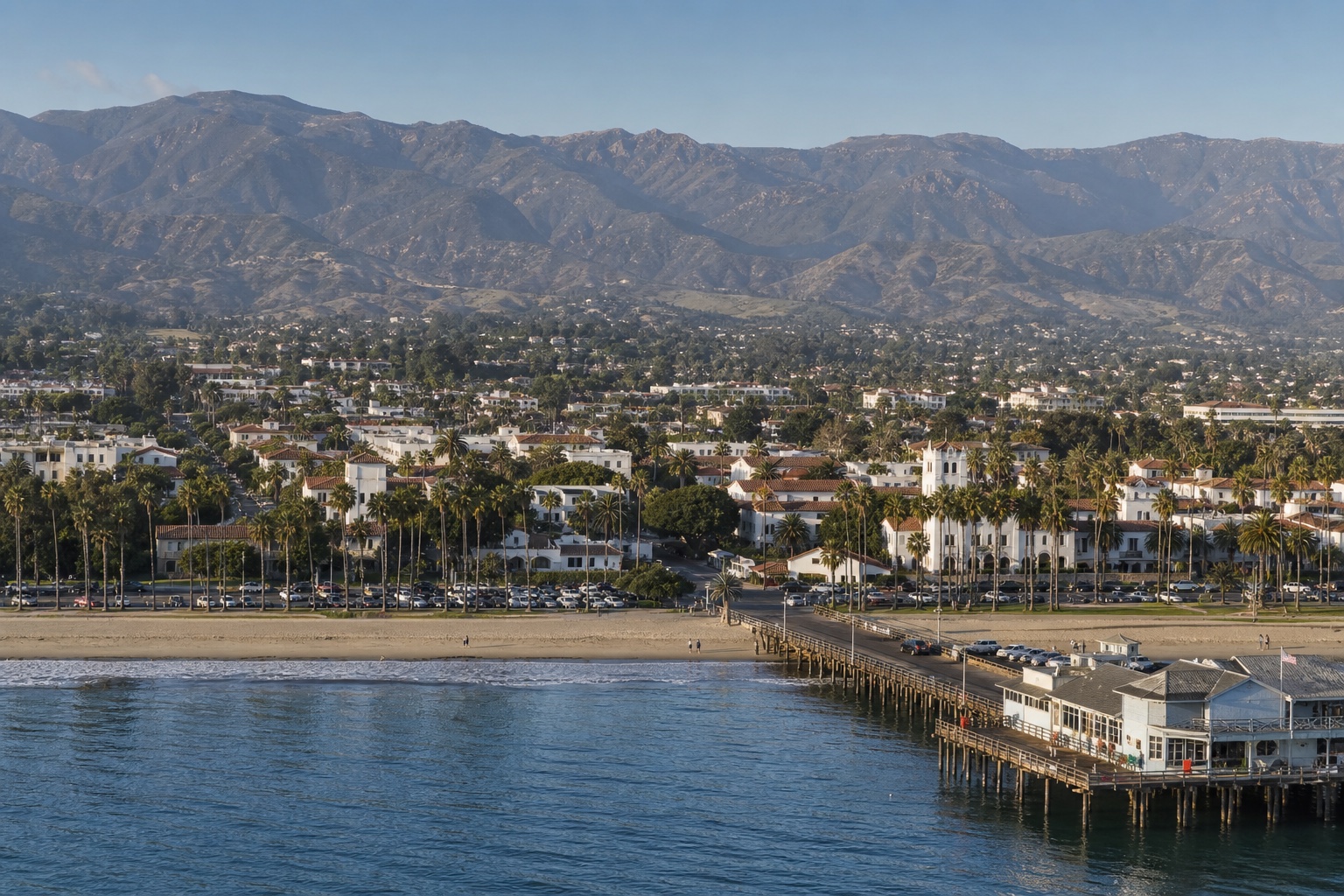
Santa Barbara's waterfront, central streets and foothills sit close enough to form a relaxed first day. Walk the harbor and beach, continue through the civic center and choose one museum, garden or historic interior. The city's visual identity deserves context beyond a quick photograph of white walls and tile.
Connect architecture to history
Spanish Colonial Revival design shaped much of modern Santa Barbara, especially after the 1925 earthquake, but the region's story begins long before that style. Seek interpretation that includes Chumash history, Spanish colonization, Mexican California and later civic development. Treat the mission as a complex historic and religious site rather than only an architectural backdrop.
State Street and the waterfront are easy to combine without moving the car. Beaches vary in character, and mountain weather or marine cloud can differ from the forecast a few miles away. Keep one indoor option and avoid turning every coastal stop between Los Angeles and San Francisco into the same day.
Put wine country on a separate route
The Santa Ynez Valley and other wine areas require driving beyond the city. Choose a small number of producers, verify reservations and arrange a sober driver, tour or other safe transport before tasting. A wine day should not end with an ambitious coastal drive. Travelers less interested in wine can use the same time for gardens, hiking, maritime history or a slower beach day.
Use the three-day Santa Barbara itinerary for pacing and the first-timer collection for priorities. Then plan your Santa Barbara trip around the coast, city and one wider outing.