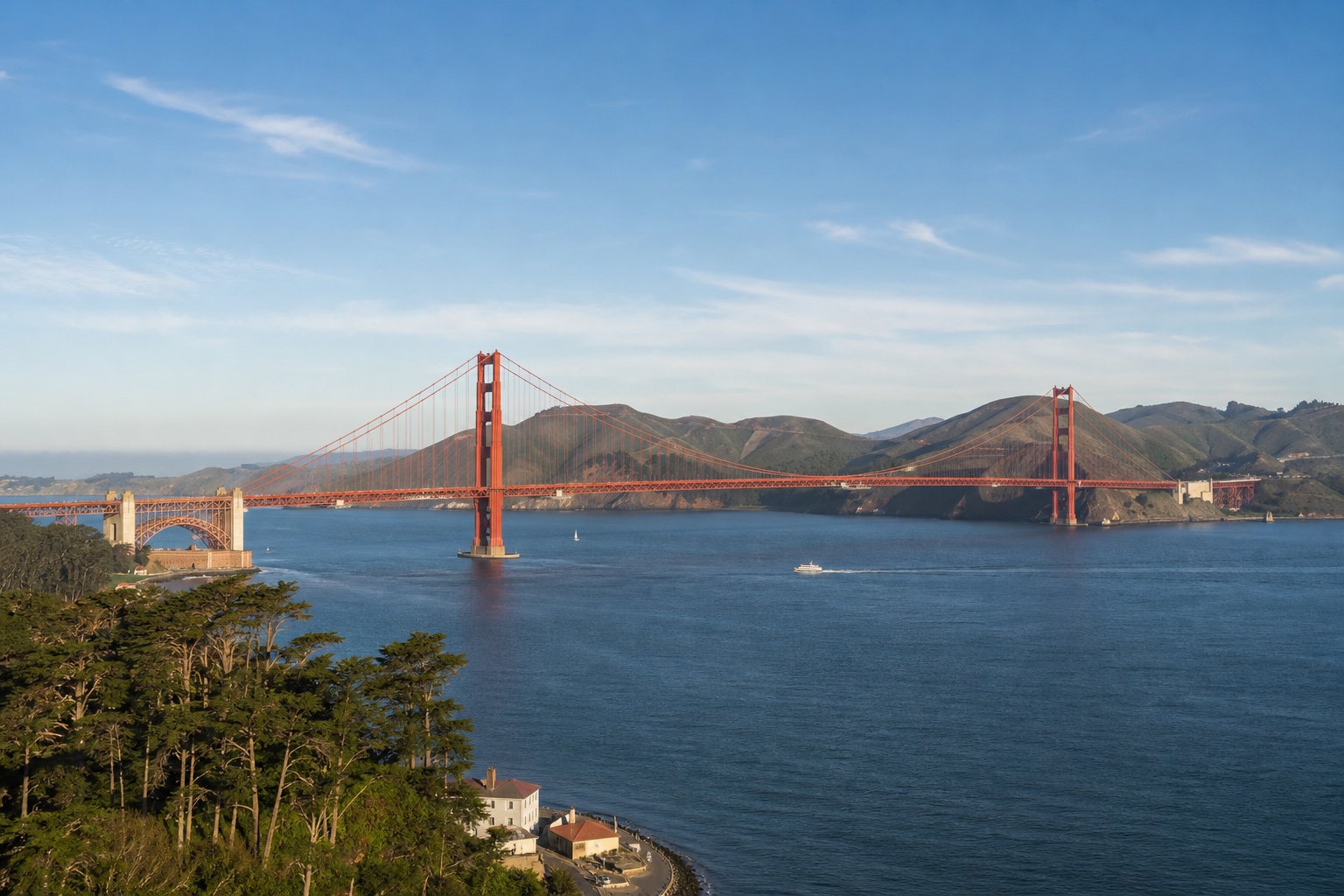
San Francisco looks compact until the hills, bay edges and neighborhood changes start shaping the walk. Build the first day around the Golden Gate and north waterfront, another around central transit and eastern neighborhoods, and a third around the Mission or Golden Gate Park. That structure leaves enough time to notice the city rather than spending every hour climbing toward the next pin.
Treat the bay as part of the itinerary
The Golden Gate Bridge is visible from many viewpoints, each with different wind, transit and walking implications. Alcatraz is a separate timed excursion that deserves adequate ferry and visit time; it should not be paired with a full museum afternoon. Fisherman's Wharf is useful for boats and waterfront orientation, but nearby North Beach, Chinatown and the Ferry Building reveal different parts of the city's daily life.
Cable cars are working heritage transit with queues and limited routes, not a complete transport system. Use buses, streetcars, rail and walking according to the terrain. A short map distance can include a steep grade, and coastal weather can change quickly between neighborhoods, so carry a layer even on a clear day.
Choose one regional extension
Muir Woods, Sausalito, Napa, Sonoma and the Pacific coast are different outings. Each requires transport planning, and wine-country visits also require a safe plan for tasting. Protect the city days before adding a regional loop. Within San Francisco, the Mission, Castro, Haight and western park districts are not one quick neighborhood circuit; choose the places that fit your interests.
Use the three-day San Francisco trip for pacing and the first-timer collection for priorities. Then plan your San Francisco trip around the bay, the hills and one neighborhood at a time.