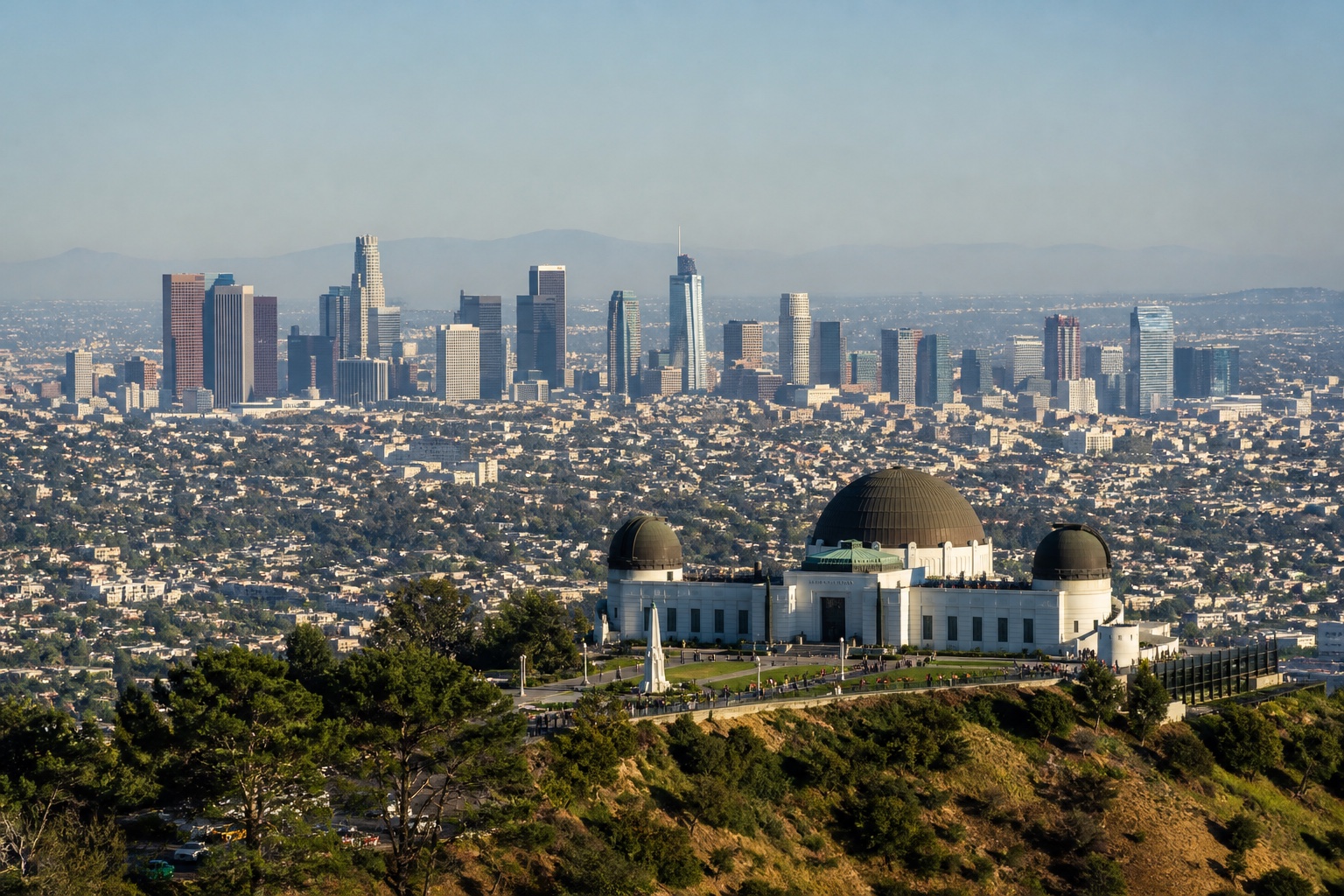
Los Angeles is not one center with attractions around it. It is a wide collection of neighborhoods, hills, museums, studios and beach cities connected by roads that can reshape the day. A good first trip chooses a few coherent zones and accepts that seeing less can reveal more. Start with where you will stay, because that decision influences nearly every transfer.
Group the city before choosing the stops
Griffith Observatory and Hollywood fit the same broad day, especially if the viewpoint matters near sunset. The Getty Center belongs more naturally with the westside; Santa Monica and Venice can share a coastal day, while Malibu extends the drive considerably. Downtown supports another cluster around major art, architecture, markets and nearby food neighborhoods. A studio tour or a large museum can anchor a final day without being squeezed between opposite sides of the basin.
Driving gives flexibility but adds parking, traffic and the responsibility to avoid distracted navigation. Transit works well for selected corridors but not every cross-city combination. Check realistic travel time when building the day, then add margin rather than treating the fastest estimate as a promise.
Let food and landscape explain the city
Los Angeles becomes clearer through its neighborhood food cultures, hillside views and changing street grids. Choose meals near the day's route rather than crossing town for every famous counter. At the coast, weather can differ from inland conditions, and a beach afternoon is not interchangeable with a quick photo at the pier. Keep arrival day modest and avoid placing a distant airport transfer after a packed final stop.
The four-day Los Angeles itinerary shows a practical geographic structure. Use the first-timer collection, then plan your Los Angeles trip around the areas you actually want to experience.