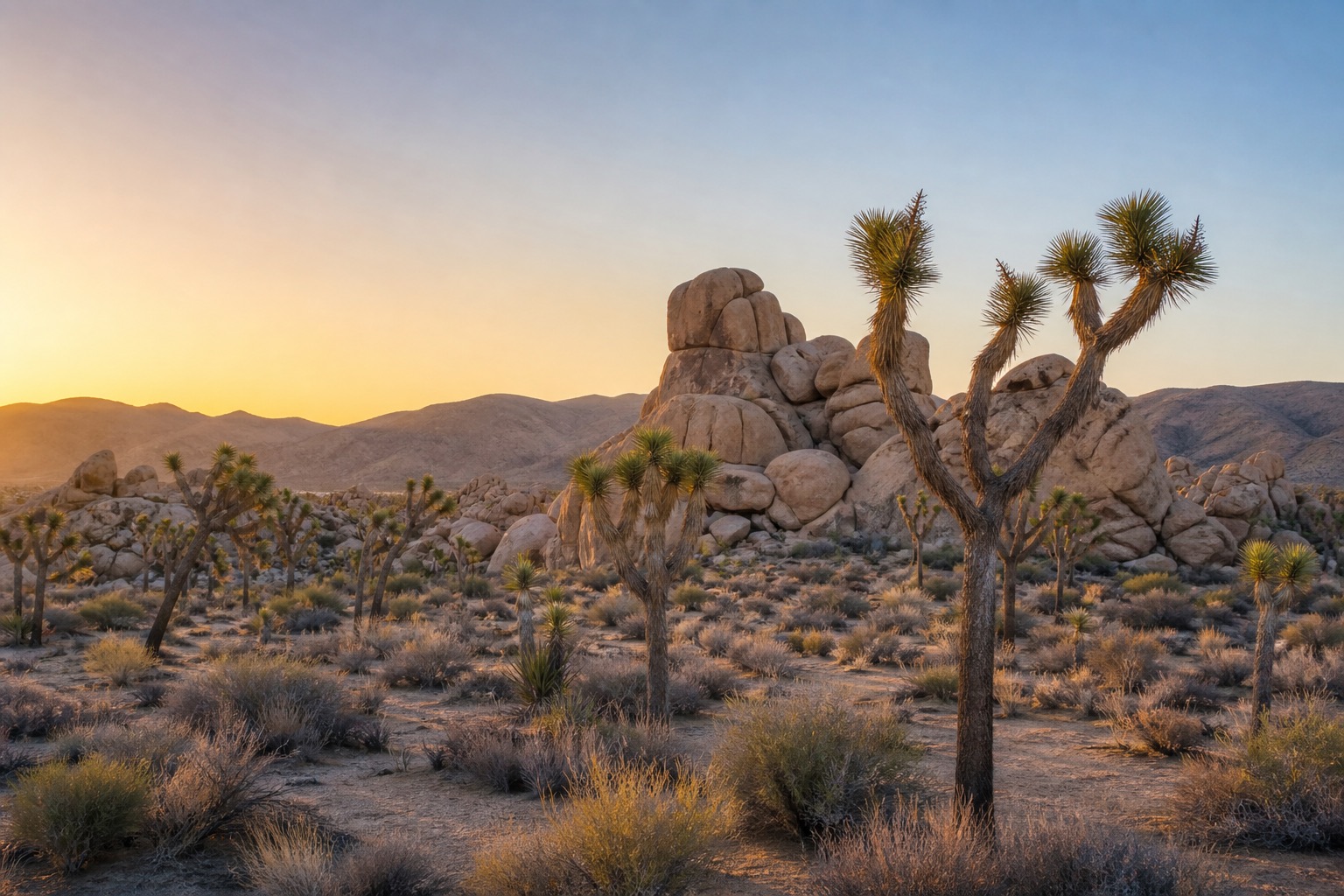
Joshua Tree rewards travelers who edit as carefully as they research. The practical starting point is to divide the park by landscape and temperature, leaving time for boulder fields, desert ecology and night sky. It creates a route with a point of view while preserving enough margin for the destination to feel lived in rather than processed.
Plan Joshua Tree by area and travel time
Group Hidden Valley, Barker Dam and Keys View in a realistic west-side route, or focus on the transition toward the Colorado Desert. Do not cross the park repeatedly for isolated photos.
Use Joshua Tree in Three Days: The Boulders, Keys View & the Stars to see one credible way through the destination. Keep the geographic logic, then adjust the density so transfers do not consume the attention the trip was meant to create.
Water, fuel and cell coverage are limited. Check National Park Service roads, temperatures and alerts before entry. The route should remain provisional until current local or park notices confirm that its key access assumptions still hold.
Understand what makes Joshua Tree worth the trip
The Joshua trees are one part of a meeting place between desert ecosystems. Geology, Indigenous history and dark skies deserve patient interpretation.
Avoid heat exposure, never climb beyond ability and do not damage plants or desert soil.
Build in one alternative that protects the experience rather than merely filling time. The shortlist in Joshua Tree First-Timer Essentials: The Boulders, Keys View & the Stars can support a personal Joshua Tree plan grounded in pace, interests and practical constraints.