Good planning in Death Valley means deciding what deserves unhurried time before filling the calendar. Use the route to respect extreme heat and immense distance by choosing one valley corridor and season-appropriate objectives. The result should feel coherent on the ground and remain useful when opening hours, weather or energy shift.
Plan Death Valley by area and travel time
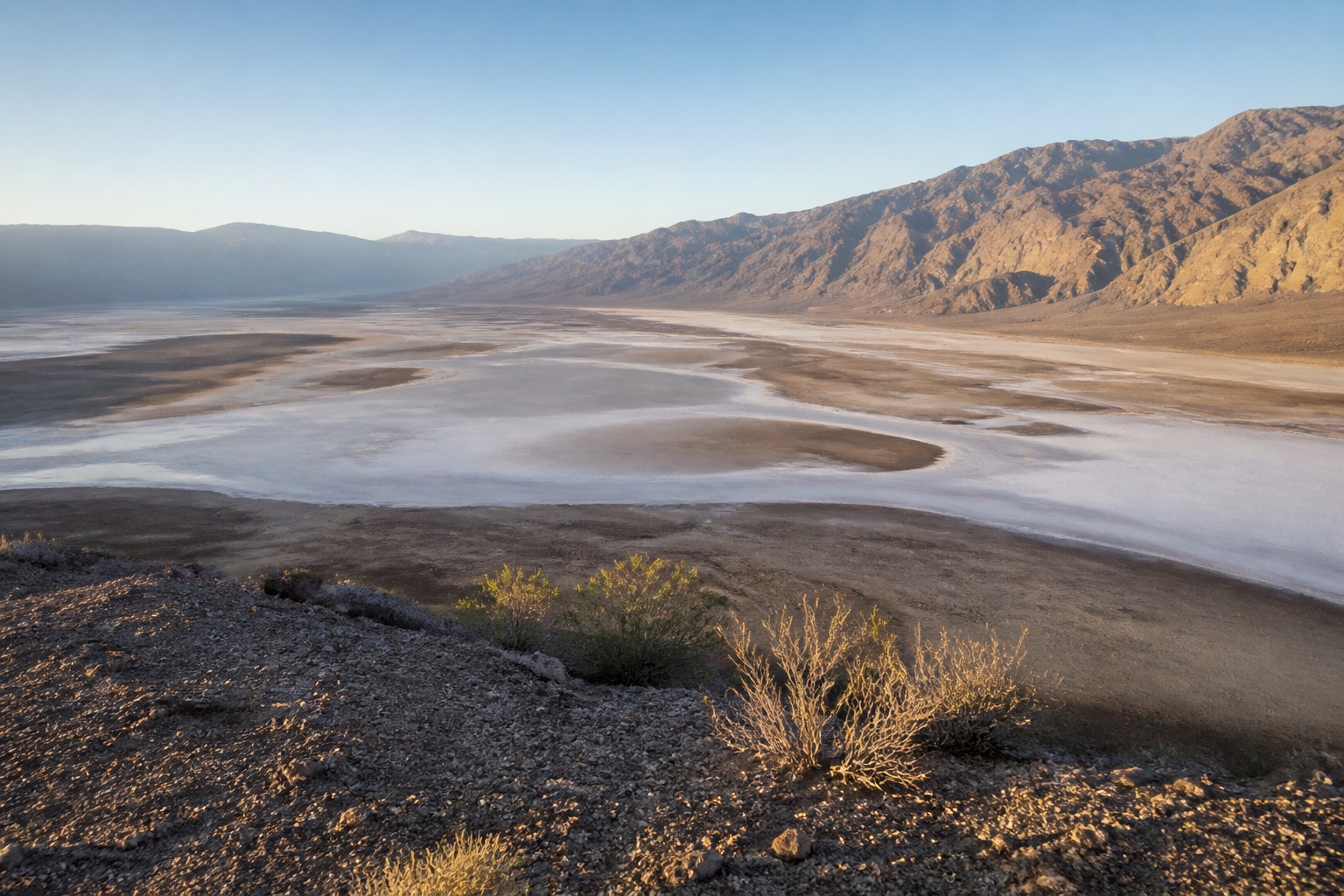
Group Badwater Basin, Artist's Drive and nearby viewpoints as one route, then use a separate early block for dunes or higher-elevation country. Do not advertise a summer midday checklist.
The public itinerary Death Valley in Three Days: Badwater, Zabriskie Point & the Dunes can help test distances and day shape. A better personal version may contain fewer stops, especially when one experience deserves a protected half day.
Road damage, temperature and service availability can change rapidly. Check National Park Service alerts, carry fuel and water, and share the route. Treat operating details as time-sensitive. A final check of official access and transportation guidance can prevent an avoidable failed day.
Understand what makes Death Valley worth the trip
Geology, night sky and Indigenous homelands make the park more than a superlative. Cooler-season walking and quiet viewpoints reveal more than racing to the lowest point.
Extreme heat kills; avoid exposure, stay with a disabled vehicle and never depend on cell service.
Weather and closures are easier to absorb when the day has a clear purpose and a compatible backup. Use Death Valley First-Timer Essentials: Badwater, Zabriskie & the Dunes to compare candidates, then plan a Death Valley trip without crowding the calendar.