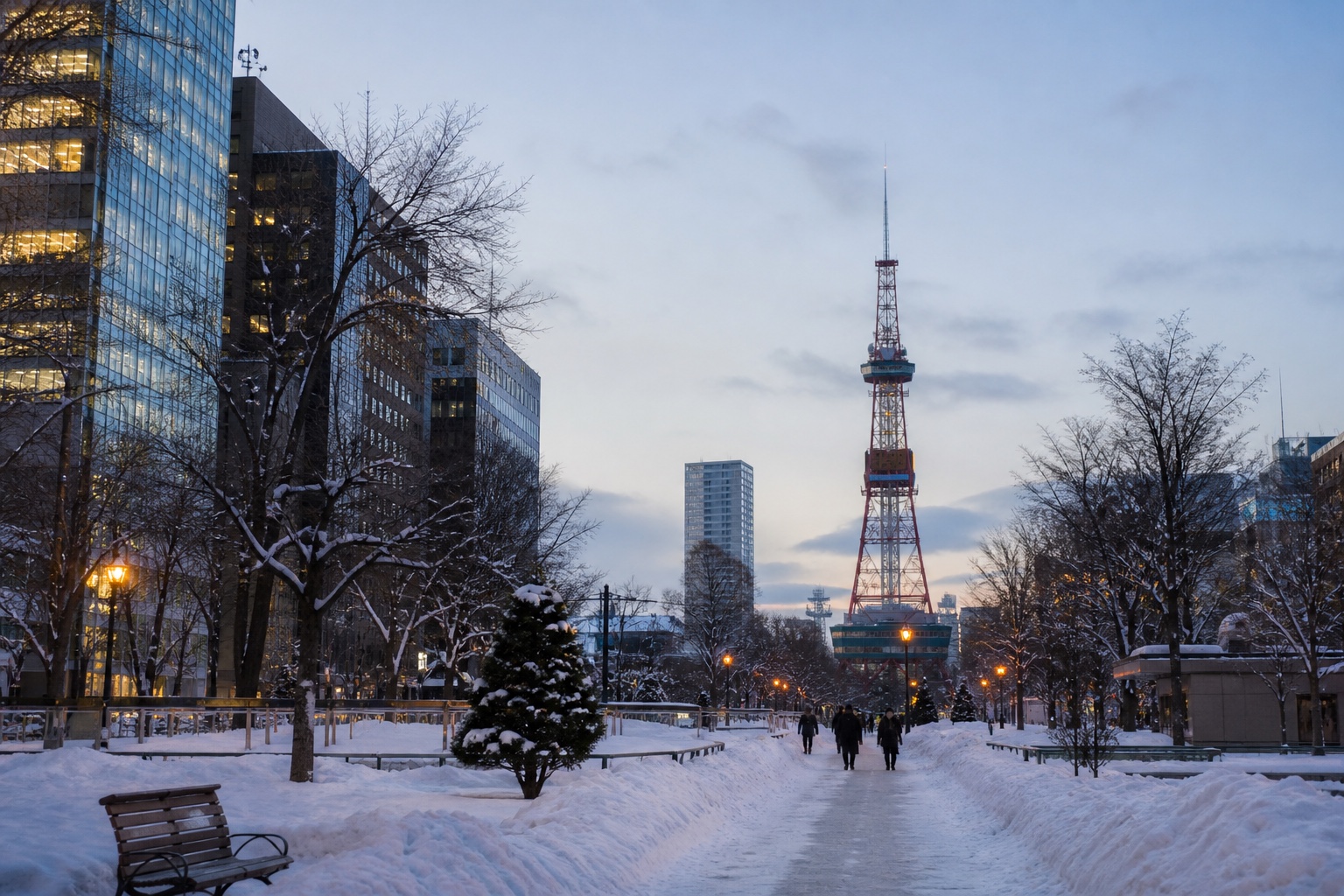
This guide is deliberately winter-first because the strongest Platix backing for Sapporo currently concerns snow season. Winter changes more than clothing: walking takes longer, daylight is shorter, sidewalks can be tiring, and a day trip can become unrealistic when transport or mountain conditions shift. The best itinerary uses the city as a flexible base rather than locking every hour.
Alternate exposure with warm resets
Odori Park, the Clock Tower area, the former government office grounds, and Susukino can form a central route, but snow makes even ordinary distances feel different. Use underground passages and subway stations as part of the plan, then place a museum, cafe, market, or long meal after each meaningful outdoor block. Footwear and traction matter more than adding one extra attraction.
Festival travelers should confirm the current event sites and dates rather than relying on a previous year's map. Visit large outdoor displays when the light and temperature suit you, and keep an indoor alternative nearby. Evening illumination can be worth a return visit instead of stretching one cold session from afternoon into night.
Keep excursions conditional
Otaru, ski areas, hot springs, and wider Hokkaido routes each solve a different trip goal. Choose one only after checking travel time, last returns, weather, and how much equipment the day requires. A powder day is not interchangeable with a city day, and a delayed excursion should not collapse the rest of the itinerary. Sapporo's ramen, seafood, soup curry, and beer culture give a spare city day plenty of purpose.
The Sapporo Snow Festival itinerary demonstrates a weather-aware winter structure. Pair it with the practical winter collection, then plan your Sapporo trip with flexible outdoor blocks and realistic backup choices.