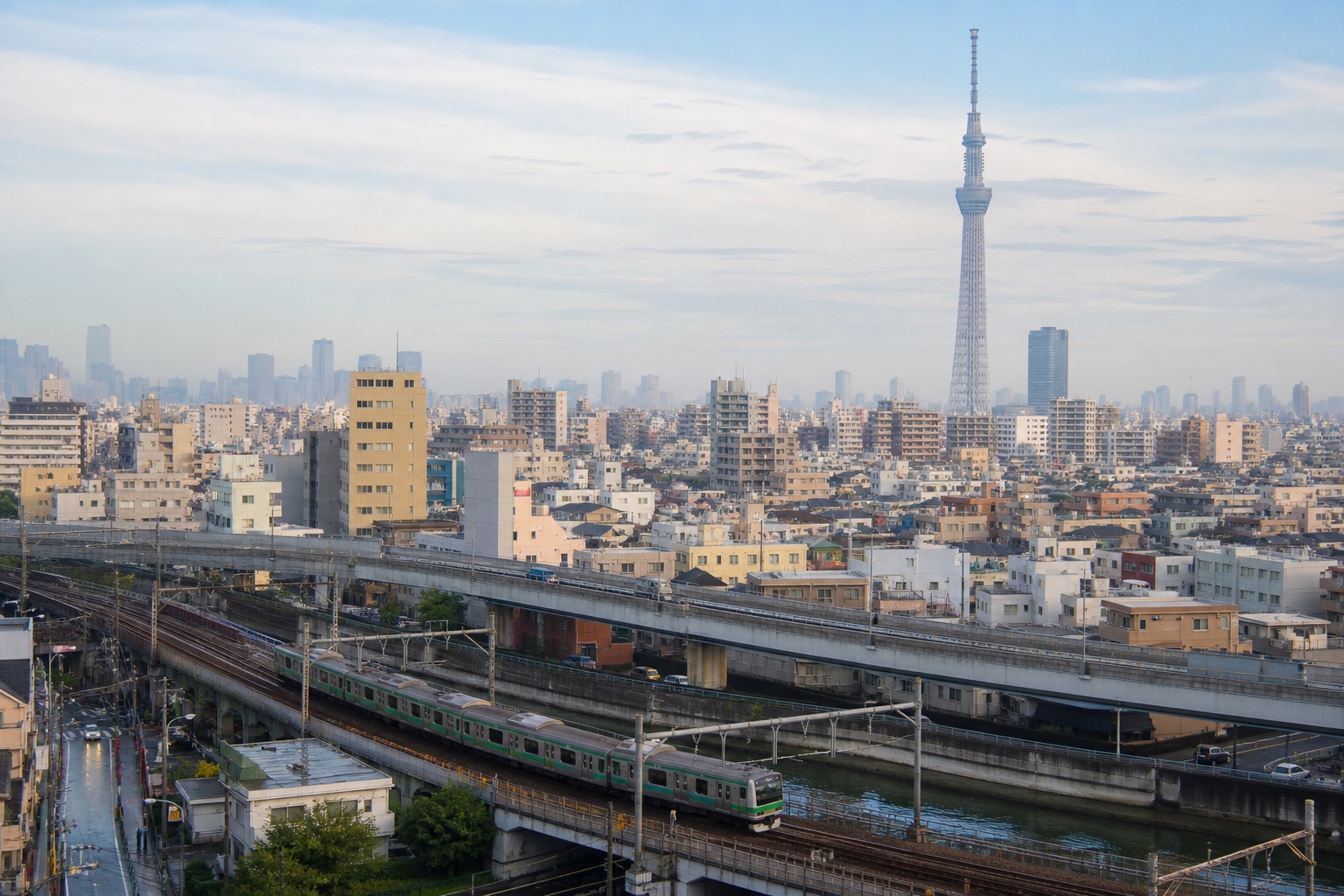
Tokyo becomes easier to plan when it stops being one enormous checklist and starts becoming a set of distinct neighborhoods. A first trip does not need to cover every famous district. It needs a daily rhythm that limits long crossings, protects the few reservations that matter, and leaves time for the small streets and stations that make the city feel different from anywhere else.
Build each day around one side of the city
Asakusa, Ueno, and Yanaka can form an eastern day of temples, museums, market streets, and older neighborhoods. Shibuya, Harajuku, and Omotesando make a contrasting western day built around design, shopping, parks, and city views. Tokyo Station, Marunouchi, Ginza, and nearby food halls can share another day. These are planning clusters, not rules: choose the combination that suits the traveler, then avoid crossing the rail map simply to collect one more landmark.
Even an efficient rail journey includes station corridors, transfers, and walking. Treat travel time as part of the day rather than empty space between attractions. Comfortable shoes and a light bag matter more here than squeezing in a sixth stop.
Protect anchors and keep the rest flexible
Reserve an observation deck, limited-entry museum, or special meal when missing it would change the trip. Keep gardens, department-store food halls, neighborhood walks, and casual meals flexible around those anchors. This makes the itinerary more resilient to queues, weather, and the unexpected shop or side street that deserves another half hour.
The first-time Tokyo itinerary shows one workable five-day shape. The Tokyo essentials collection is better when you are still deciding which anchors belong. Start with those choices, then plan your own Tokyo trip around pace, interests, and the neighborhoods you most want to understand.