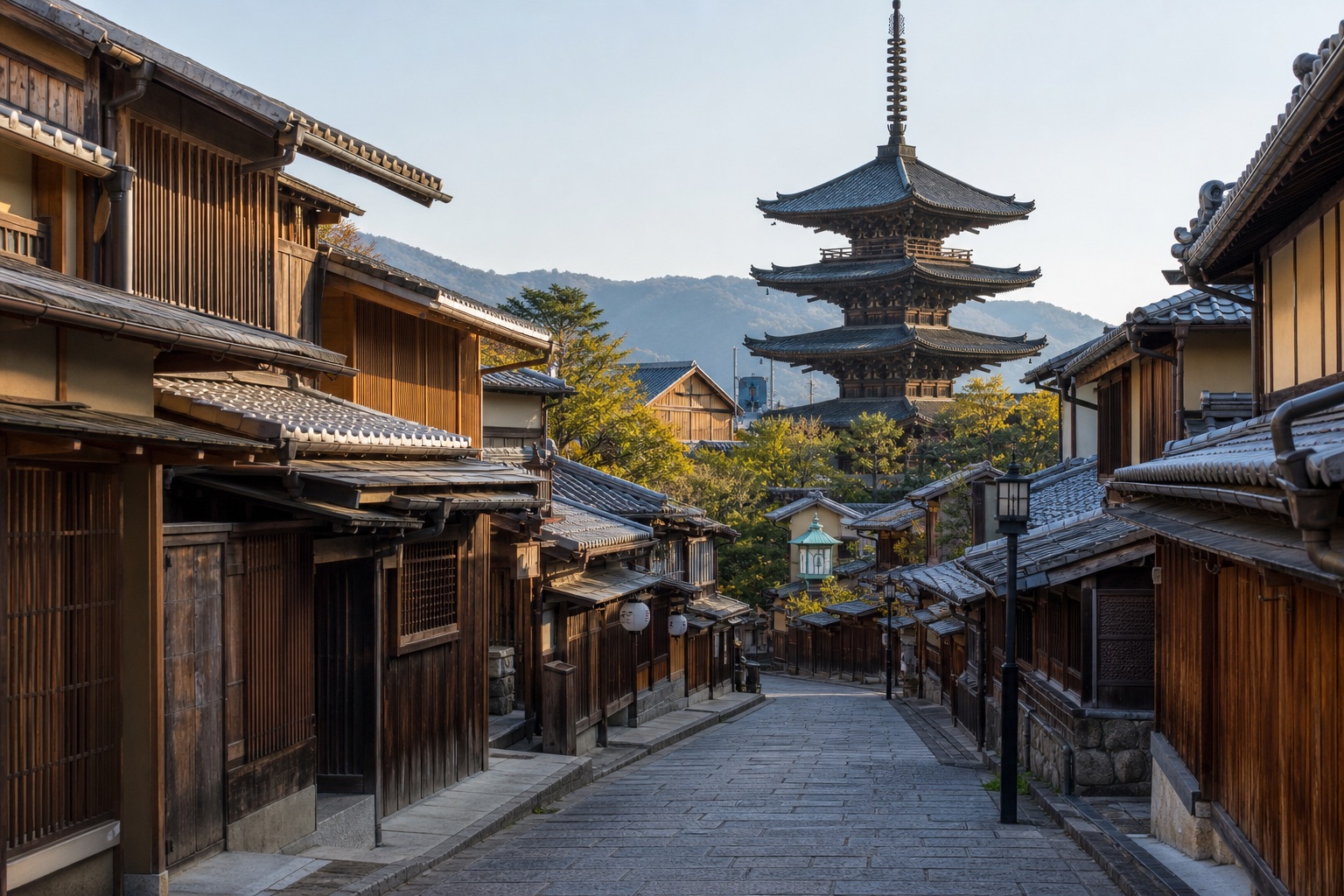
Kyoto rewards a slower plan than its map first suggests. Temples, gardens, market streets, and hillside neighborhoods may look close together, yet the most satisfying days usually stay within one area. The planning challenge is less about finding attractions and more about choosing which parts of the city deserve an unhurried morning.
Give each area its own time
Higashiyama and Gion fit naturally into a day of early temple grounds, sloping lanes, and an evening walk. Arashiyama belongs to a different side of the city and works better as a focused outing than as an add-on after eastern Kyoto. Northern temples, central markets, and southern Fushimi each create another possible day. Pick fewer areas and give them room rather than building a route that repeatedly returns to Kyoto Station.
Kyoto's official visitor guidance recommends using both trains and buses, because the shortest-looking road route may be slowed by congestion. Trains and subways are useful for covering the larger jump; walking or a bus can finish the local connection. Check current conditions close to the travel date, and avoid carrying large luggage through a sightseeing day when delivery or storage is practical.
Use timing as part of the itinerary
An early start at one important place can make more difference than adding another attraction. Pair that fixed opening with a nearby garden, café, craft stop, or neighborhood walk that does not require an exact time. If Nara is essential, give it a real day rather than squeezing it between Kyoto reservations.
The Kyoto and Nara itinerary demonstrates a calmer five-day pace. Use the Kyoto essentials collection to choose the places worth protecting, then shape a Kyoto trip that leaves space between them.