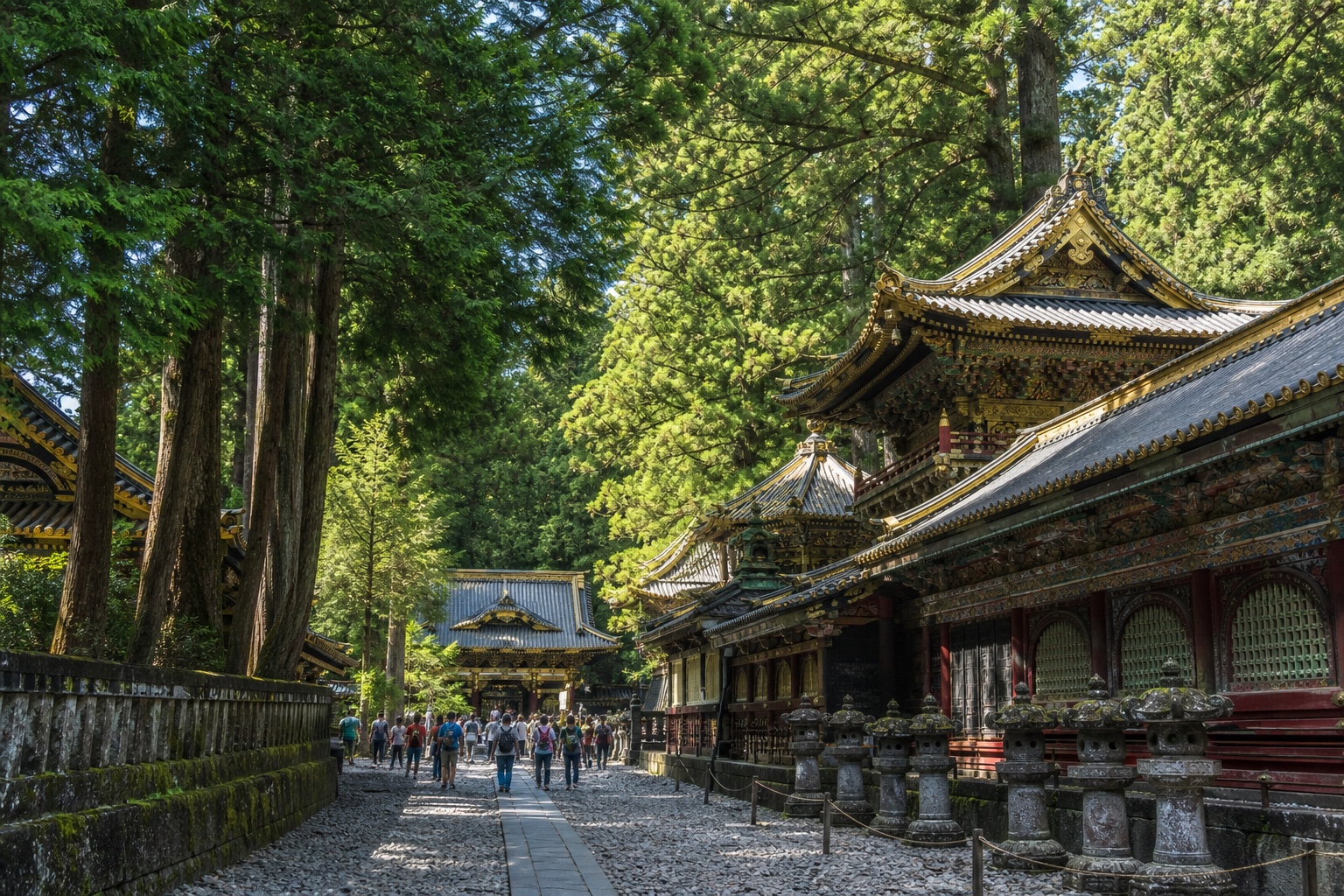
Nikkō is often sold as one day from Tokyo, but its planning problem is really two places. The shrine and temple precinct sits near town; Oku-Nikkō climbs toward Lake Chūzenji, waterfalls, and mountain landscapes. Combining both at depth requires an overnight or a firm decision about what to omit.
Let the shrine complex fill its block
Tōshō-gū is richly detailed and busy. Tickets, stairs, separate buildings, and time spent looking closely make it a substantial visit. Rinno-ji, Futarasan, and the surrounding cedar paths can follow in a coherent walking route, while a villa or quieter mausoleum offers a different pace.
Check current opening hours and any restoration notices. The complex carries religious and historical significance, so photography rules and worship spaces deserve ordinary respect rather than hurried collection.
Treat Oku-Nikkō as mountain travel
Buses climb a winding road and can face seasonal traffic. Weather at the lake and marshes may differ from town, and waterfalls or trails require their own time. Confirm current road, bus, and trail conditions, especially during autumn color, winter, or severe weather. A mountain day should replace additional shrines, not sit after them.
The two-day Nikkō itinerary uses one day for each geography. Use the first-timer collection, then plan your Nikkō trip around daylight, bus conditions, and whether the mountain landscape is truly part of this visit.
An overnight near town gives useful protection against missed connections and lets the shrine precinct begin before many day groups arrive. Book early in peak autumn, when roads, buses, and accommodation all face exceptional demand.