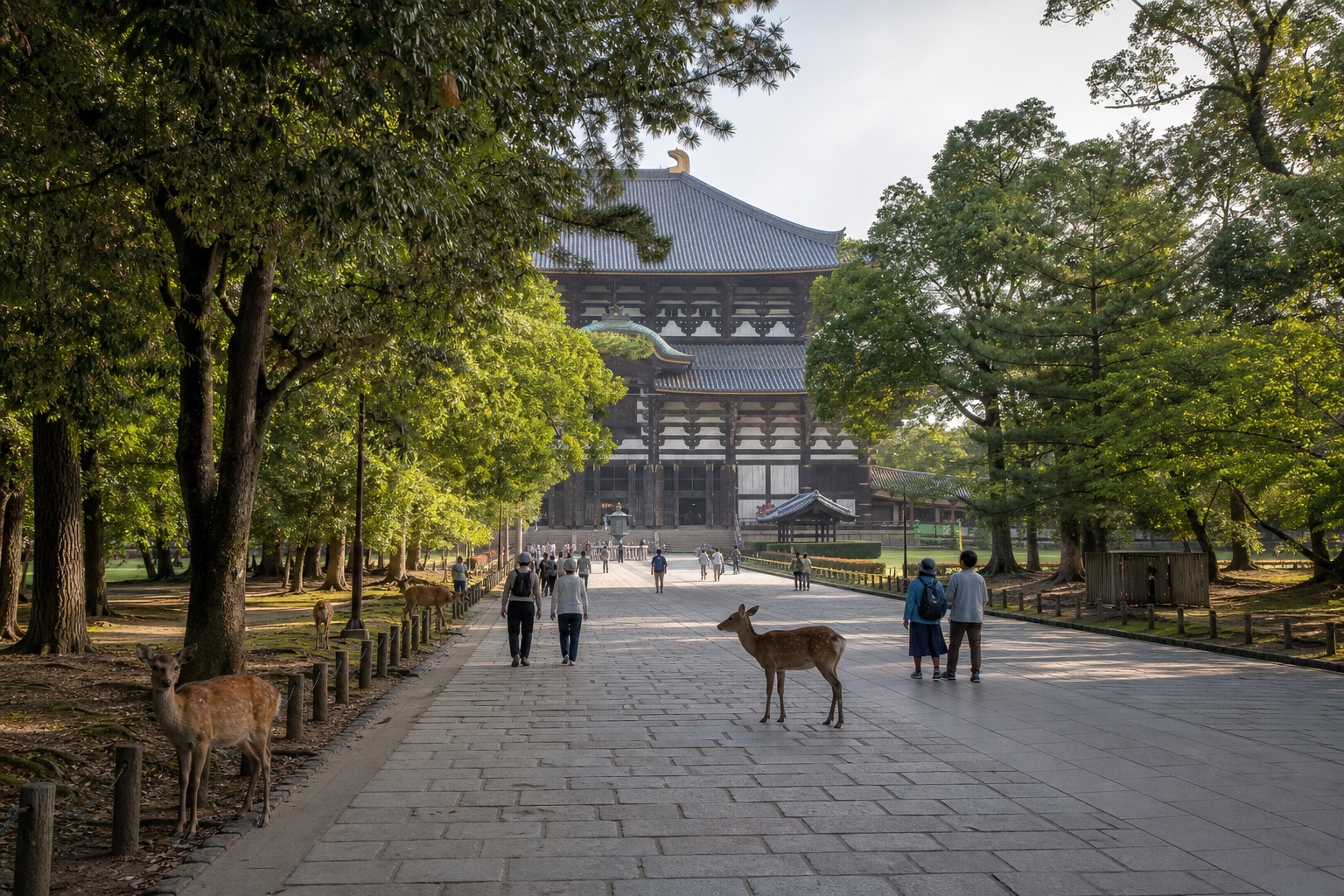
Nara is easy to visit from Kyoto or Osaka and easy to underestimate. The famous park contains monumental temples, shrine paths, gardens, and wooded slopes that deserve more than a fast circuit around the deer. A two-day stay separates the busy eastern sights from older temple districts and gives the city a quieter morning and evening.
Start early in the eastern park
Tōdai-ji and the Great Buddha should anchor the first block. Continue toward Kasuga Taisha or the forest edge according to walking energy rather than adding every temple between them. Distances, gravel, slopes, and time inside the halls make the park larger than it appears.
Deer are free-roaming animals, not props. Follow current local guidance, keep food secure, supervise children, and do not crowd or provoke them for a photograph. A garden or museum provides a calm counterpoint when the central paths become busy.
Use the second day for ancient Nara
Hōryū-ji and western Nara require a separate transit plan. They are historically important enough to replace another half-day, not fit between a late breakfast and the return train. If the trip remains a day visit, protect the eastern park and accept that a second district belongs to another stay.
Nara also rewards an overnight because the park changes after day visitors leave. Check the final transport connection before dinner, or stay centrally enough to enjoy the quieter evening without turning it into a late logistical problem.
The two-day Nara itinerary makes that separation explicit. Start with the first-timer collection, then plan your Nara trip around temple opening hours, respectful wildlife behavior, and the amount of walking your group actually wants.