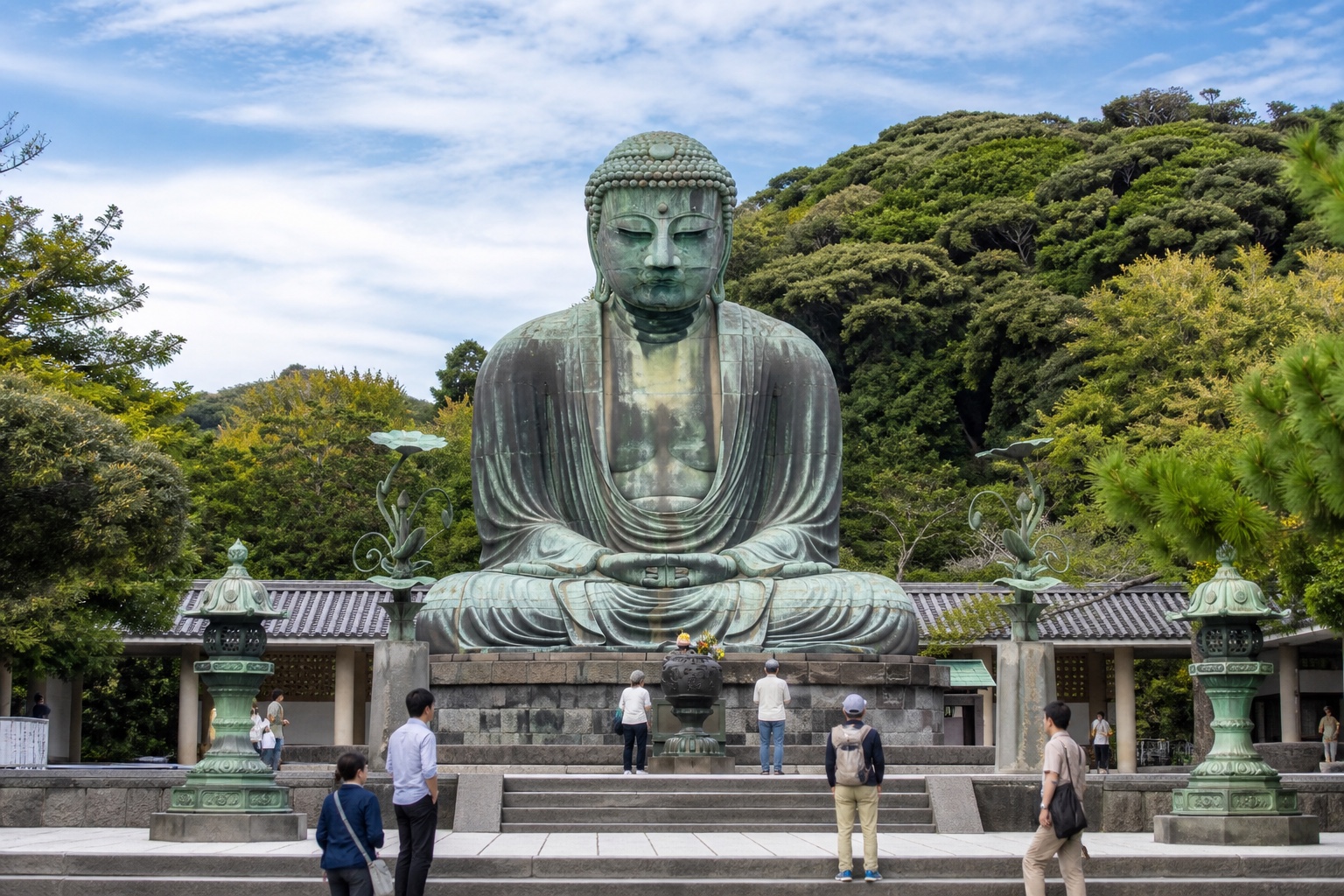
Kamakura looks like a simple Tokyo day trip until the route tries to include the Great Buddha, northern Zen temples, central shrine, Enoden line, and Enoshima. Those places spread across different transit corridors. Group one side of the city at a time and let an overnight create the second route.
Choose a temple geography
The Great Buddha and Hase-dera fit the western side. Kita-Kamakura's Zen temples form a northern sequence, while Tsurugaoka Hachimangū anchors the center. A one-day visitor should choose two compatible groups rather than crossing between all three. Seasonal hydrangeas and autumn color can create queues and change the best order.
Temples are active religious places. Follow photography guidance, lower voices, and allow time for gardens and interiors instead of treating each gate as a brief image stop.
Add the coast with intention
The Enoden railway and coast can form a separate half-day, but trains and popular crossings become crowded. Enoshima adds walking, stairs, and enough sights to become its own outing. Beach conditions and weather should determine whether the coast remains in the plan.
From Tokyo, station choice matters: different railways favor different parts of Kamakura. Decide which cluster comes first before buying a pass, and leave the return flexible enough that a crowded local train does not spoil a reservation. Weekdays are calmer when available.
The two-day Kamakura itinerary uses the overnight to separate temples from the coast. Start with the first-timer collection, then plan your Kamakura trip around one geographic cluster per half-day.