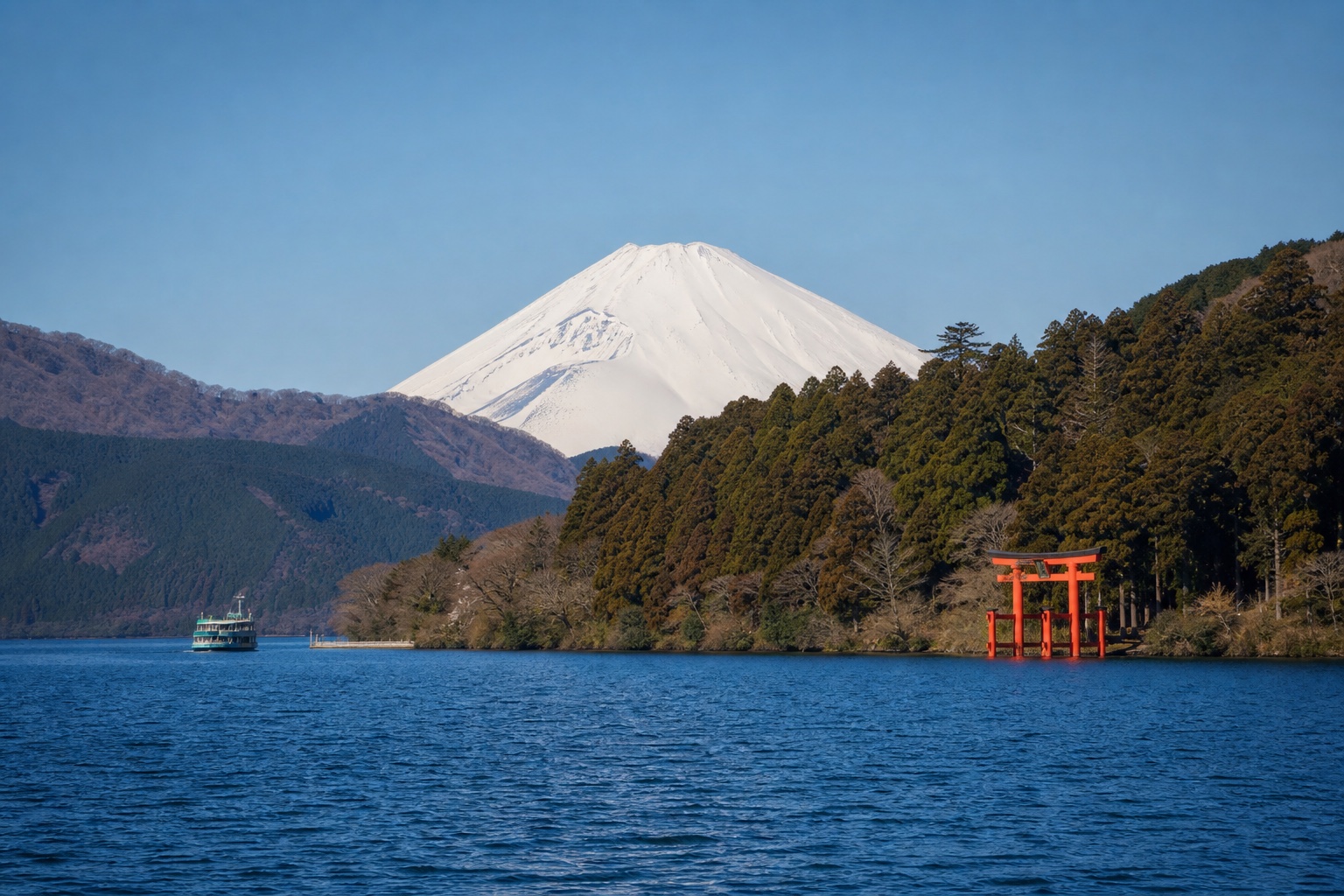
Hakone is not one compact town. It is a mountain area connected by trains, buses, cable cars, ropeways, boats, and walking routes. The famous loop can be useful, but completing every segment is not the objective. Accommodation, weather, luggage, and the experiences that matter should determine the direction.
Plan backward from the ryokan
Many ryokan have fixed dinner or check-in expectations. Confirm those before building the sightseeing day, and use luggage forwarding or station storage when it prevents bags from traveling around the loop. An onsen stay needs enough unhurried time to be worth its place between larger cities.
The Open-Air Museum, Lake Ashi, and volcanic area are separate anchors. Select two that fit the route rather than adding all three automatically. Mount Fuji views are weather-dependent and should never be promised; a good Hakone plan still works when clouds remove the mountain.
Verify transport and volcanic conditions
Ropeway, boat, and road operations can change with weather, maintenance, or volcanic conditions. Check official updates on the travel day and retain an alternate route. Travelers with mobility constraints should inspect transfers, slopes, and accommodation access in detail.
Forward luggage between larger cities when practical; carrying full cases around the loop adds friction to buses, boats, and cable transport. A small overnight bag also makes ryokan arrival and the next morning materially easier.
The Japan Golden Route shows Hakone as a meaningful overnight. Use the first-timer essentials, then plan your Hakone trip from accommodation timing outward, with a complete cloudy-day version.