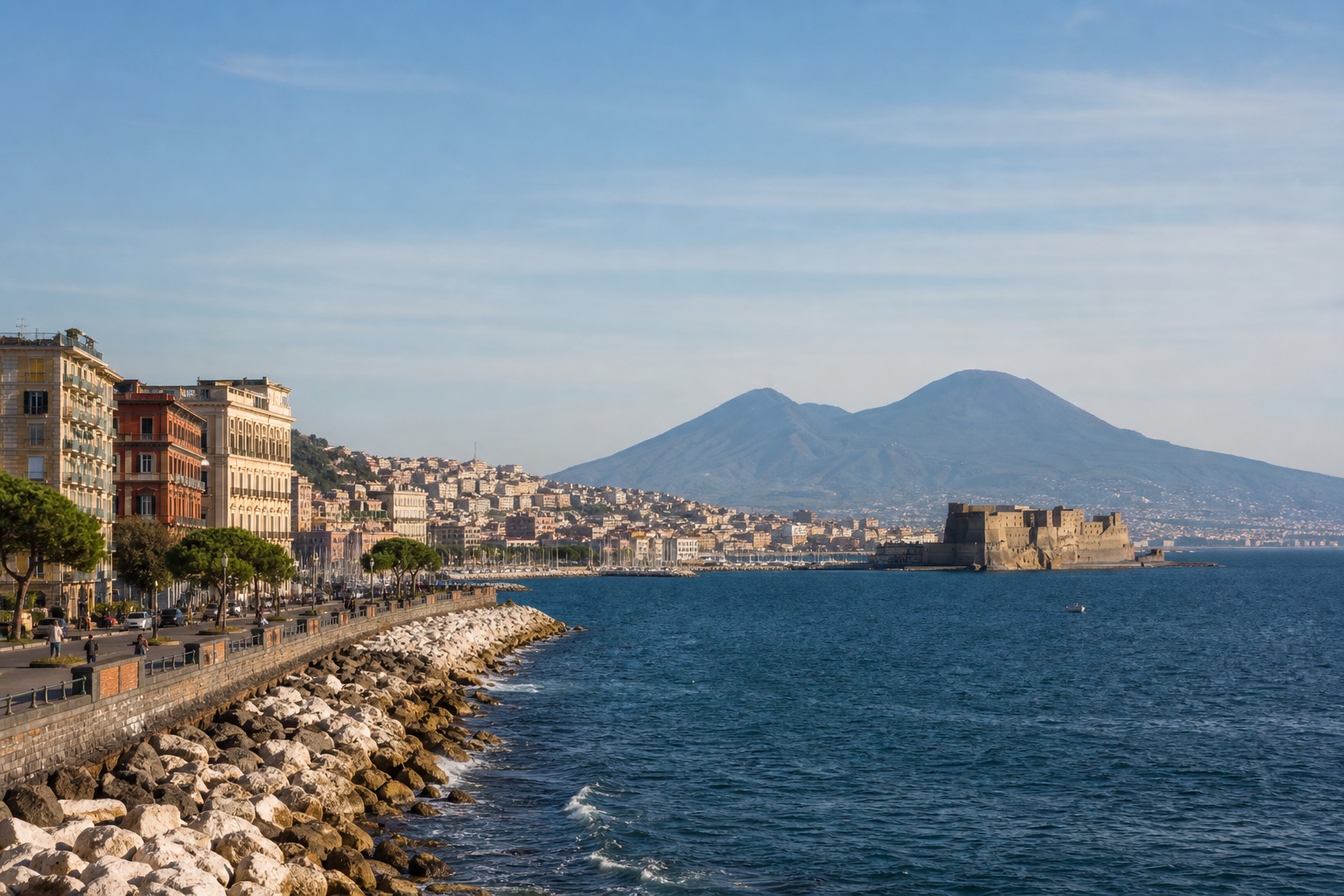
Naples is often treated as a station between Rome, Pompeii, and the Amalfi Coast. That produces a rushed first impression of a city whose meaning lies in layers: Greek street lines, Roman remains, Baroque chapels, apartment life, religious shrines, underground passages, and an open waterfront under Vesuvius. Stay for at least two full days before deciding how many excursions the trip can support.
Read the historic center in layers
Spaccanapoli and Via dei Tribunali form the spine of the old city, but the day needs more than walking their full length. Choose a small number of interiors, such as Cappella Sansevero, the cathedral, or a guided underground visit, and check timed entry before arrival. The National Archaeological Museum deserves a separate substantial block. It gives context to Pompeii and Herculaneum, and can be more valuable before an excavation day than another quick church stop.
Via Toledo, the Spanish Quarter, and the grander streets toward Chiaia show a different Naples. They fit well together, with the metro or funicular doing real work rather than serving as attractions to collect. Dense streets can be loud and busy; a plan should include time to orient rather than pretending every kilometer is a simple stroll.
Keep the bay and the day trips distinct
The Lungomare, Castel dell'Ovo, and Vomero viewpoints offer the space the old city lacks. Give them part of a day instead of using the waterfront only as an evening photo stop. Pompeii, Herculaneum, Capri, and the Amalfi Coast each require their own transport and timing decisions. One excursion can enrich a short Naples stay; stacking several usually erases Naples itself.
The three-day Naples itinerary keeps the city central. Pair it with the first-timer collection, then plan your Naples trip around the fixed visits and excursions that genuinely matter.