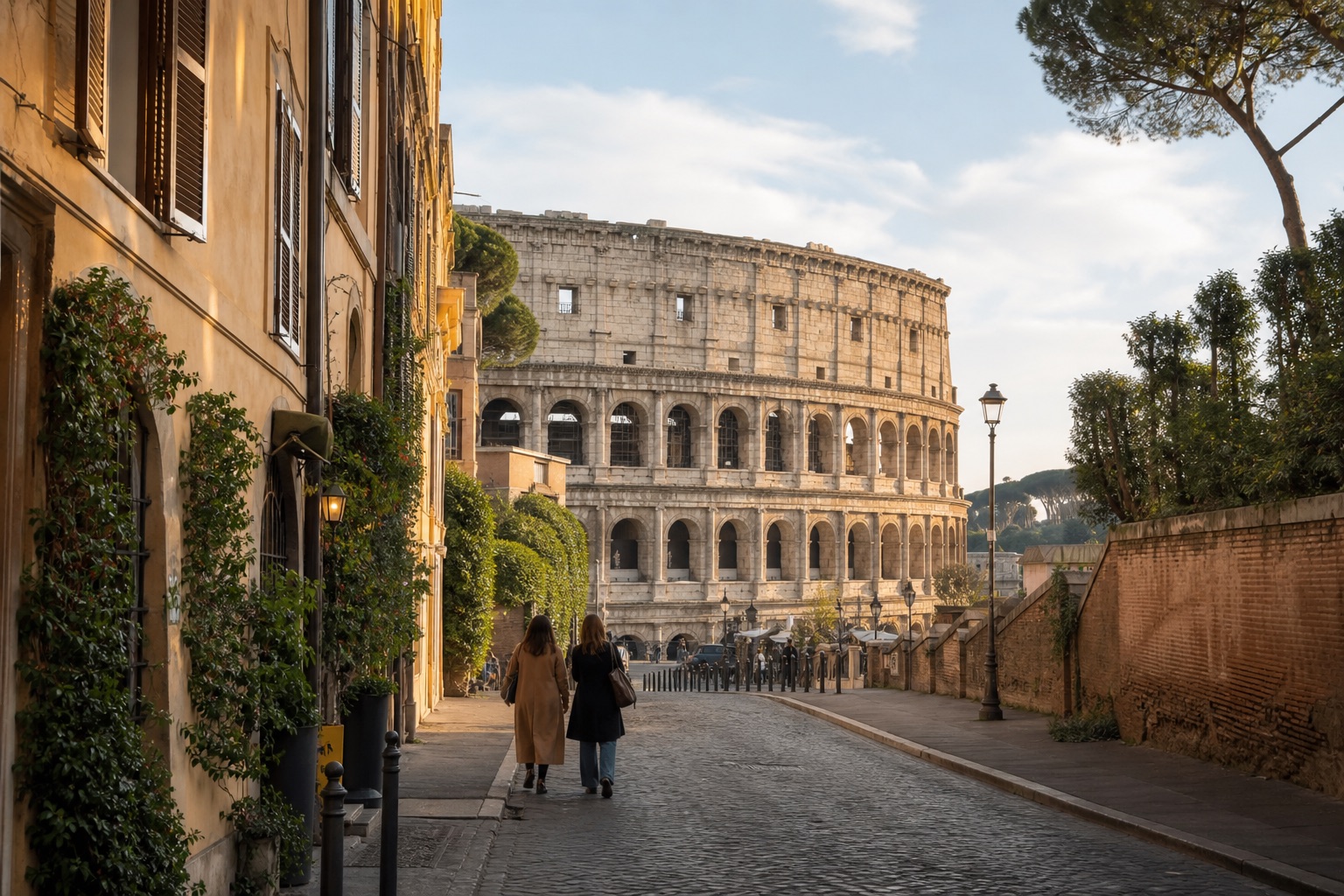
Rome is dense with things worth seeing, but it is not a city to plan as a chain of isolated tickets. Stone streets, hills, security lines, and long museum visits can turn a short distance into a full afternoon. A workable first trip begins with two or three major reservations, then builds coherent neighborhood days around them.
Separate the major anchors
Ancient Rome deserves its own block for the Colosseum, Forum, and Palatine area rather than sharing a rushed morning with the Vatican. The Vatican Museums are another substantial anchor. Central Rome's Pantheon, Trevi Fountain, Piazza Navona, churches, and lanes can form a more flexible day, while Villa Borghese and its surrounding streets create a different pace. Trastevere or Testaccio work best when treated as neighborhoods to spend time in, not merely dinner pins.
Buy reservation-sensitive tickets only through the official venue channels and confirm current entry rules before the trip. Once those fixed times are secure, leave the surrounding meals and walks adjustable. That balance keeps one delayed entry from unraveling the rest of the day.
Plan for walking, heat, and recovery
Group stops by area and expect uneven surfaces. In warmer months, place exposed archaeological sites earlier and protect a slower middle of the day. A hotel near a useful transit line or within walking distance of the evening neighborhoods can save more energy than a theoretically central address that requires repeated transfers.
The five-day Rome itinerary gives the major anchors separate days and keeps evenings local. The Rome essentials collection helps decide what to reserve and what to leave flexible. From there, plan your Rome trip around season, walking tolerance, and the experiences that matter most.