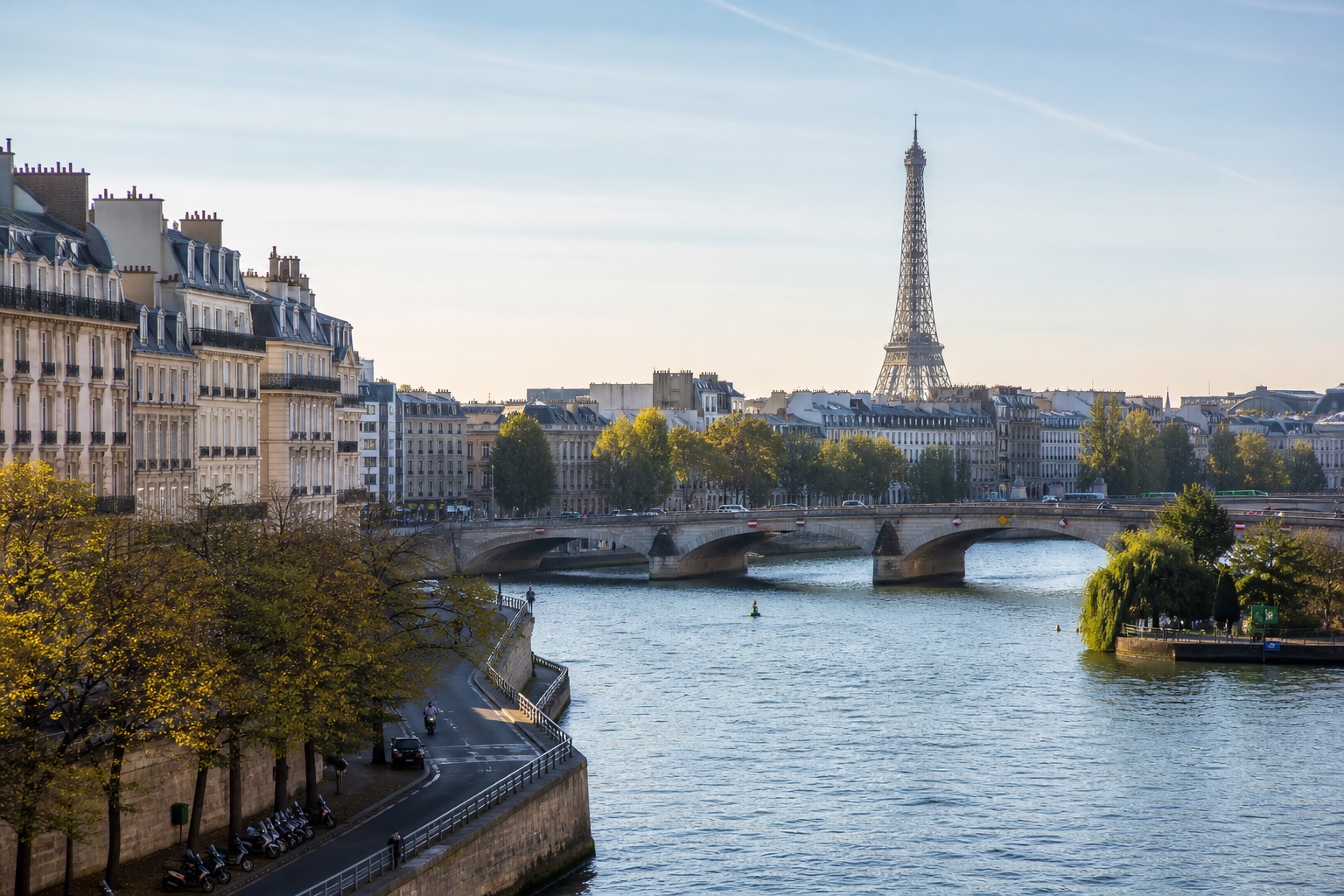
Paris works best when the famous sights provide structure without consuming every hour. The city is compact enough to invite ambitious plans, yet museum scale, river crossings, and the temptation to stop at a market or café make tightly timed days fragile. A strong first itinerary chooses one major anchor, one part of the city, and enough unassigned time to enjoy both.
Group days by neighborhood, not fame
The Louvre, Tuileries, Palais Royal, and covered passages can share a central day. The Marais and the islands make another walkable cluster. Saint-Germain and the Latin Quarter belong together more naturally than either does with Montmartre. The Eiffel Tower and western museums can anchor a different day, while Canal Saint-Martin or a quieter residential neighborhood can provide relief from the monuments.
Where you stay changes the trip's rhythm. A central base shortens some first-visit journeys, while a neighborhood base may give evenings more local character. Choose according to the days you actually plan, not a single idea of the "best" arrondissement.
Reserve selectively and leave room to look around
Protect timed museum or monument entries that would be difficult to replace. Avoid stacking two large museums simply because they are both important. Flexible walks, gardens, food streets, and smaller collections can absorb weather or energy changes without turning the day into a failure.
The five-day Paris itinerary balances major sights with quieter streets and slower evenings. The Paris essentials collection helps narrow the first round of choices. Use those as references, then plan your Paris trip around your hotel, interests, and a pace that still feels good on day four.