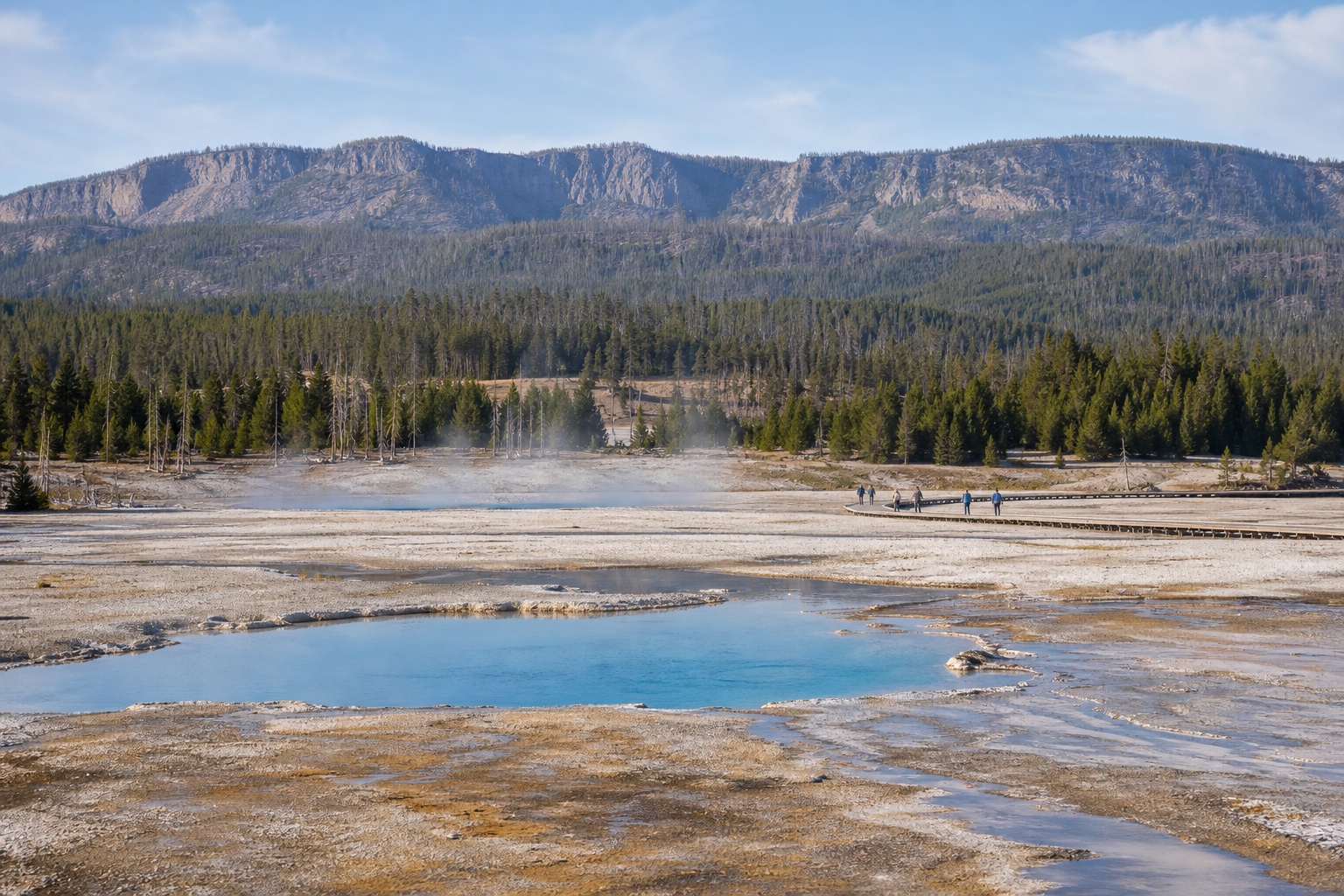
Yellowstone is larger and slower than a pin-filled map suggests. Thermal basins, the Grand Canyon of the Yellowstone and the major wildlife valleys belong to different geographic days. Roads can be delayed by construction, weather, wildlife and ordinary congestion, so a good plan leaves margin rather than promising a perfect circuit.
Divide the park into landscapes
Old Faithful and the Upper Geyser Basin deserve time beyond one eruption. Nearby thermal areas can share the day, but boardwalk walks, parking and unpredictable geyser intervals add hours. Canyon Village and the falls form another cluster. Lamar and Hayden valleys reward patient viewing near dawn or dusk, not rapid stops between geothermal sights.
Never step off a thermal-area boardwalk. Ground that appears solid can be thin, and hot water is not a decorative backdrop. Wildlife also requires real distance: remain in your vehicle when appropriate, use a long lens and never approach or feed an animal. A traffic jam is not permission to stop unsafely in the road.
Let lodging shape the route
Where you sleep changes the practical day because entrances and park lodging can be far apart. Choose a base before finalizing daily loops. Seasonal roads, snow, fire and facility operations can alter access, so confirm conditions on official park channels close to travel. Cell service is limited; download maps and essential information before entering.
The three-day Yellowstone trip provides geographic structure. Use the first-timer essentials, then plan your Yellowstone trip with room for the park to set its own pace.