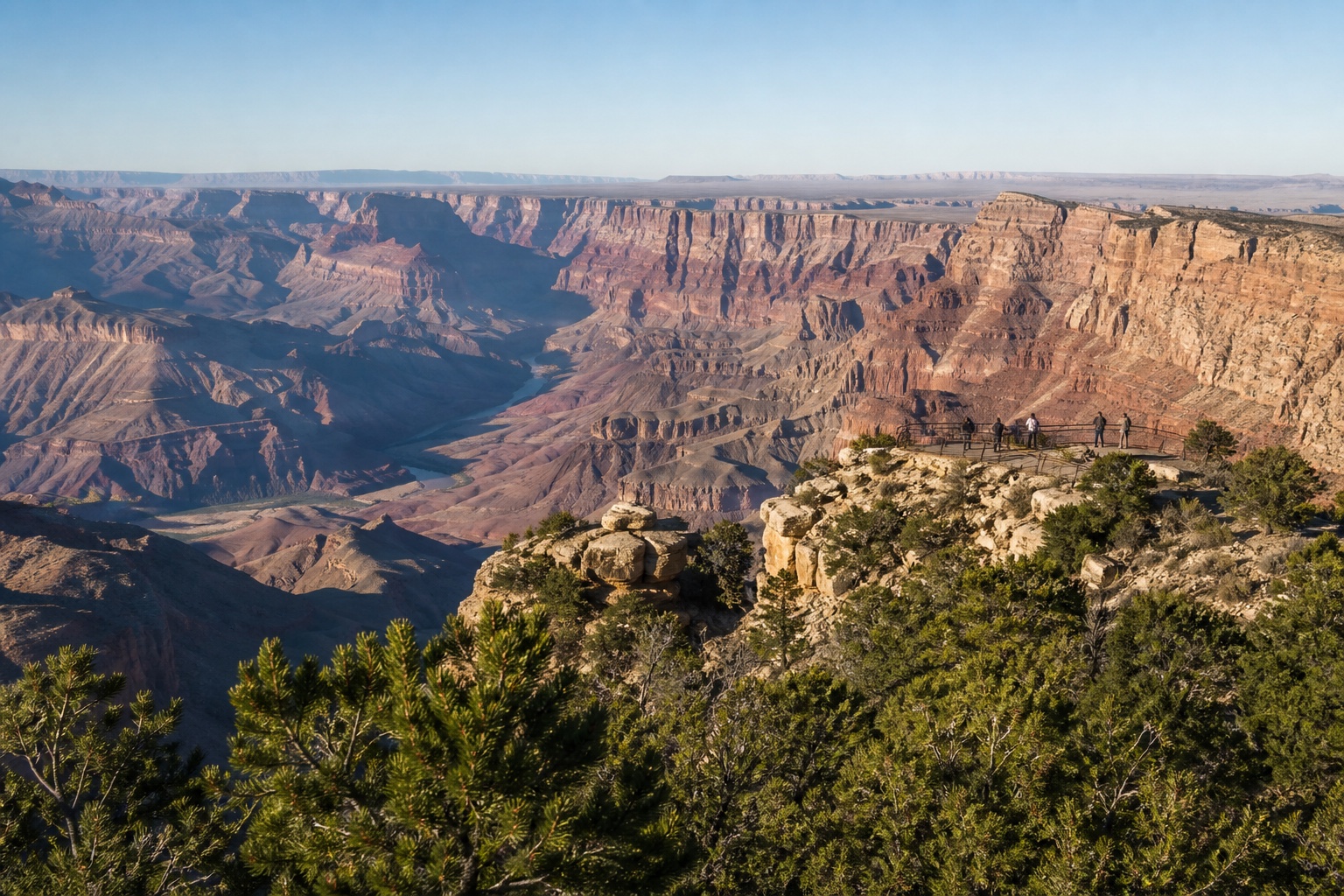
The Grand Canyon becomes more impressive when the itinerary slows down. A single overlook reveals the scale, but walking part of the rim, returning in different light and learning the landscape's human history make the visit more than a roadside photograph. Base a first trip on the South Rim and give it at least one full day after arrival.
Connect viewpoints instead of chasing them
The village, western overlooks and Desert View corridor form different parts of the South Rim. Use park transit and rim paths where available, then choose a few viewpoints rather than driving to every pullout. Sunrise and sunset attract crowds and low temperatures can differ sharply from the heat below the rim, so carry layers and keep a daylight view in the plan too.
A hike into the canyon is not the same as a rim walk. Every step down must be climbed on the return, usually in harder conditions. Select distance according to current weather, water availability, trail status and your own preparation; avoid presenting a rim-to-river attempt as a casual day hike. Follow National Park Service guidance and turn around early when conditions change.
Treat the edges as real hazards
Stay behind barriers and on maintained surfaces, especially near ice, wind or crowds. The North Rim, inner canyon and surrounding tribal lands require separate planning and should not be treated as quick extensions of the South Rim. Verify seasonal roads, permits and closures through official sources.
Use the three-day Grand Canyon itinerary for pacing and the first-timer collection for priorities. Then plan your Grand Canyon trip around the conditions and experience you can support safely.