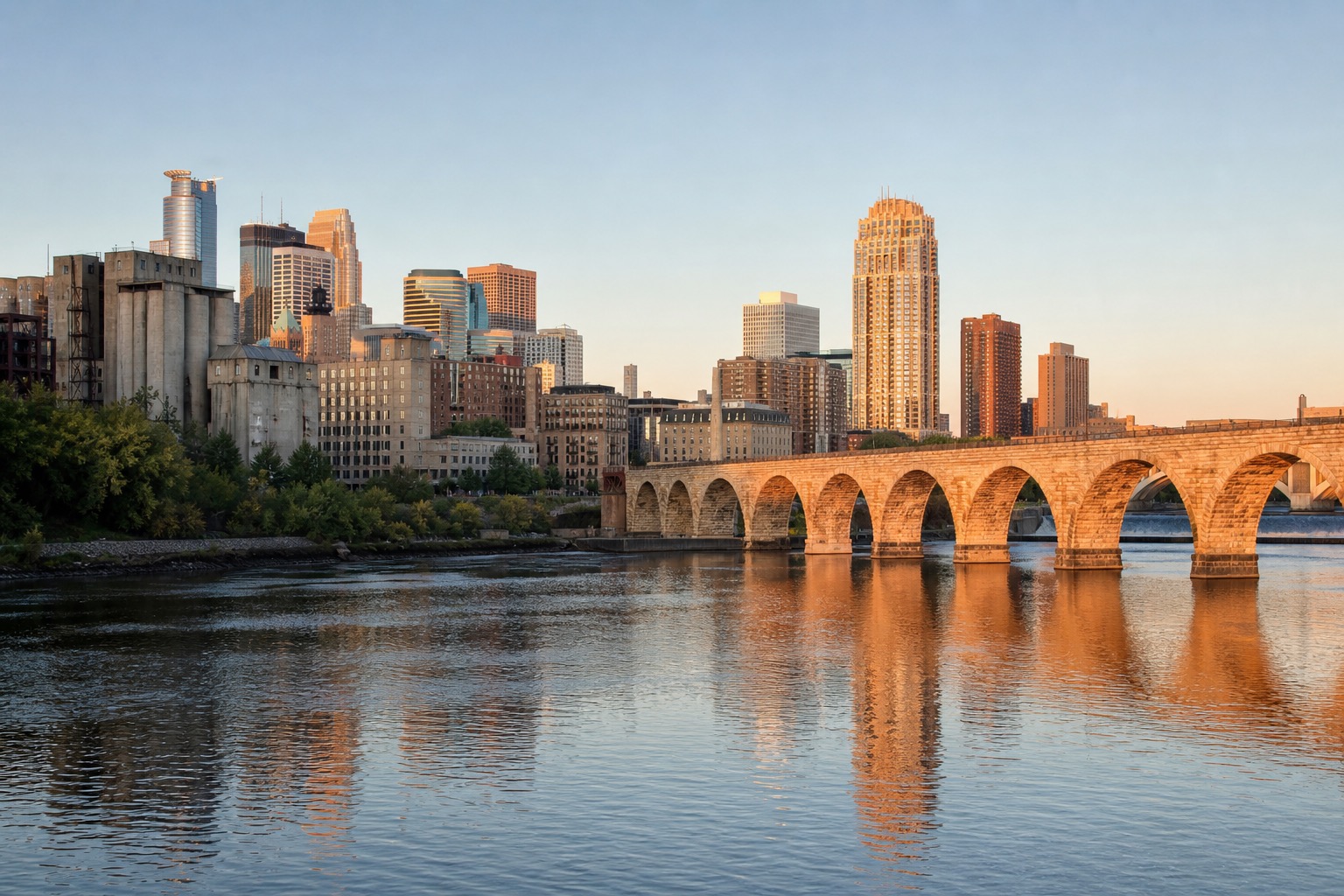
A useful Minneapolis plan begins with priorities, distances and an honest reading of the day. The central choice is how to connect the Mississippi riverfront, major art museums and chain of lakes through a route that uses the city's parks well. Once that is clear, the route can absorb weather, energy and local changes without losing its purpose.
Plan Minneapolis by area and travel time
Keep the Mill District, Stone Arch Bridge area and downtown river story together. Use a separate block for the Walker and sculpture garden or for a lake loop and neighborhood meal.
The Minneapolis in Three Days: The Lakes, the Art & the Riverfront offers a workable route to compare against. Adapt it to the group's stamina and interests; the aim is a legible day, not maximum attraction count.
Light rail, buses and cycling can reduce driving, but winter conditions and event traffic affect timing. Check trail and transit status before relying on a single mode. Recheck official operating information near the travel date; a sound route still needs current hours, access and transportation details.
Understand what makes Minneapolis worth the trip
Dakota history, migration and the city's recent civic reckoning belong in the story alongside design and parkland. Include local food and contemporary neighborhoods with care.
Cold and heat extremes can both be serious; plan warming or cooling stops by season.
A flexible backup is part of the plan, not evidence that the first choice was weak. Compare options in Minneapolis First-Timer Essentials: The Lakes, the Art & the River, then build a Minneapolis trip that reflects the group's real interests and limits.