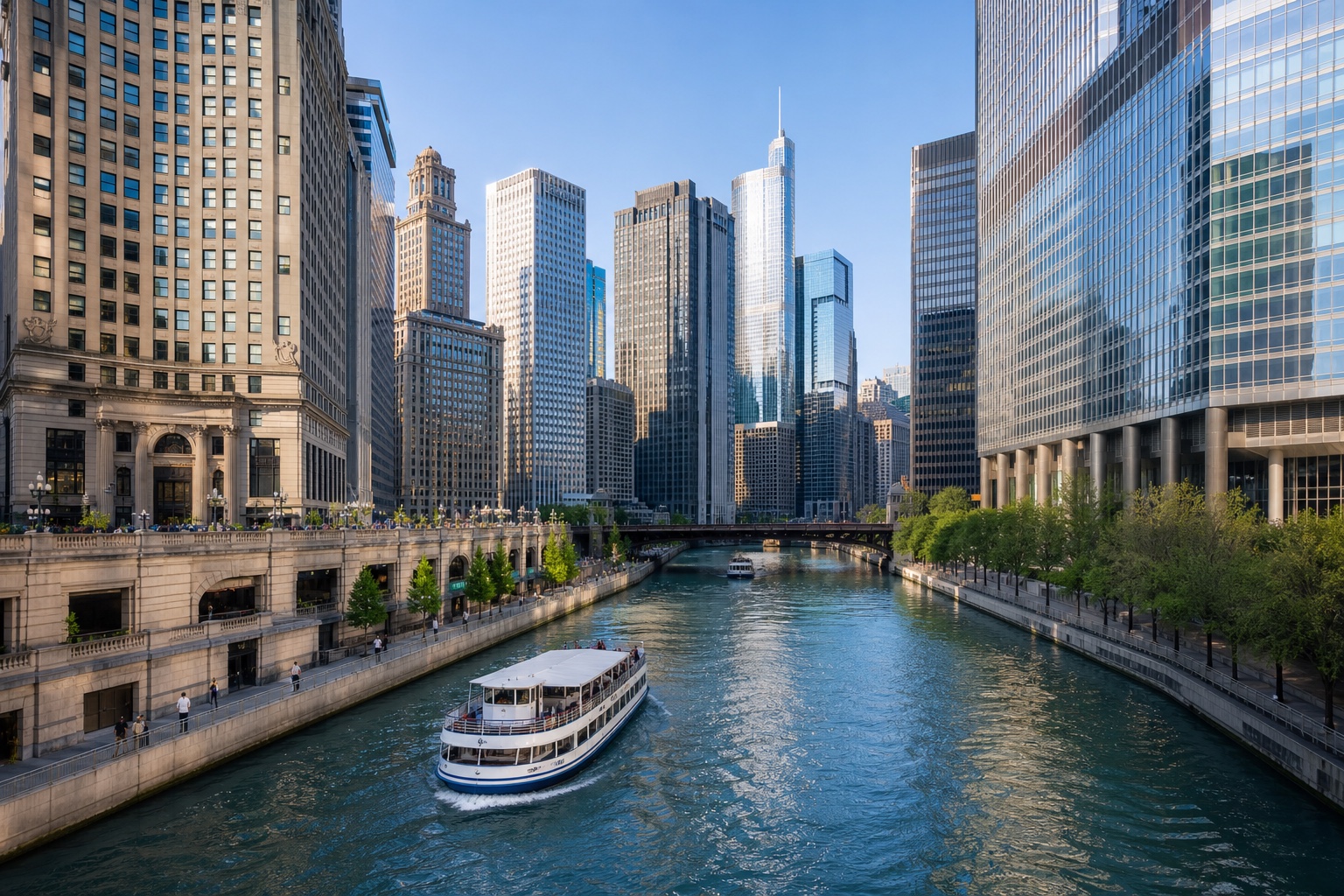
Chicago's center is unusually legible once the river and Lake Michigan become the organizing lines. Begin in the Loop with Millennium Park and one major museum, then use the Riverwalk or an architecture cruise to understand how the city grew upward. A second day can move toward the lakefront or museum campus, while another should leave downtown for a neighborhood, a ballgame or a food route with a reason beyond sampling famous dishes.
Let architecture explain the city
An architecture river cruise is more than a skyline photograph; it gives the street plan, building eras and engineering decisions a coherent story. Pair it with a limited walk through the Loop rather than stacking several observation decks. The Art Institute can fill most of a day for an interested visitor, so choose galleries and protect time instead of placing it between outdoor stops.
The lakefront changes the scale. Navy Pier, the museum campus, beaches and northern parkland sit along the same water but do not form one quick route. Weather can alter boat plans, visibility and walking comfort, particularly near the lake. Keep one indoor option available without forcing every museum into the schedule.
Go beyond a downtown food checklist
Deep dish, Italian beef and the Chicago-style hot dog are recognizable starts, not the whole food city. Pilsen, Chinatown, the West Loop, Logan Square and many other neighborhoods have distinct histories and require purposeful travel. Choose one area that fits the day's interests and eat there, rather than making separate journeys for one highly ranked counter.
Use the three-day Chicago trip to organize the river and lakefront. Start with the first-timer collection, then plan your Chicago trip around one architectural, cultural or neighborhood anchor each day.