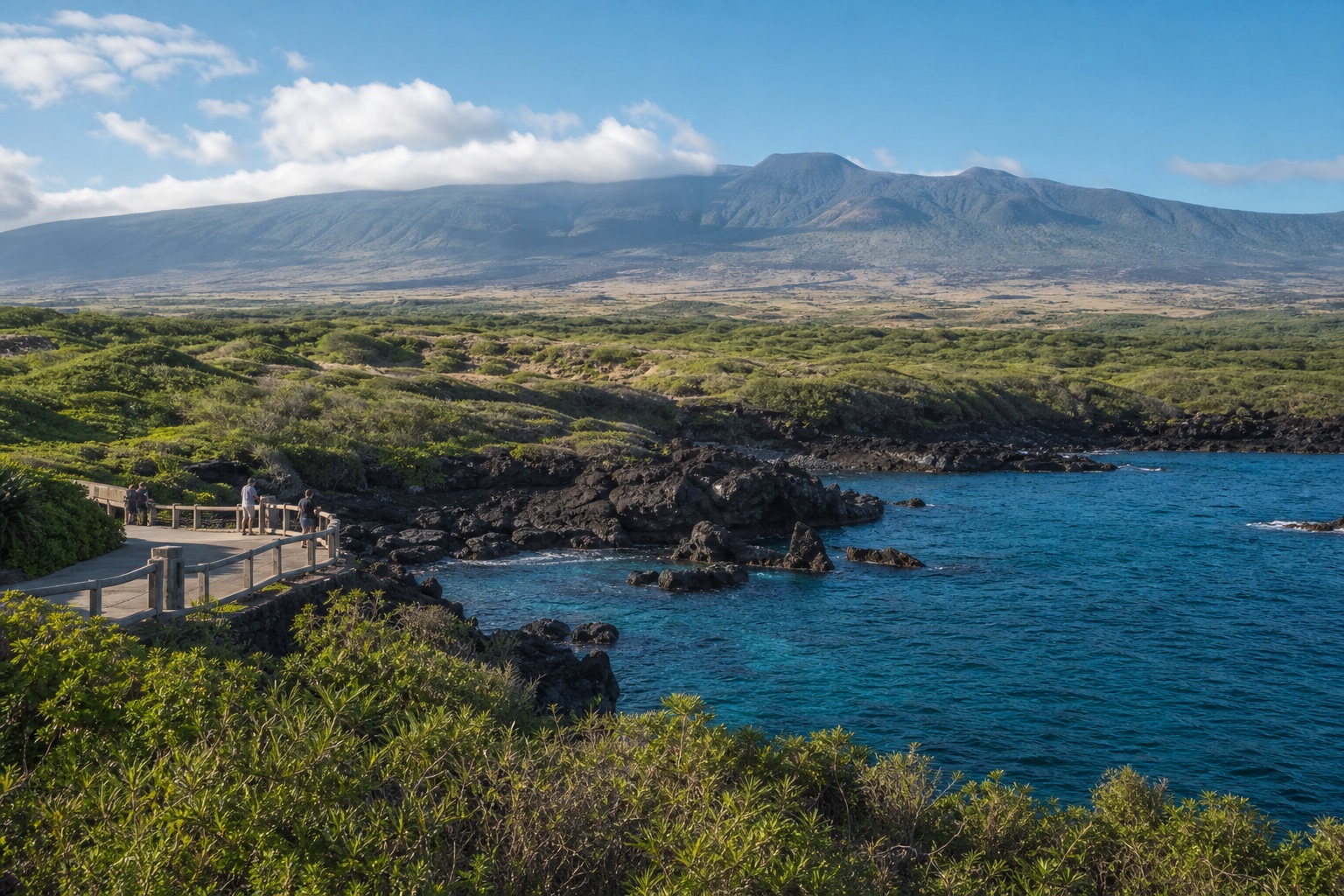
Maui's headline landscapes lie in different directions and on very different clocks. Haleakalā, the road to Hāna and the main beach regions should be planned as separate days. Begin with where you will stay, because crossing the island repeatedly can turn a short visit into hours of driving.
Give Hāna a full decision
The Hāna coast is a narrow, active road through communities and changing weather, not a collection of roadside props. Decide whether a long self-drive or a local guided trip fits your group, begin with a safe driver plan and avoid trespassing at unofficial stops. Pull over only where legal, let local traffic pass and respect resident requests and closures. The return requires as much attention as the outward journey.
Haleakalā is another substantial outing involving altitude, cold, sun and a long descent. Access systems and hours can change; check official park information rather than assuming sunrise is automatically available. Daylight visits can be equally revealing and may fit the rest of the trip more naturally.
Let the ocean set the beach day
Choose a beach region near the day's route and assess conditions after arrival. Surf, wind and currents differ across the island. Use reputable operators for snorkeling or boat trips, keep distance from wildlife and avoid standing on coral. Current community guidance should override an old itinerary, especially where recovery or infrastructure needs affect access.
The three-day Maui trip provides a realistic division. Use the first-timer essentials, then plan your Maui trip around current access, resident guidance and the island's actual distances.