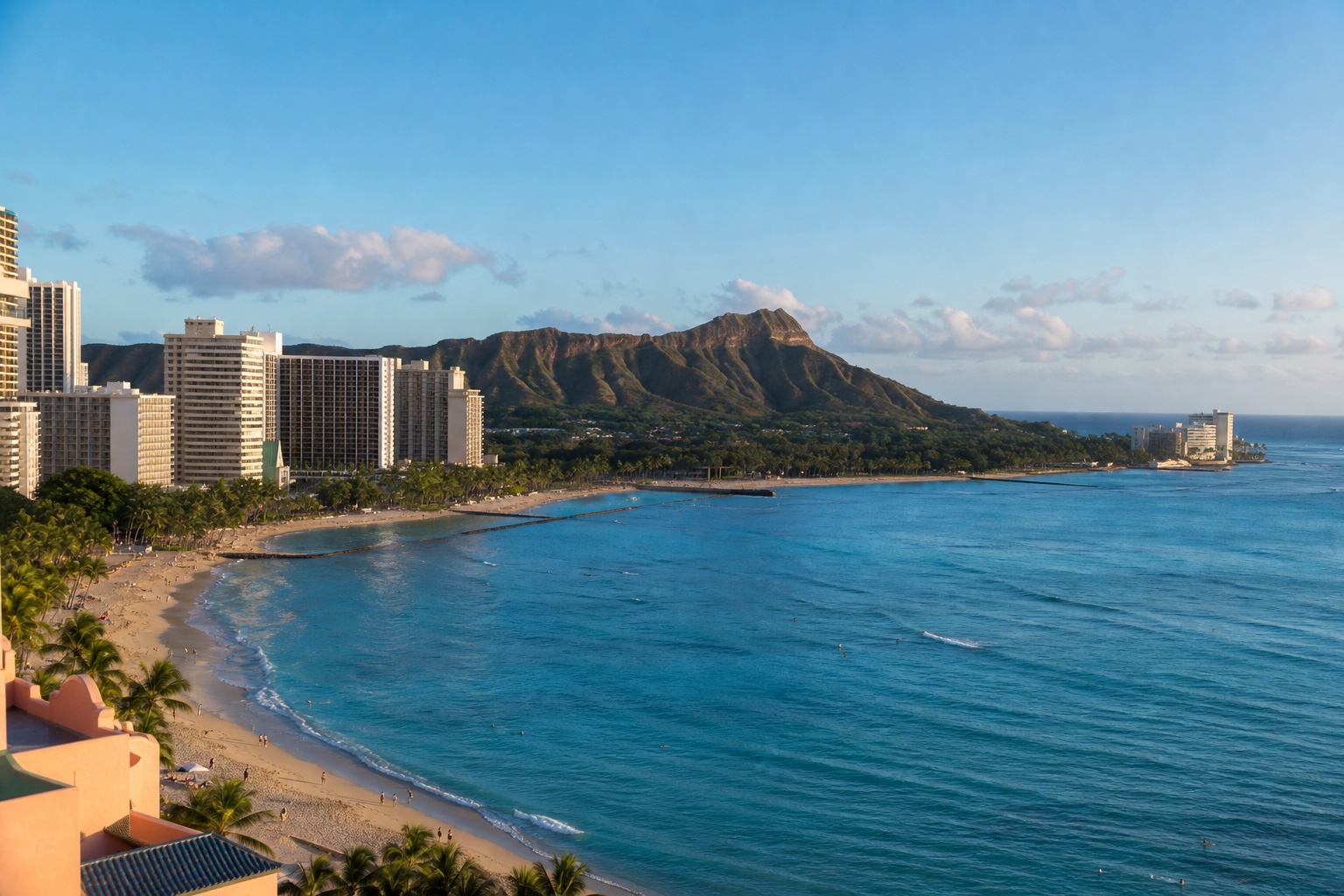
Honolulu is both Hawaiʻi's capital and the urban center of Oʻahu, not simply the hotels facing Waikīkī. A strong first trip gives the beachfront one relaxed day, uses another for history and cultural institutions, and chooses one deliberate island outing instead of circling Oʻahu through a string of hurried stops.
Look beyond the resort corridor
Waikīkī works well on foot and transit, with the beach, public spaces and Lēʻahi forming a coherent area. Hiking access, parking and operating rules can change, so verify current official information before setting an early start. Ocean conditions also vary by day and shoreline; use guarded beaches where available, follow posted warnings and do not assume calm-looking water is safe.
Downtown Honolulu and nearby cultural sites provide essential context for the Hawaiian Kingdom, state history, migration and the modern city. Pearl Harbor is a separate visit with security and reservation considerations. Approach its memorials as places of remembrance rather than another quick attraction.
Treat Oʻahu as a lived-in island
The North Shore and windward coast deserve more than a drive-by loop. Traffic, surf, weather and limited parking can reshape the day, while residential areas are not overflow spaces for visitors. Support locally owned businesses, respect closures and private property, and learn Native Hawaiian place names and history without turning cultural practices into entertainment props.
Use the three-day Honolulu itinerary for structure and the first-timer collection for priorities. Then plan your Honolulu trip around the city and island rather than only their most familiar images.