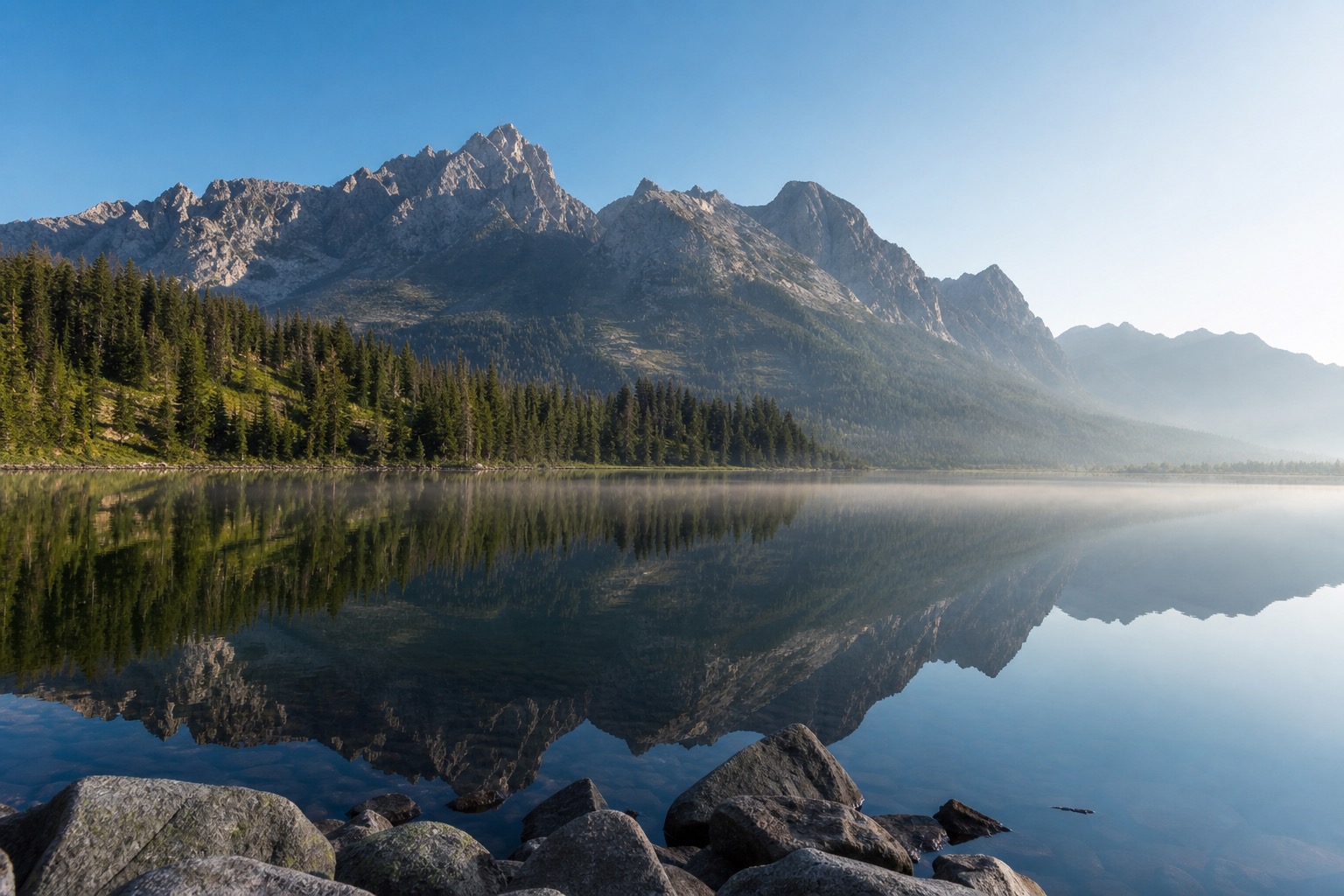
A useful Grand Teton plan begins with priorities, distances and an honest reading of the day. The central choice is how to use the park's north-south geography to connect lakes, historic districts and wildlife corridors without constant backtracking. Once that is clear, the route can absorb weather, energy and local changes without losing its purpose.
Plan Grand Teton by area and travel time
Build one day around Jenny Lake and nearby trails, another around Mormon Row and the Snake River viewpoints, and choose a northern extension only when it fits the base.
The Grand Teton in Three Days: Jenny Lake, Mormon Row & the Snake River offers a workable route to compare against. Adapt it to the group's stamina and interests; the aim is a legible day, not maximum attraction count.
Road work, boat operations and wildlife traffic affect timing. Check National Park Service conditions and avoid relying on a tight Yellowstone connection. Recheck official operating information near the travel date; a sound route still needs current hours, access and transportation details.
Understand what makes Grand Teton worth the trip
Dawn light and quiet lakeshore time can matter more than collecting overlooks. Include Indigenous history and conservation context alongside settler-era structures.
Carry bear spray where recommended, know how to use it and maintain wildlife distance.
A flexible backup is part of the plan, not evidence that the first choice was weak. Compare options in Grand Teton First-Timer Essentials: Jenny Lake, Mormon Row & the River, then build a Grand Teton trip that reflects the group's real interests and limits.