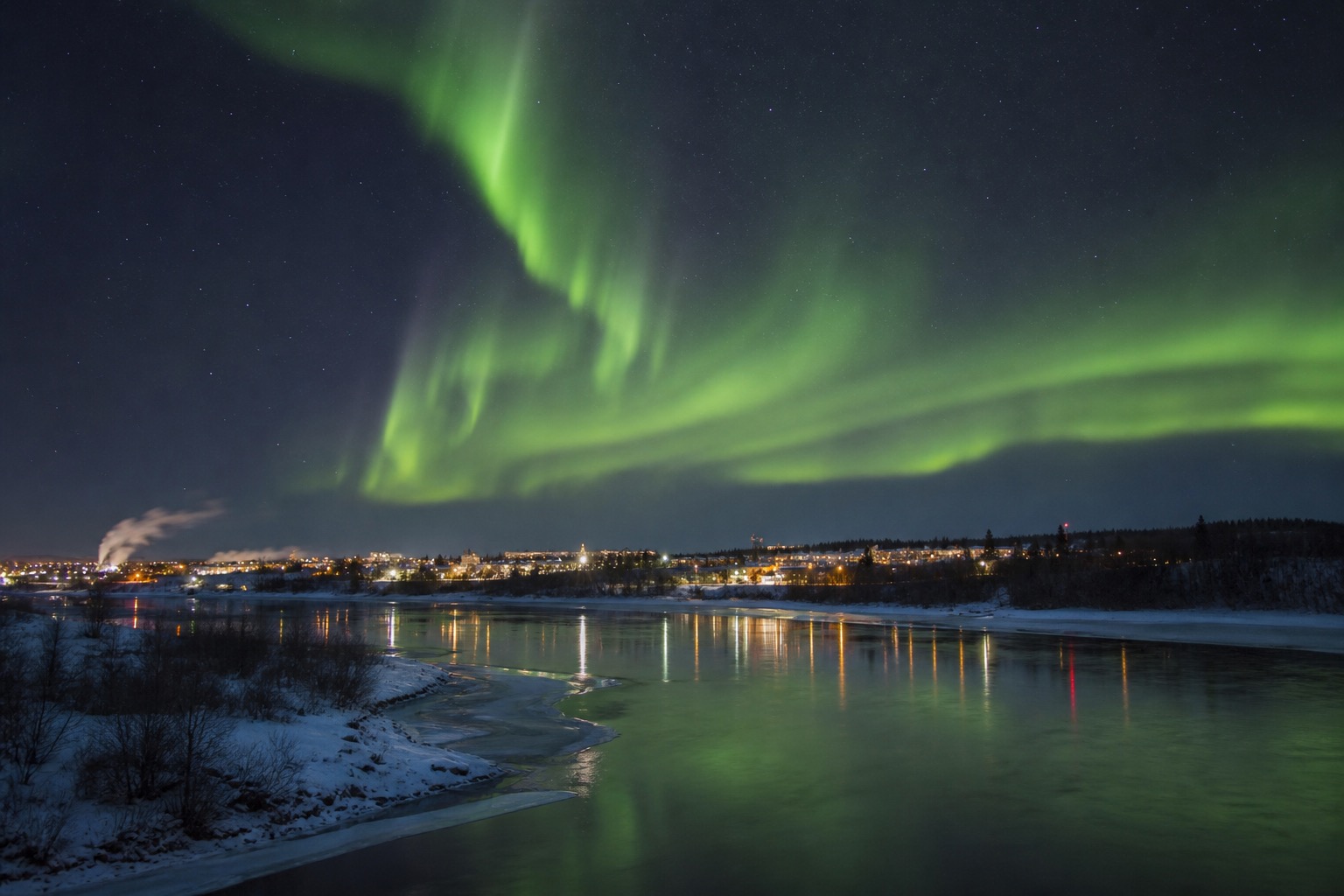
Treat Fairbanks as a place to experience, not a checklist to finish. A grounded first plan should match the trip to the season, whether the goal is aurora darkness, midnight sun, Interior history or hot-spring country. With that structure in place, optional stops can move without sacrificing the character of the trip.
Plan Fairbanks by area and travel time
Keep the museum, river and city history as one cluster. Reserve a separate outing for Chena Hot Springs or another Interior landscape, and treat aurora watching as a late flexible window rather than a guaranteed attraction.
Compare this structure with Fairbanks in Three Days: The Aurora, the Hot Springs & the Arctic. Its value is in the sequence and pacing; travelers should still make room for slower meals, changing conditions and the places that matter most to them.
Daylight, temperature and road conditions vary dramatically. Check current forecasts, aurora information and operating schedules before fixing sleep and driving plans. Before locking the calendar, verify current hours, closures and transport with the responsible local authority rather than relying on an older itinerary.
Understand what makes Fairbanks worth the trip
Athabascan culture, gold-rush history and modern Interior life deserve time alongside sky phenomena. A strong winter plan includes warm indoor recovery and conservative travel.
Extreme cold can become dangerous quickly; use appropriate gear and do not rely on a rental car as a warming shelter.
The itinerary should bend without becoming generic, so keep a nearby alternative with the same purpose. Review Fairbanks First-Timer Essentials: The Aurora, the Springs & the History and shape a Fairbanks trip around what the group would genuinely regret missing.