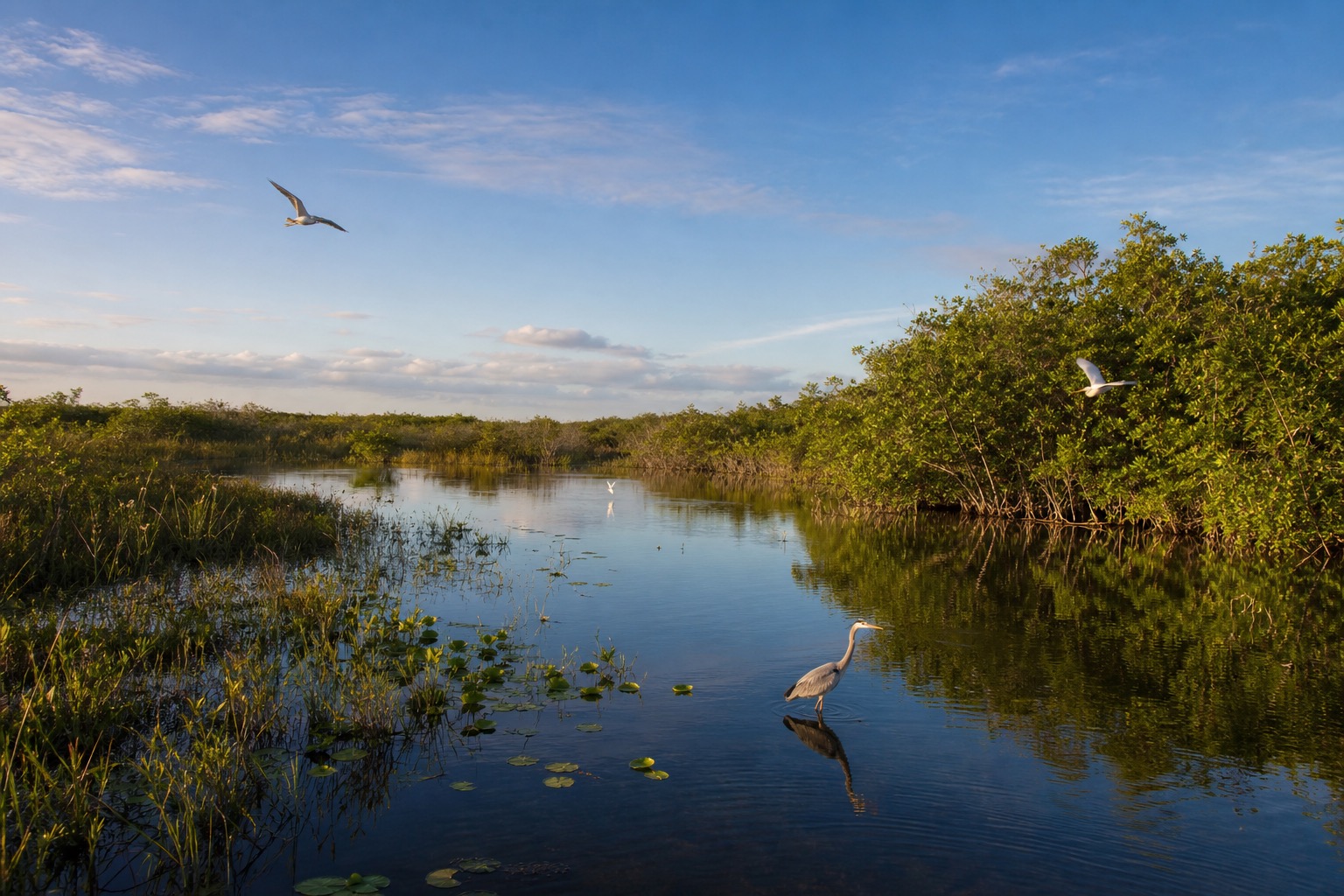
The strongest reason to visit Everglades is not the length of its attraction list, but the way its landscapes, neighborhoods and stories fit together. Build the trip to choose among Shark Valley, the Homestead corridor and Flamingo rather than describing the wetland as one roadside attraction. That gives every day a clear center rather than a sequence of disconnected stops.
Plan Everglades by area and travel time
Use Shark Valley as one wildlife and cycling or tram experience. Give Royal Palm, the Anhinga Trail and the road toward Flamingo a separate day, and choose water access with a responsible operator.
Start route research with Everglades in Three Days: Shark Valley, the Anhinga Trail & Flamingo, but treat it as an editorial reference rather than an obligation. Preserve its useful clusters and cut stops that create needless backtracking.
Water levels, heat, storms and seasonal services change the experience. Verify National Park Service and weather guidance before departure. Use official local sources for a final conditions check, particularly where weather, reservations or seasonal service affect access.
Understand what makes Everglades worth the trip
The Everglades is a living water system tied to Miccosukee and Seminole communities, agriculture and South Florida's future. Wildlife viewing should support understanding, not pursuit.
Keep distance from alligators and crocodiles, use insect and sun protection, and never feed wildlife.
Choose an alternate that preserves the day's theme when weather or access changes. Everglades: Wildlife & the Wetlands provides useful candidates before you plan an Everglades trip at a realistic pace.