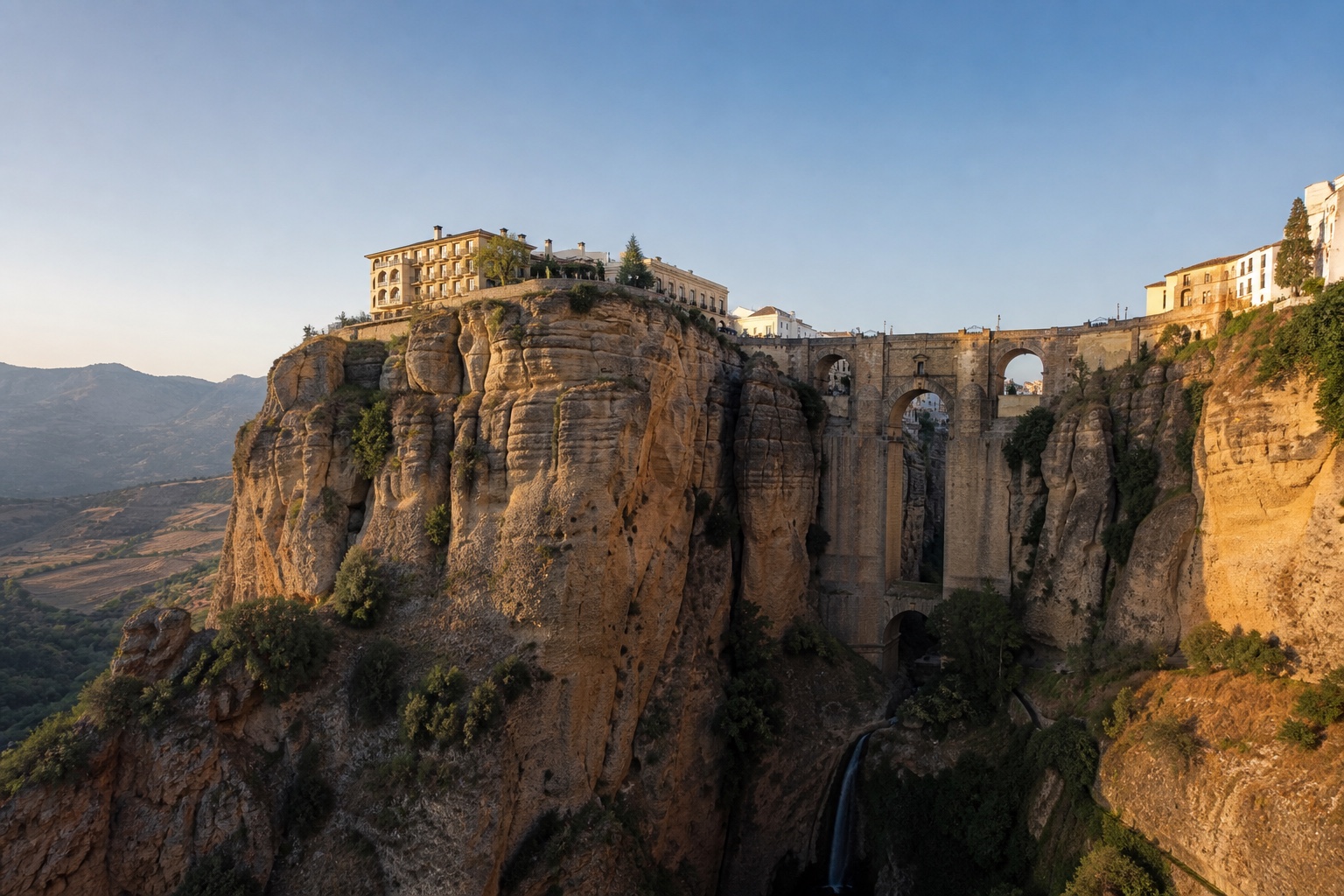
Puente Nuevo is Ronda's organizing landmark, not the entire town. View it from the upper promenades, then cross into the old city for historic streets, churches, walls and the older bridges. The gorge creates steep elevation changes, so a route that descends once and climbs once is more realistic than chasing every viewpoint from both sides.
Treat gorge paths as trails
Lower viewpoints can involve uneven, exposed or temporarily restricted paths. Check official access and weather, wear suitable footwear, carry water and turn back when conditions do not suit the group. Heat and rain materially affect the route. A beautiful photograph does not establish that a path is open or safe.
Ronda's bullring is historically important and ethically complicated. Visitors can learn about its architecture and cultural role without assuming attendance at an event. Present the tradition with context and let travelers make informed choices. Wine visits likewise require reservations and sober transport. An overnight makes early or late gorge views easier and reduces dependence on constrained day-trip schedules.
Do not collect white villages
Setenil, Grazalema and Zahara de la Sierra lie on different roads and deserve more than parking photographs. Choose one or build a proper driving day. Public transport is limited, while mountain roads take longer than simple distance suggests. Protect the onward connection to Málaga, Seville or Granada.
The Andalusia itinerary places Ronda in a workable circuit. Use the first-timer collection, then plan your Ronda trip around one safe gorge route, contextual history and one deliberate extension.