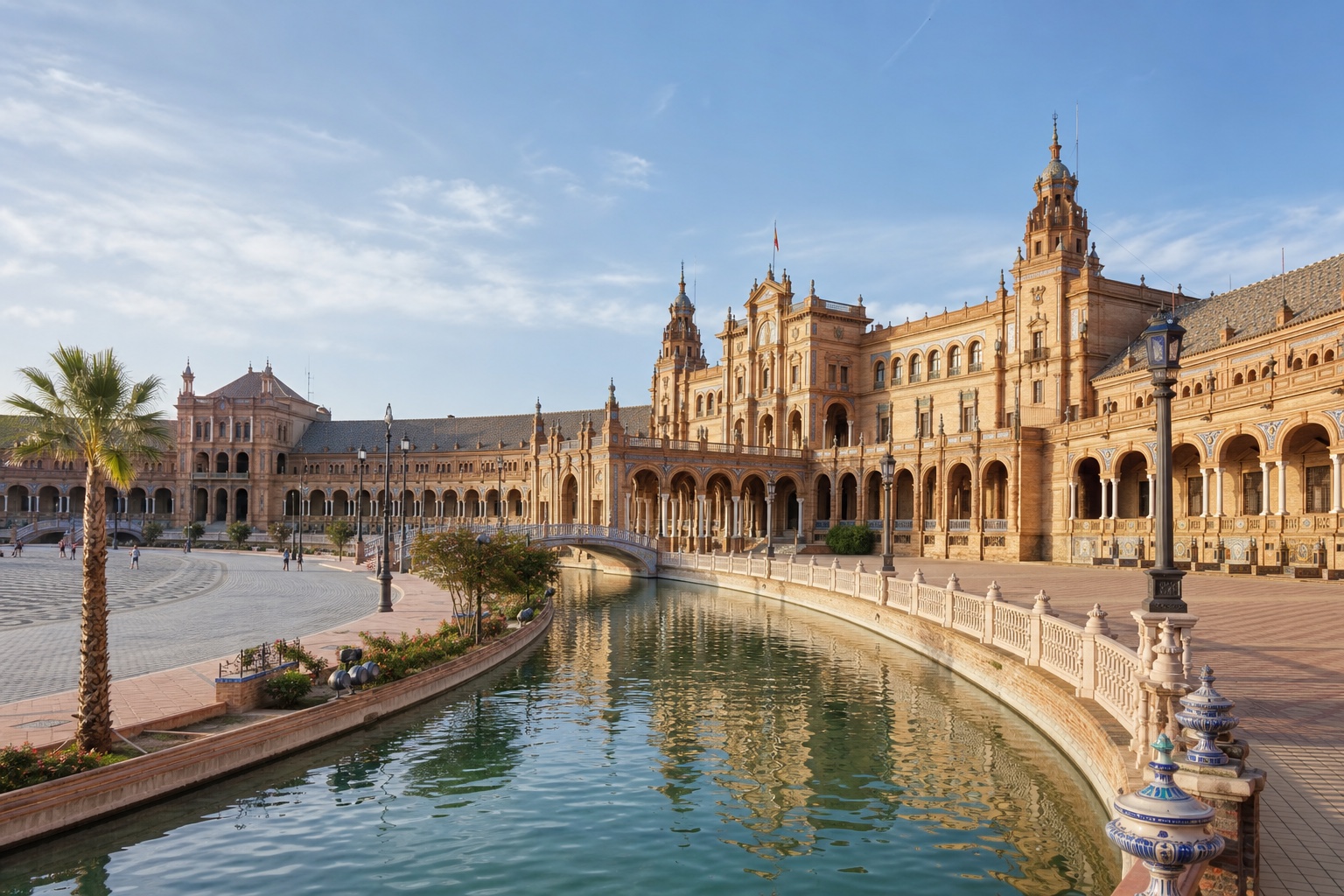
Seville's main landmarks appear close together, yet temperature and timed entry matter more than distance. The Alcázar, cathedral, Santa Cruz, river, and Plaza de España can form an elegant first visit when the day has a strong morning, a real afternoon pause, and an evening neighborhood. Without that rhythm, the same route becomes a long queue followed by a hot walk and a rushed performance.
Give the fixed monuments separate attention
Reserve the Real Alcázar and cathedral in advance, but avoid placing both major interiors back to back unless time is genuinely tight. The Alcázar's palaces and gardens can absorb a morning. The cathedral and Giralda work well on another day with Santa Cruz and a slower lunch. Plaza de España and María Luisa Park form one southern block; they are not useful filler between two central reservations.
Crossing to Triana changes the tone of the city. Its market, ceramic history, riverfront, and neighborhood bars deserve more than a single sunset photograph. A flamenco evening also needs a decision: choose a focused performance, confirm the start time, and eat before or after rather than assuming every venue includes the experience you want.
Use the heat as a planning constraint
In warm months, put the most exposed walking early or late and leave the middle of the afternoon for lunch, a hotel reset, or a cool interior. Córdoba is fast by train but still occupies a full useful day once station time and the Mezquita are included. Keep that day focused instead of returning to Seville with another list of evening obligations.
The Seville and Córdoba itinerary shows one compact structure. Use the Seville first-timer collection, then plan your Seville trip around the season, monument times, and evening you want.