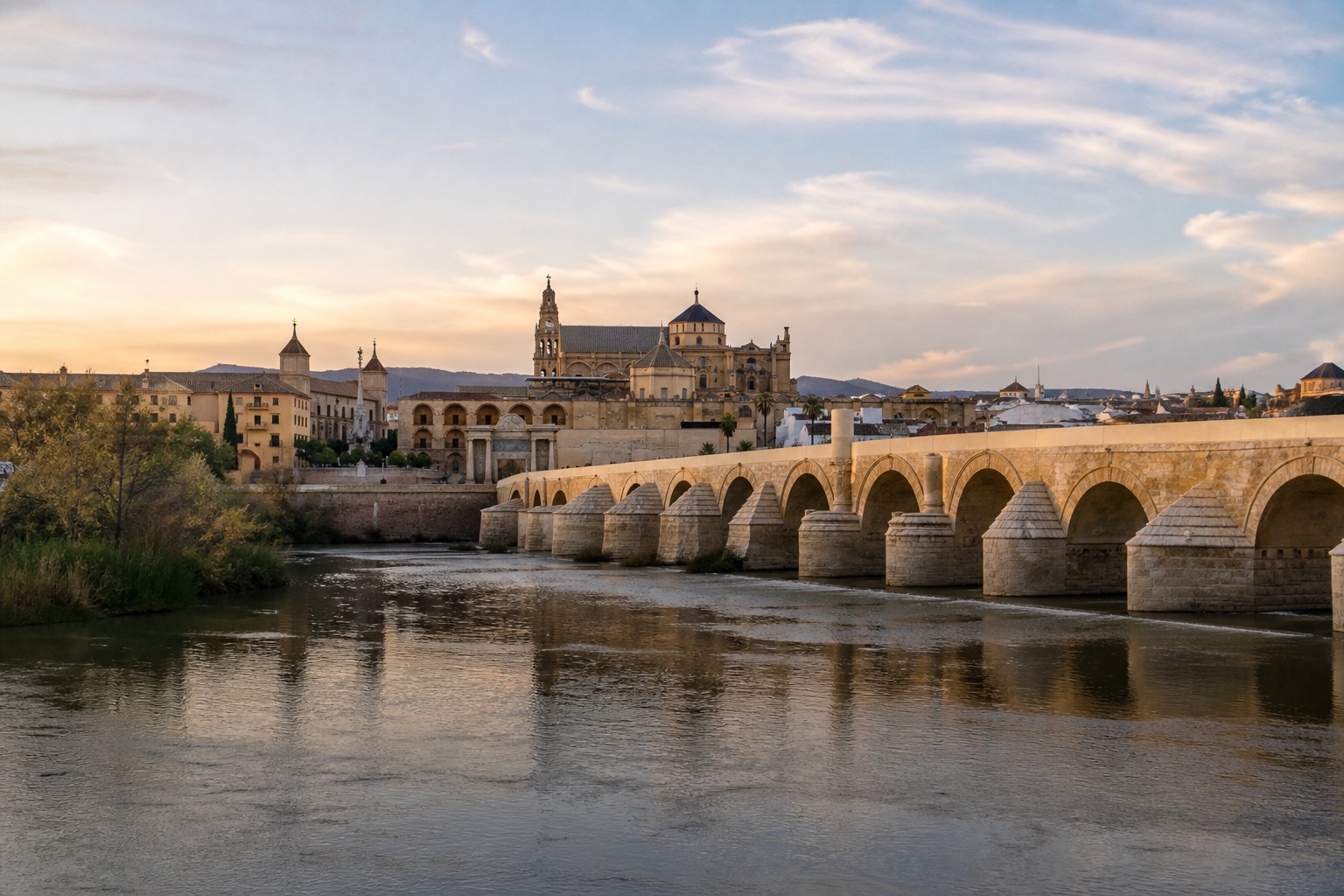
Córdoba can work as a rail stop, but an overnight reveals cooler evening and morning hours. Let the Mezquita-Catedral anchor the day. It is an active cathedral within a monument shaped by multiple periods; verify ticketing, worship access and visitor rules, then allow time to read the building rather than treating its arches as a photo set.
Keep the historic center coherent
The Judería, synagogue, Alcázar area, Roman bridge and river belong to one broad walking zone. Religious and heritage sites require respectful conduct, while narrow streets become crowded at peak times. Choose a few courtyards with lawful visitor access. Private patios are homes, and the celebrated festival calendar does not make every doorway public year-round.
Summer heat is a core constraint. Move major outdoor walking to early and late hours, protect shade and hydration, and avoid copying spring schedules into July. Salmorejo and tavern meals fit naturally into a long midday reset. Spring patio events increase demand, so lodging and controlled entries may need advance planning. Confirm dates rather than assuming the floral displays are permanent.
Place Córdoba correctly in Andalusia
Fast trains connect Seville and Madrid, while Granada and Ronda require different planning. A same-day visit should not carry the Mezquita, Medina Azahara and every patio. Medina Azahara is a separate archaeological excursion with transport and exposed terrain; add it only with sufficient time.
The Andalusia itinerary shows the regional sequence. Start with the first-timer collection, then plan your Córdoba trip around one major monument, cool-hour walking and honest onward transport.