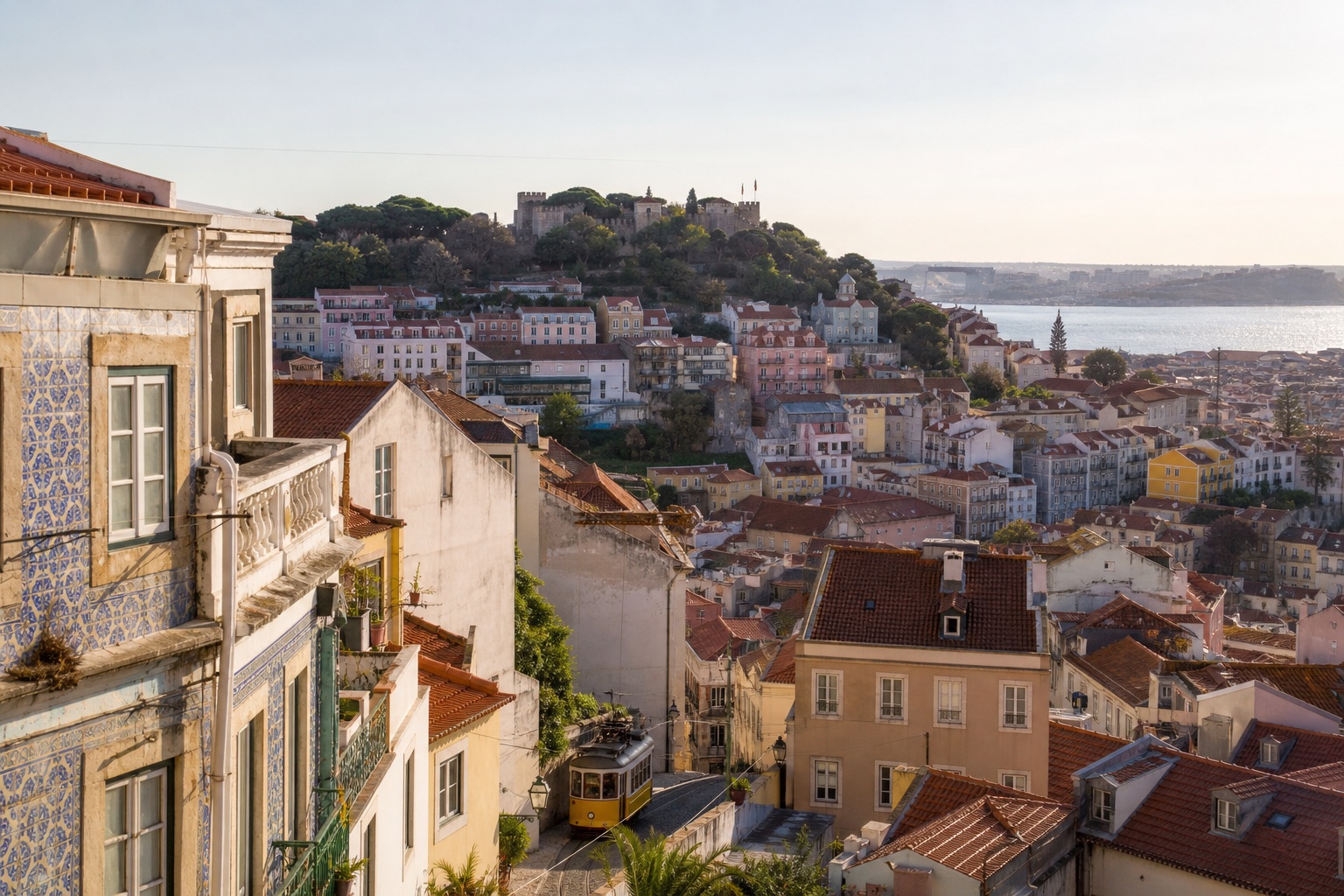
Lisbon looks compact on a map, but the hills turn a short line into stairs, viewpoints, and frequent reasons to stop. A satisfying itinerary works with that terrain. It groups high and low neighborhoods deliberately, avoids repeated climbs, and treats the riverfront and a long meal as part of the experience rather than empty time.
Plan downhill when you can
The castle and Alfama can anchor one elevated day. Reaching the upper area first and wandering gradually toward the river is usually more pleasant than bouncing between hilltop pins. Baixa, Chiado, and nearby viewpoints form another flexible central cluster, while Belem belongs to its own half or full day west of the center.
Historic trams are useful pieces of the city's identity, but the most famous routes can also involve queues and crowding. Build a plan that still works if walking, the metro, a bus, or a taxi becomes the better connection. Comfortable footwear and a realistic estimate of vertical distance matter more than adding another viewpoint.
Give the city a slower middle
Markets, seafood restaurants, small tascas, pastry stops, and an evening of music can carry as much weight as a monument. Leave time to sit. On a warm day, a long lunch or shaded museum creates a natural pause between the morning climb and an evening neighborhood.
If Sintra or another day trip is essential, give it a true day and protect the remaining Lisbon neighborhoods from being compressed into arrival and departure fragments.
The Lisbon long-weekend itinerary offers one grounded rhythm for tiles, viewpoints, food, and fado. Use the Lisbon essentials collection to choose the first anchors, then plan your Lisbon trip around mobility, weather, day trips, and how much unplanned wandering you want.