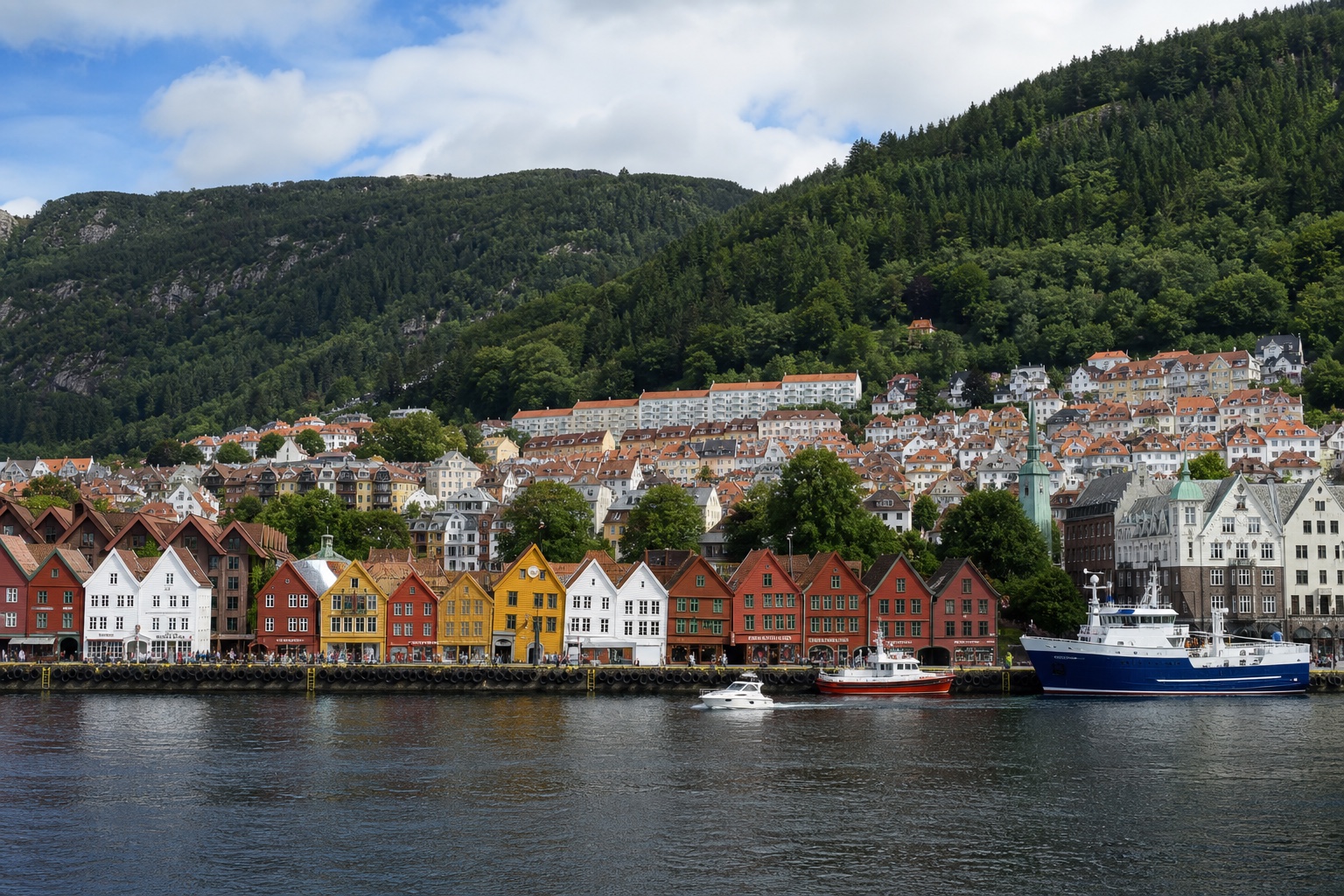
Bergen's rain is not a reason to avoid the city, but it is a reason to design flexibly. Bryggen, the harbor, historic museums, central streets, and hillside neighborhoods form a compact core. Keep one indoor sequence ready and move the viewpoint or longer walk to the clearest available window.
Give Bryggen historical depth
The timber wharf is more than a colorful façade. Museums and preserved interiors explain Hanseatic trade, fire, reconstruction, and working life. Move carefully through narrow passages and respect active businesses. The fish market can be a useful food stop, but compare options and prices rather than assuming every stall represents everyday local dining.
Fløibanen provides convenient elevation, while Ulriken and longer walks demand more time, equipment, and weather judgment. Choose one mountain experience and check current operation. Wet surfaces, wind, and visibility matter even when the city below seems mild.
Accommodation on steep streets can add charm and daily effort. Check walking access from the station or airport-bus stop before booking, especially with bags.
Build the fjord day from transport
Fjord cruises, rail links, and combined routes differ in season, duration, and land connections. A famous itinerary may involve several precise transfers. Confirm each segment for the actual date and retain enough margin that one delay does not unravel the day. Bergen deserves time before or after that excursion, not merely a late arrival and early departure.
The Oslo to Bergen itinerary shows a slower Norwegian route. Start with the first-timer collection, then plan your Bergen trip around one protected city day, the best weather window, and verified fjord connections.