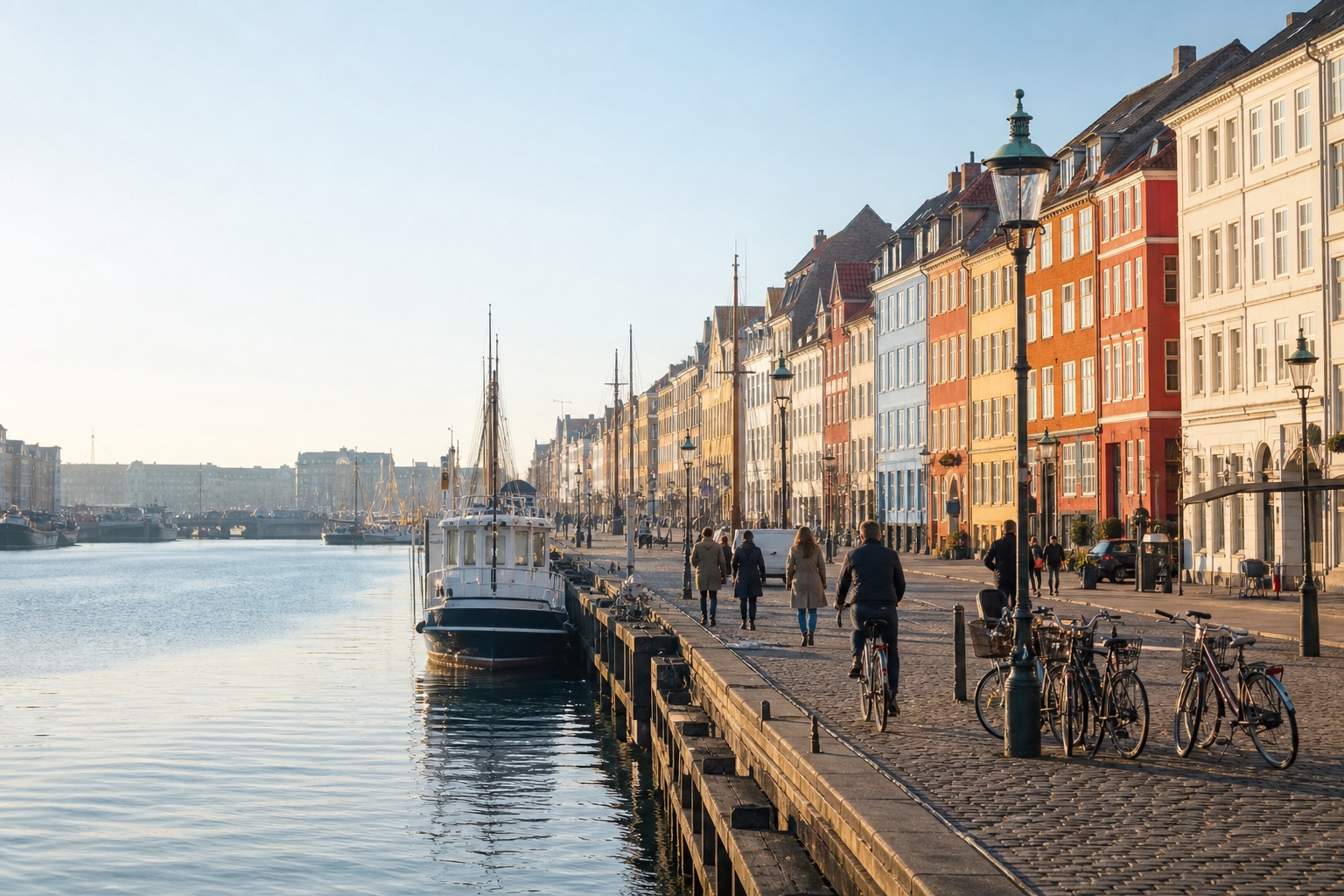
Copenhagen is compact enough to improvise and expensive enough to reward a little planning. Reservations, museum days, weather, and the distance between neighborhood meals often matter more than the number of landmarks. Build each day around one part of the harbor or one side of the center, then let the metro, harbor bus, or bicycle connect the longer gaps.
Treat movement as part of the plan
Cycling can make Copenhagen wonderfully legible, but visitors do not need to rent a bicycle to experience the city well. Dedicated lanes have their own rules and commuter pace. A metro-and-walking plan is often better for uncertain riders, while a harbor bus creates a useful north-south connection with a water-level view. Decide by confidence and weather rather than treating a bike as compulsory.
Nyhavn, Amalienborg, the old center, and the major design institutions can form a coherent first day. Christianshavn, the canals, and the eastern harbor belong together on another. Vesterbro, Nørrebro, and Østerbro each offer a distinct neighborhood evening; choose the one that matches the meal or atmosphere instead of crossing the city for every recommendation.
Reserve selectively and keep a weather version
Copenhagen's food reputation spans bakeries, smørrebrød, casual wine bars, food halls, and expensive tasting menus. Reserve only the meals that define the trip, then leave space for places discovered on the day. Harbor swimming is seasonal and conditions matter; it should always have a dry alternative. Louisiana Museum of Modern Art is an excellent train excursion, but it takes a meaningful portion of a short weekend and should replace city time rather than sit on top of it.
The three-day Copenhagen itinerary offers one workable shape. Use the first-timer collection, then plan your Copenhagen trip with one outdoor route and one weather-safe alternative for each day.