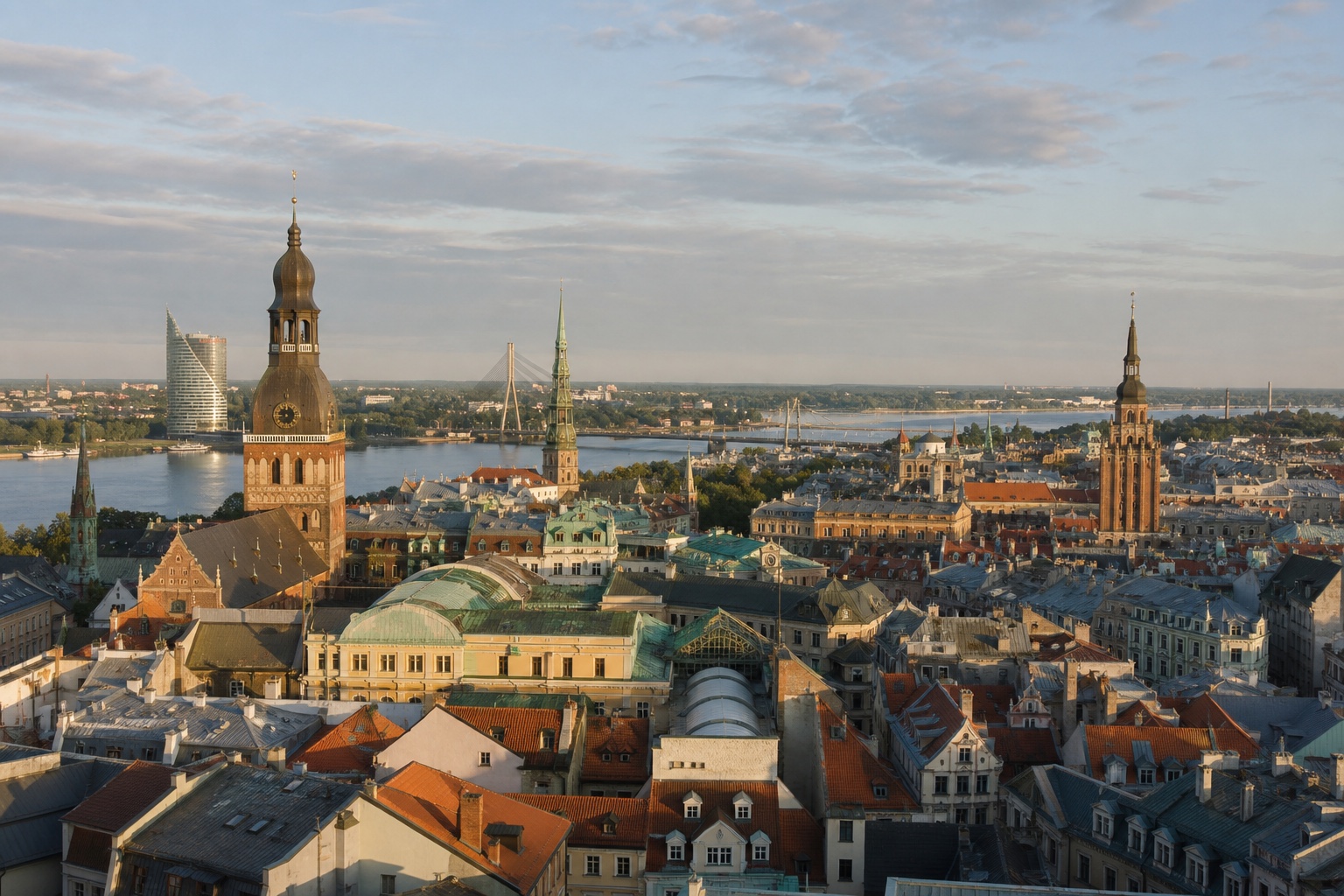
Riga needs more than an old-town loop. Start among the cathedral, guild houses, medieval lanes and river edge, but keep enough time for the city's later histories. Churches, museums and viewpoints have seasonal schedules, and some old streets are difficult on icy or wet days. Select a few interiors rather than building the route around every tower.
Separate Art Nouveau from the old town
The concentrated Art Nouveau district around Alberta iela belongs in its own walking block with the relevant museum or interpretation. Look beyond decorated facades to the expansion of the city that produced them. Riga's wooden-house districts and contemporary neighborhoods add another layer, but should not be attached to the same hour simply because the center appears compact on a map.
The Central Market occupies former airship hangars beside active transit. Visit when stalls are operating, ask before photographing vendors closely, and use the market for an actual meal or provisions. Latvian rye bread, smoked fish and seasonal produce explain more than a forced checklist of specialties. Allow time to compare the market's separate halls instead of treating it as one room.
Let Baltic daylight set the pace
Winter has short daylight and potentially difficult surfaces; summer evenings are long and central streets busier. Build separate seasonal schedules. Buses to Tallinn and Vilnius are useful, but station time and the multi-hour journey make transfer days modest sightseeing days, not three-capital races.
The Baltic capitals itinerary shows the wider sequence. Use the first-timer collection, then plan your Riga trip around one historic cluster, one architecture walk and the actual season.