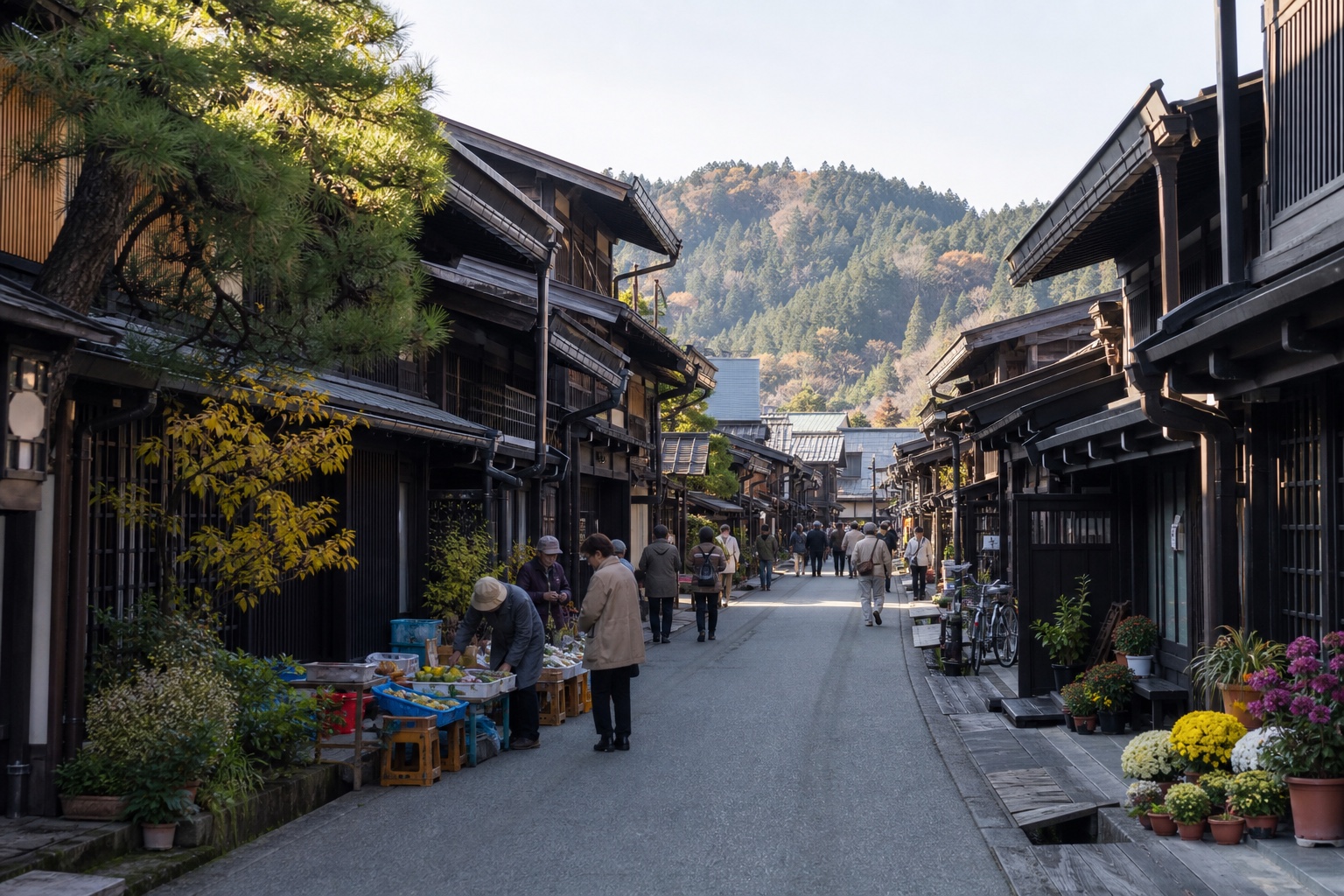
Takayama works best when it is more than a bus connection between Kanazawa, Shirakawa-gō, and Matsumoto. An overnight protects the morning markets and the preserved streets before peak visiting hours, while regional food, sake, craft, and the Takayama Jinya give the city substance beyond its timber facades.
Use the early and late hours
Visit a morning market first, then move into Sanmachi and the Jinya as they open. The center is compact, so avoid assigning a separate long block to every street. Instead, combine architecture with a specific brewery, workshop, museum, or meal. An evening walk adds a quieter city without making claims that popular lanes will be empty.
Local dishes deserve context and dietary awareness. Hida beef is prominent but not the only reason to eat here, and reservations or opening hours may matter in a small city after dark.
Choose the next region before booking buses
Shirakawa-gō, Kanazawa, Matsumoto, and the mountain areas point along different routes. Popular buses can require reservations and seasonal conditions affect mountain travel. Decide whether Takayama is a base, a two-night stop, or part of a one-way crossing, then arrange luggage and onward transport accordingly.
The Japan Alps route shows one coherent crossing. Use the first-timer collection, then plan your Takayama trip around confirmed buses and enough time to experience the city itself.
Season changes the planning texture. Festival dates require very early bookings, while winter makes daylight and road status more consequential. Check morning market calendars and museum closures rather than assuming a generic daily rhythm.