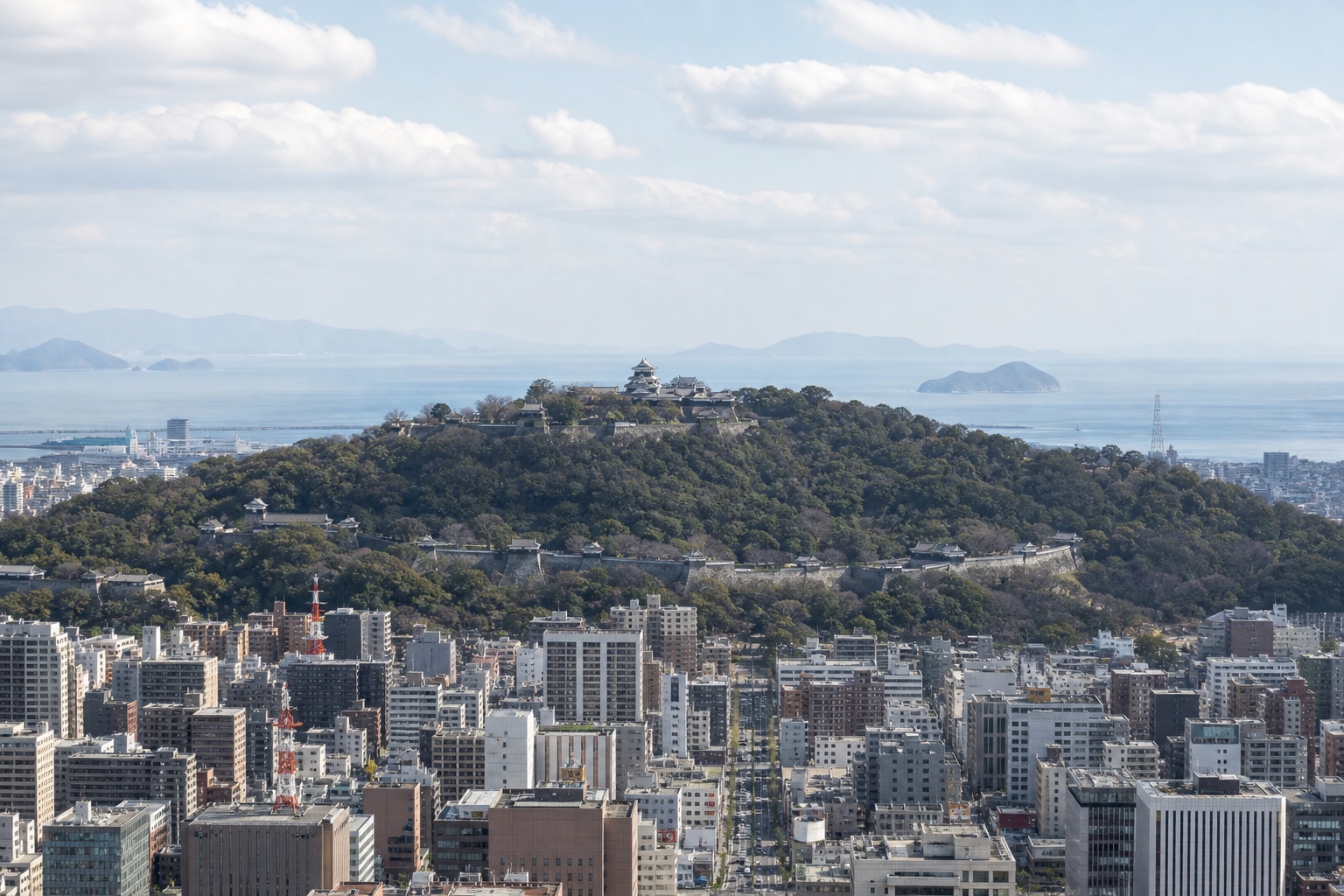
Matsuyama has two strong centers: the castle hill above the commercial city and the Dōgo Onsen district farther east. Treating them as adjacent creates a rushed day. Start at Matsuyama Castle when visibility and energy are best, then descend for lunch before moving to Dōgo by tram. An overnight allows the bathhouse area to become an evening neighborhood rather than a final photograph before departure.
Give the original keep time
Matsuyama Castle is one of Japan's surviving original keeps and part of a larger hilltop defensive complex. The ropeway, chairlift and walking routes have different accessibility and weather implications. Check current operation, allow for steep timber stairs inside, and leave time for gates, walls and the view across the city toward the Seto Inland Sea.
Dōgo Onsen Honkan is a working bathing institution with changing renovation, room and reservation arrangements. Verify the official access model for your date, learn basic bathing etiquette, and do not assume every historic room or bath is included. Nearby Ishite-ji connects the city to Shikoku's pilgrimage tradition; visit respectfully rather than treating pilgrims as costume.
Choose the next Shikoku direction
Kōchi, Uwajima, Takamatsu and the islands require very different rail, bus, ferry or driving plans. Matsuyama also has an airport and ferry links, so the best onward route depends on the larger trip. Do not force all four original keeps into a fast circuit without accepting long transfer days.
The wider Shikoku itinerary shows the island context. Compare the four original keeps, then plan your Matsuyama trip around the castle, an honest onsen visit, and the transport you will actually use.