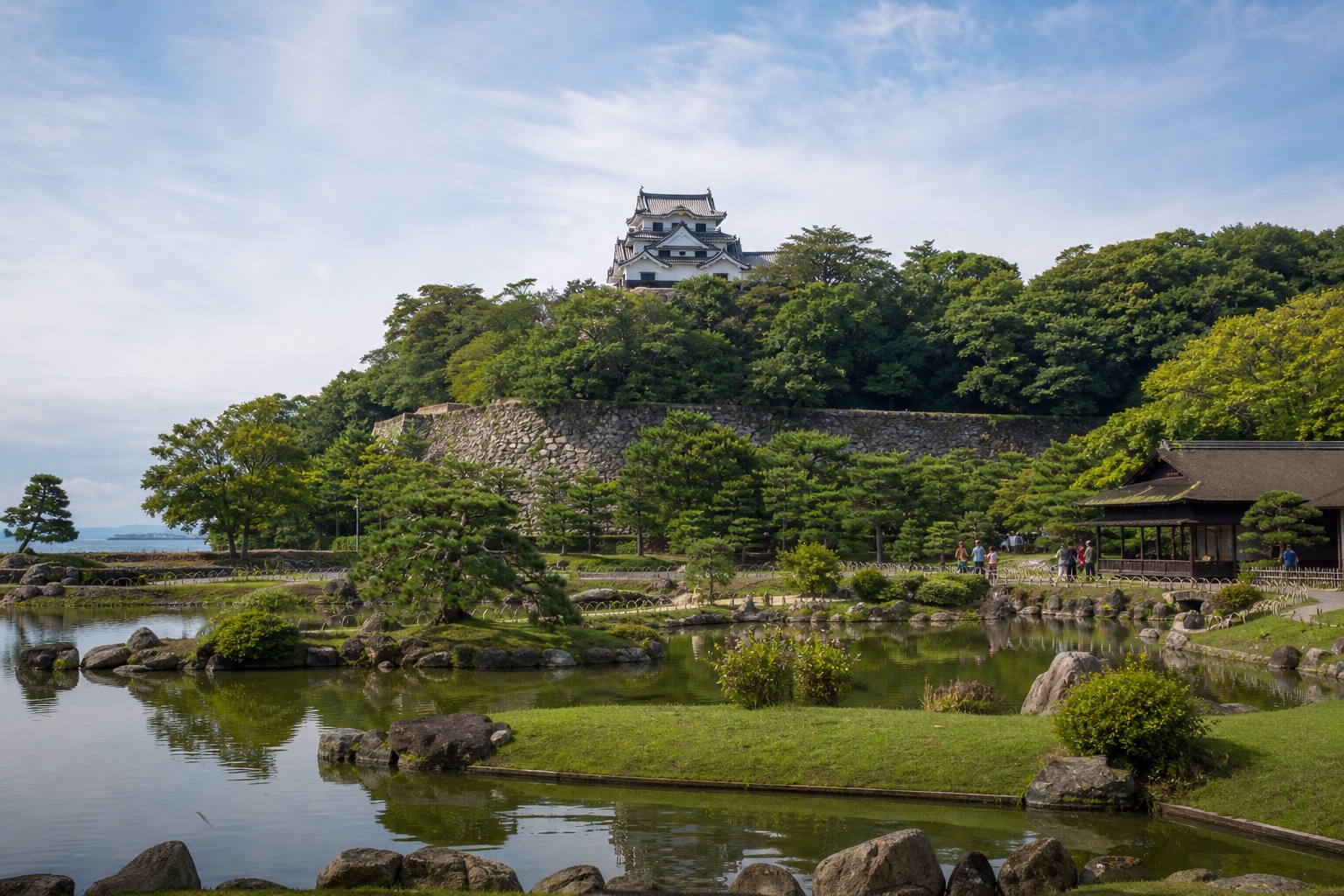
Hikone is often reduced to a rail pause between Nagoya and Kyoto, but its castle, garden and Lake Biwa setting make a coherent slow day. The keep is smaller than Himeji's and more complete than a quick size comparison suggests. Arrive early, store luggage if necessary, and treat the climb through gates and surviving structures as part of the monument rather than a path to one photograph.
Pair the keep with its landscape
Hikone Castle is an original keep and National Treasure with steep interior stairs. Seasonal crowds and limited circulation can slow access. Genkyū-en sits below the castle and frames the keep across a pond; it is not a decorative extra to skip after spending too long in a queue. Check combined access and current opening arrangements, then give both sites a measured half-day.
The Hikone Castle Museum and Ii family history add political context. Choose the museum if that history matters rather than automatically fitting every ticketed site. Yumekyōbashi Castle Road is a modern, stylized commercial street, useful for lunch and shopping but not an intact Edo neighborhood. Labeling that honestly does not make it less pleasant.
Decide between a stop and an overnight
A day stop works when luggage and onward rail are controlled. An overnight adds Lake Biwa light, a quiet garden or castle approach, and time for local Ōmi beef without racing for Kyoto. Confirm the correct station and train pattern; Hikone is straightforward, but it is not on every fastest Shinkansen service.
The five-castles rail route places Hikone in context. Use the National Treasure collection, then plan your Hikone trip around the keep, garden, lake, and a realistic onward train.