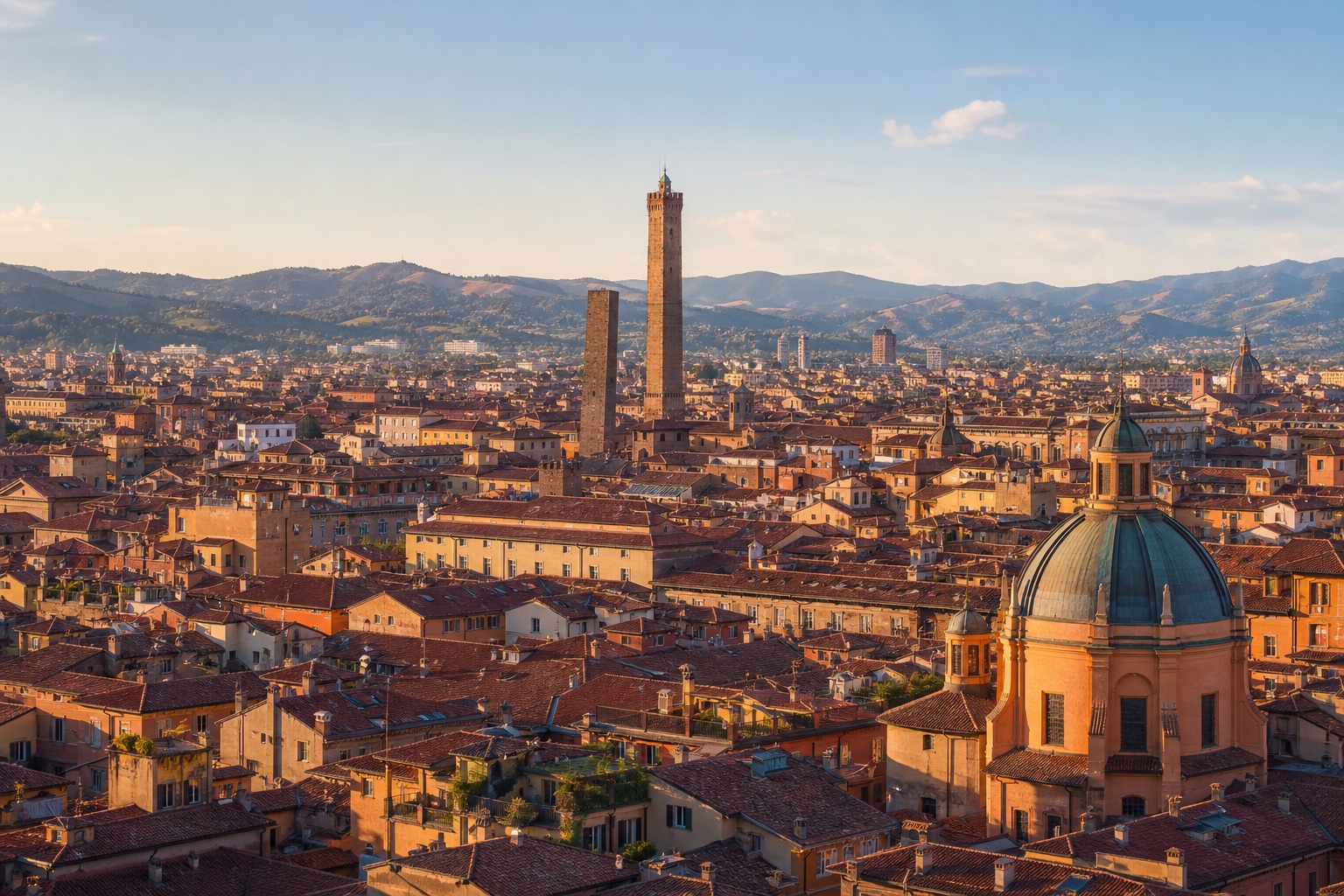
Bologna's porticoes make walking coherent in sun and rain. Begin at Piazza Maggiore, San Petronio and the civic buildings, then move through the Quadrilatero and university streets. Church access changes around services, and tower access may be restricted or timed. Confirm the current viewpoint rather than planning around an old assumption.
Read the covered city
The porticoes are infrastructure, social space and architectural history, not only a UNESCO label. Follow a purposeful route through central examples, then consider the long climb toward San Luca if weather, mobility and time support it. Public transport can shorten the approach; walking the entire arcade is an activity in itself.
Bologna's university history appears in courtyards, museums and everyday street life. Choose one institution for context. The city also rewards evenings after day visitors leave, so an overnight is more useful than adding another remote museum to a rail stop. Major fairs can tighten accommodation sharply, so check the events calendar before assuming ordinary prices.
Eat without performing a checklist
Tortellini, tagliatelle al ragù, mortadella and market produce belong to meals, not a race. Reserve one important restaurant, use markets and bakeries for the rest, and understand that protected regional names matter. Modena, Parma, Ravenna and Florence are different day trips; choose based on transport and interest rather than proximity on a map.
The three-day Bologna itinerary offers a grounded sequence. Use the first-timer collection, then plan your Bologna trip around covered routes, one viewpoint, one institution and meals with breathing room.