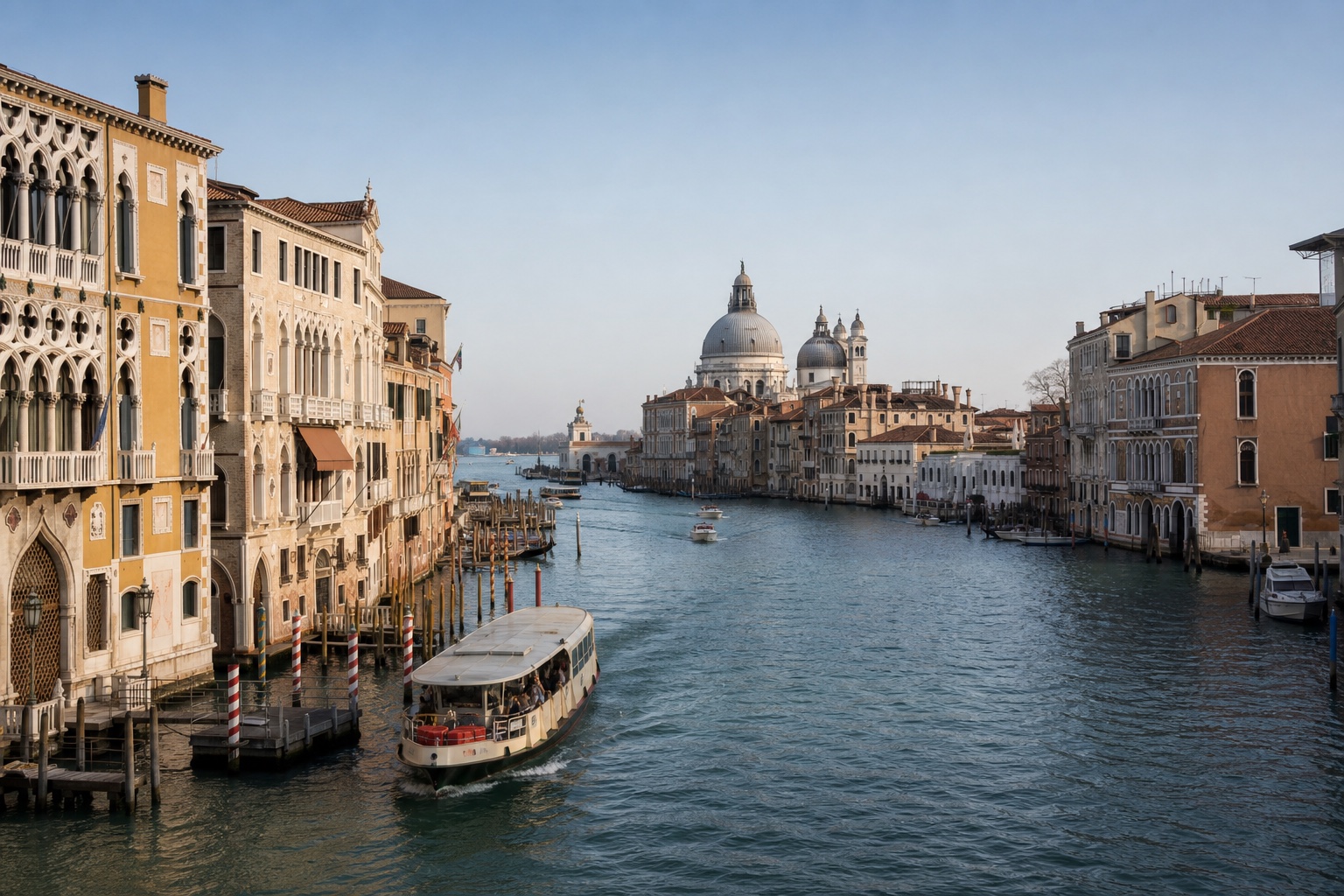
Venice becomes easier when the plan stops treating every bridge as a shortcut. Walking routes bend around canals, vaporetto journeys take time, and the busiest landmarks have their own reservation logic. Organize days by sestieri, then use the water bus for a purposeful connection rather than repeatedly crossing the city for isolated recommendations.
Reserve the anchors, leave room between them
San Marco, the Doge's Palace, and a major church or museum can fill a substantial day once entry, security, interiors, and meals are counted honestly. Reserve the few experiences that define the visit, but do not timetable every lane. Venice's value also lies in the walk between places, particularly in Cannaregio, Castello, and Dorsoduro after the most compressed routes begin to thin.
Choose accommodation with the arrival journey in mind. A beautiful address can still mean bridges and stairs with luggage. Check the current access fee or visitor-registration rules, vaporetto changes, and high-water conditions close to travel; these are operational facts, not permanent parts of an itinerary.
Treat the lagoon as a separate day
Murano, Burano, and Torcello require boat time and make different promises. Select one sequence rather than collecting islands. Weather and queues can alter that day substantially, and it should not sit beneath a full San Marco schedule. For a shorter stay, keep the lagoon optional until the city anchors are settled.
The three-day Venice itinerary offers a workable rhythm. Use the first-timer collection, then plan your Venice trip around confirmed entries, one neighborhood at a time, and enough unscheduled space to let the city remain legible.