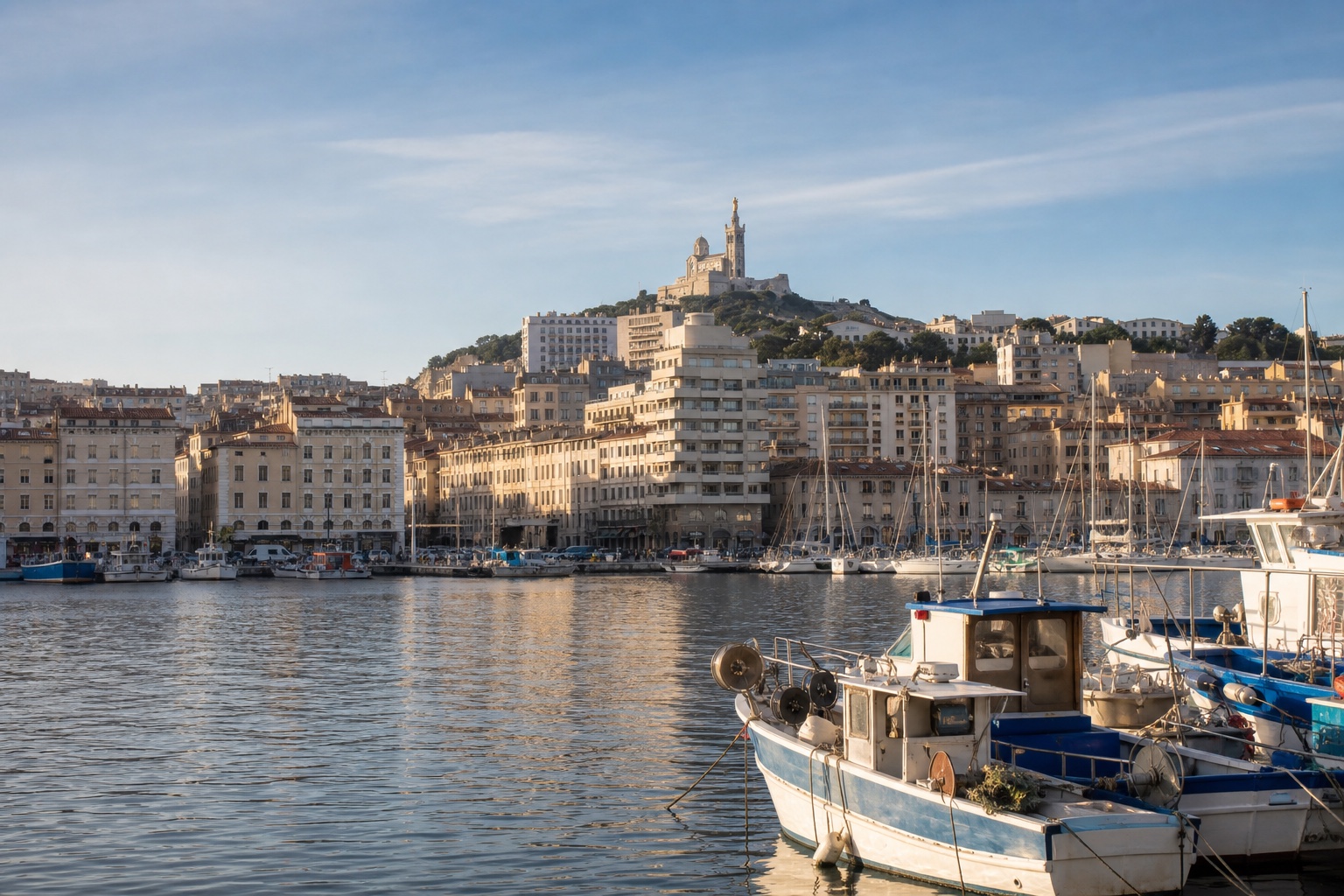
Marseille is a large working city, not a polished harbor set. Begin at the Vieux-Port, then connect Le Panier, MuCEM and Fort Saint-Jean as one waterfront cluster. Markets, migration and maritime history deserve context. Ask before photographing vendors closely and avoid describing diverse neighborhoods as exotic discoveries.
Use elevation and transit
Notre-Dame de la Garde provides orientation but sits high above the port. Use current public transport when the climb, heat or mobility makes sense. The Corniche and coastal neighborhoods form another geographic block; they should not be squeezed between every central museum. Bouillabaisse is a specific, often expensive preparation, so reserve and understand the offering rather than expecting it as casual soup everywhere.
Normal city awareness is appropriate around stations and busy streets. That does not justify flattening Marseille into warnings. Plan routes, protect belongings and engage with the city as an inhabited place. Allow extra transfer time between the main station, harbor, hills, and southern trailheads. Marseille's scale rewards fewer, better-connected stops.
Treat the Calanques as protected terrain
Fire risk, heat, wind and conservation rules can close or restrict access. Check the official status on the day, select a route matching fitness, carry water and never assume phone service or shade. Boat trips offer a different experience and also depend on sea conditions. Keep a complete urban alternative.
The three-day Marseille itinerary builds in that flexibility. Use the first-timer collection, then plan your Marseille trip around coherent neighborhoods and a Calanques day that can safely disappear.