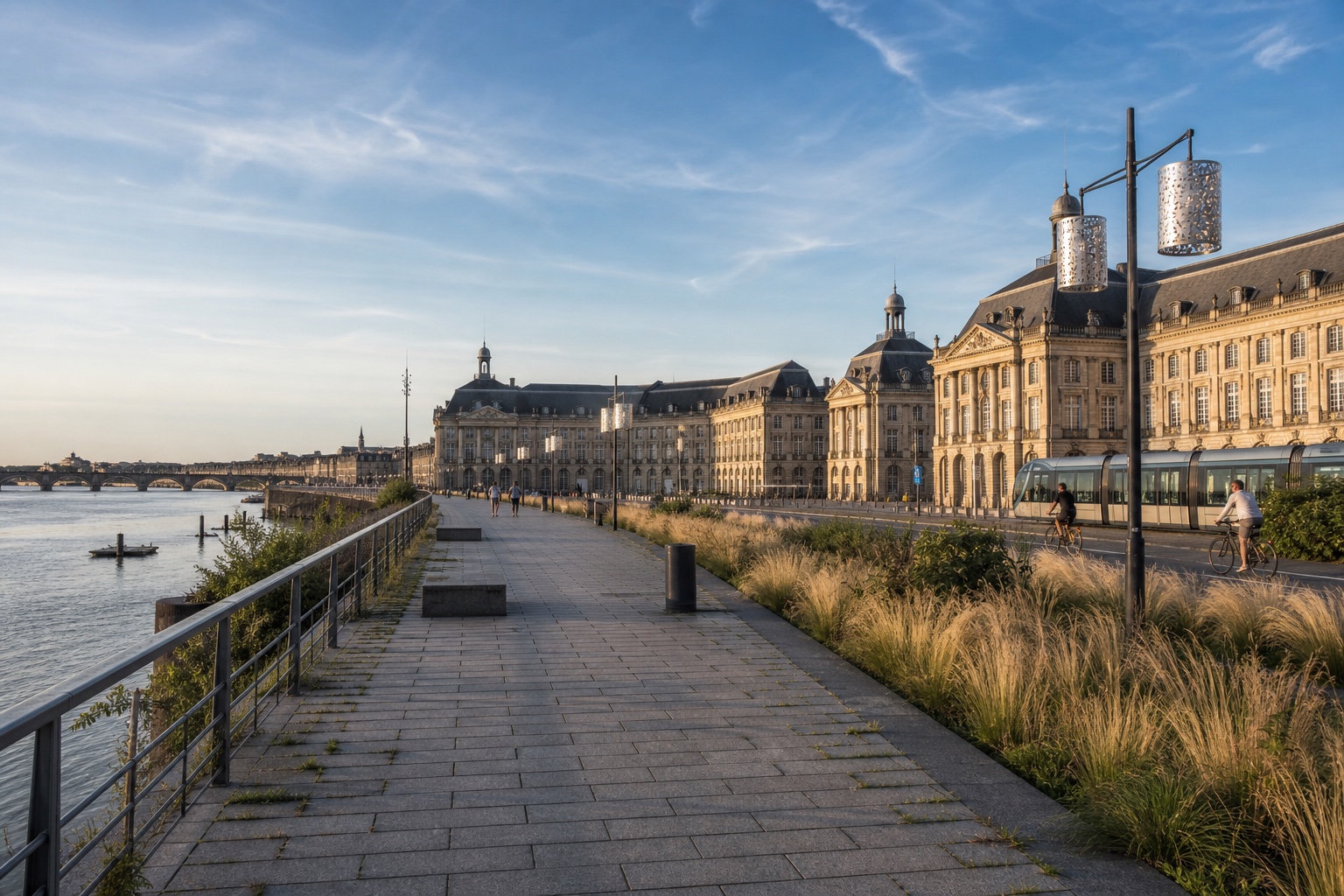
Bordeaux should not disappear behind its vineyards. The limestone center, Garonne riverfront, markets, public gardens, contemporary districts, and museums can fill two thoughtful days. Keep the historic core and river together, use the tram for longer connections, and let the city's evening light remain part of the experience instead of departing for wine country immediately after arrival.
Give the city its own itinerary
Walk the central squares, cathedral area, old gates, and quays as one continuous geography. The water mirror is seasonal and operational, so treat it as part of the setting rather than a guaranteed performance. Cité du Vin can require a substantial visit; decide whether its exhibitions and tasting perspective match the group before combining it with another distant museum.
Markets and restaurants make Bordeaux useful for travelers who do not drink. Ask about alcohol-free options and do not frame wine as mandatory participation. For those tasting, schedule transport that removes any question about driving.
Choose one wine landscape carefully
Saint-Émilion, the Médoc, Graves, and other appellations differ in geography, transport, appointment practices, and style. Some estates require reservations well ahead, and harvest or seasonal calendars affect access. Pick one coherent day based on interest rather than collecting famous names across opposite directions. A guided small-group trip, train-based visit, or private driver each solves a different planning problem.
Atlantic coast or Arcachon excursions are another full-day choice, not a quick addition after vineyard appointments. Weather and transport should decide whether they replace wine country or belong to a longer regional stay.
The three-day Bordeaux itinerary protects both city and region. Start with the first-timer collection, then plan your Bordeaux trip around one city sequence and one responsibly arranged regional day.