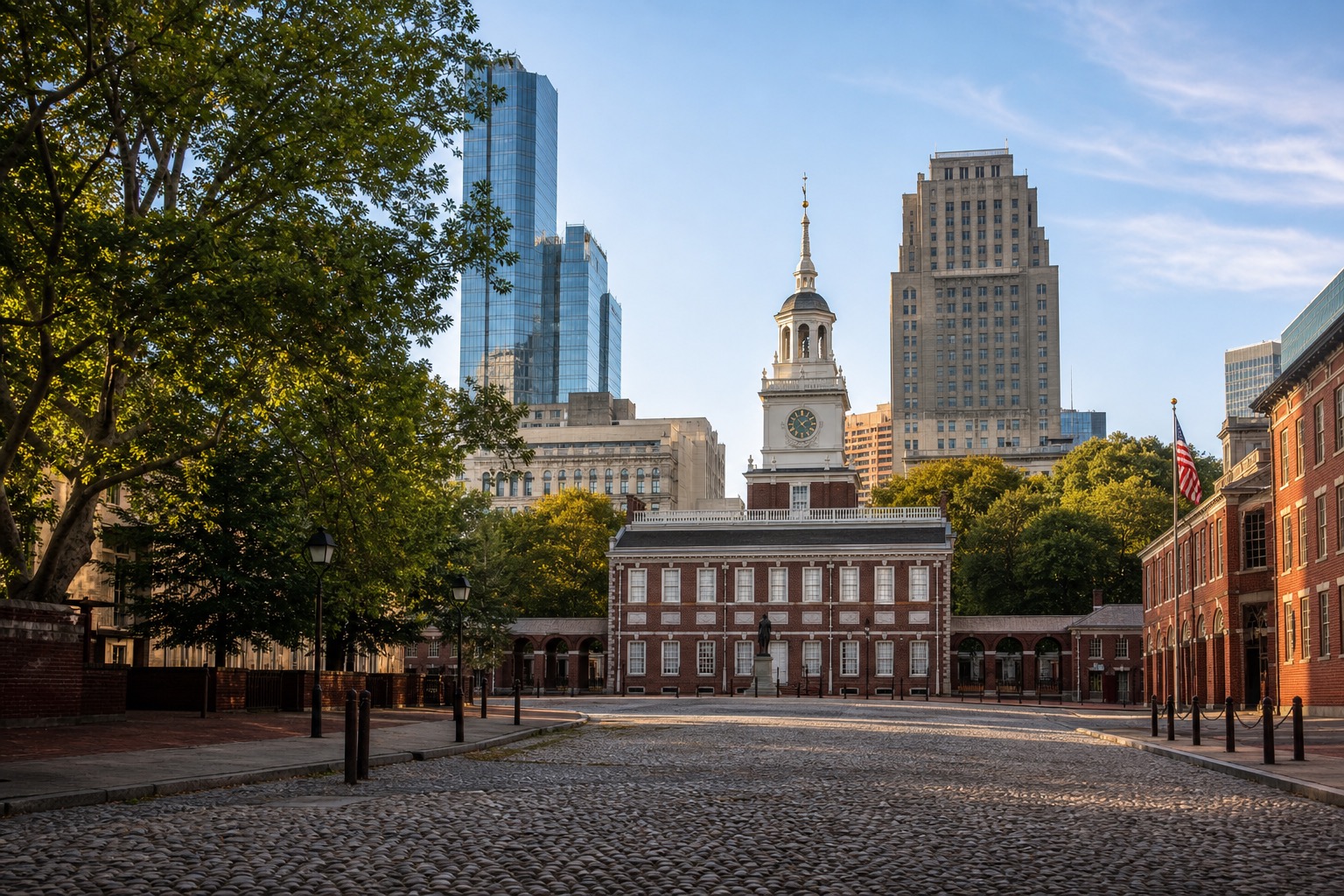
Philadelphia rewards travelers who edit as carefully as they research. The practical starting point is to separate the compact founding-era core from the museum district and neighborhood food so history does not become a hurried checklist. It creates a route with a point of view while preserving enough margin for the destination to feel lived in rather than processed.
Plan Philadelphia by area and travel time
Keep Independence Hall, the Liberty Bell area and Old City together. Give the Parkway museums another block, and explore Reading Terminal Market or a neighborhood as part of the route rather than a detached meal stop.
Use Philadelphia in Three Days: The Founding, the Museums & the Food to see one credible way through the destination. Keep the geographic logic, then adjust the density so transfers do not consume the attention the trip was meant to create.
Central Philadelphia is highly walkable and transit can connect the main clusters. Reserve timed historic access where required and avoid crossing town repeatedly. The route should remain provisional until current local or park notices confirm that its key access assumptions still hold.
Understand what makes Philadelphia worth the trip
Founding history should include conflict, slavery, Indigenous displacement and later struggles over citizenship. Art, markets, murals and contemporary neighborhoods keep the city from becoming a preserved prologue.
Use ordinary city awareness and verify current security and entry procedures for major historic sites.
Build in one alternative that protects the experience rather than merely filling time. The shortlist in Philadelphia First-Timer Essentials: Independence, the Art & the Cheesesteak can support a personal Philadelphia plan grounded in pace, interests and practical constraints.