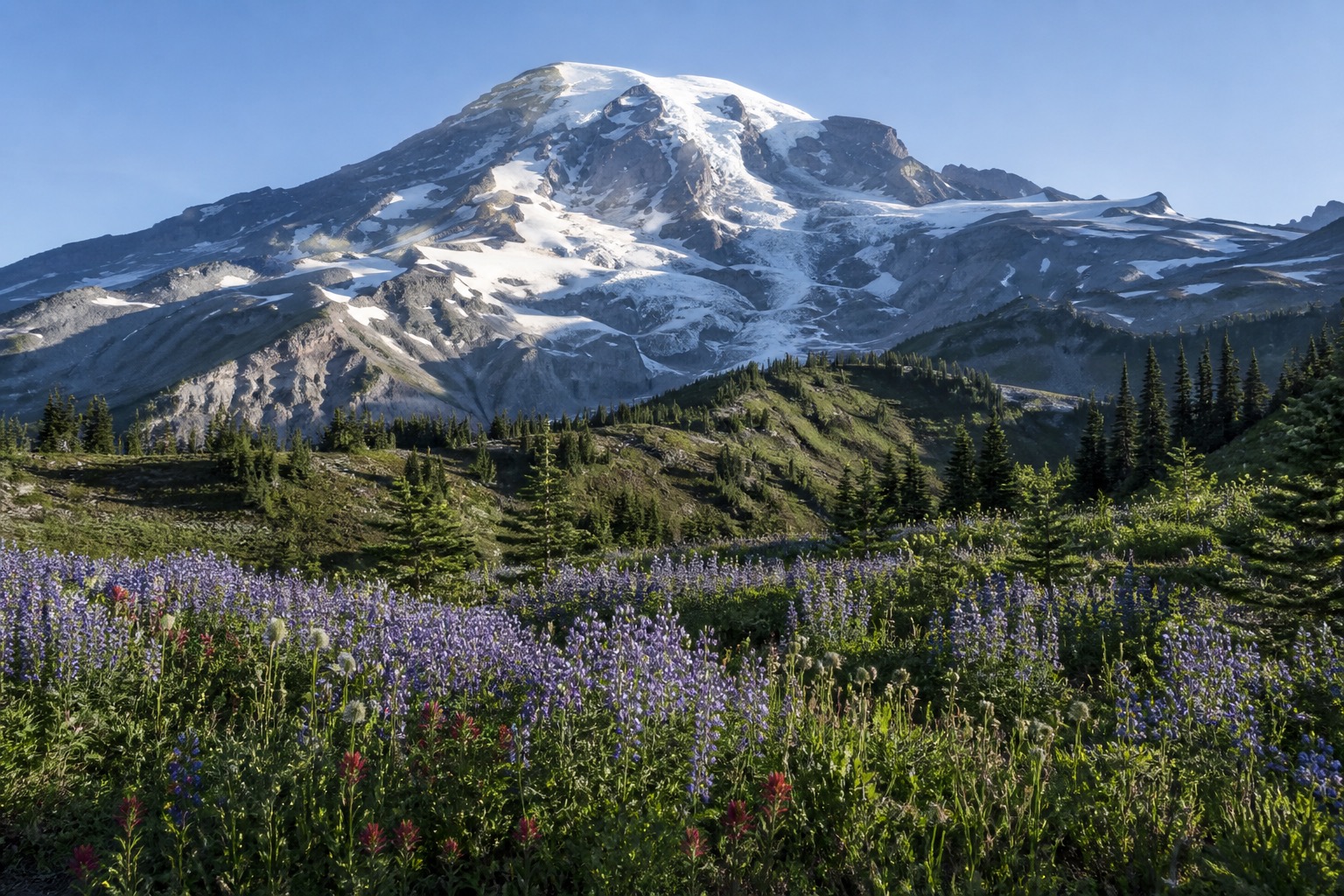
Good planning in Mount Rainier means deciding what deserves unhurried time before filling the calendar. Use the route to choose a park side and elevation band, then let snow, wildflowers and visibility shape the actual day. The result should feel coherent on the ground and remain useful when opening hours, weather or energy shift.
Plan Mount Rainier by area and travel time
Paradise and Sunrise are separate high-country destinations with long transfers between them. Pair one with a lower-elevation forest or waterfall rather than attempting both in a single rushed circuit.
The public itinerary Mount Rainier in Three Days: Paradise, Sunrise & the Wildflowers can help test distances and day shape. A better personal version may contain fewer stops, especially when one experience deserves a protected half day.
Seasonal roads, timed-entry policies and trail snow can change access. Verify current National Park Service conditions immediately before travel. Treat operating details as time-sensitive. A final check of official access and transportation guidance can prevent an avoidable failed day.
Understand what makes Mount Rainier worth the trip
The mountain may be hidden even on a worthwhile day. Old-growth forest, volcanic geology and subalpine ecology provide a fuller experience than one viewpoint.
Stay on trails, keep distance from wildlife and turn back before weather or snow exceeds the group's ability.
Weather and closures are easier to absorb when the day has a clear purpose and a compatible backup. Use Mount Rainier First-Timer Essentials: Paradise, Sunrise & the Falls to compare candidates, then plan a Mount Rainier trip without crowding the calendar.