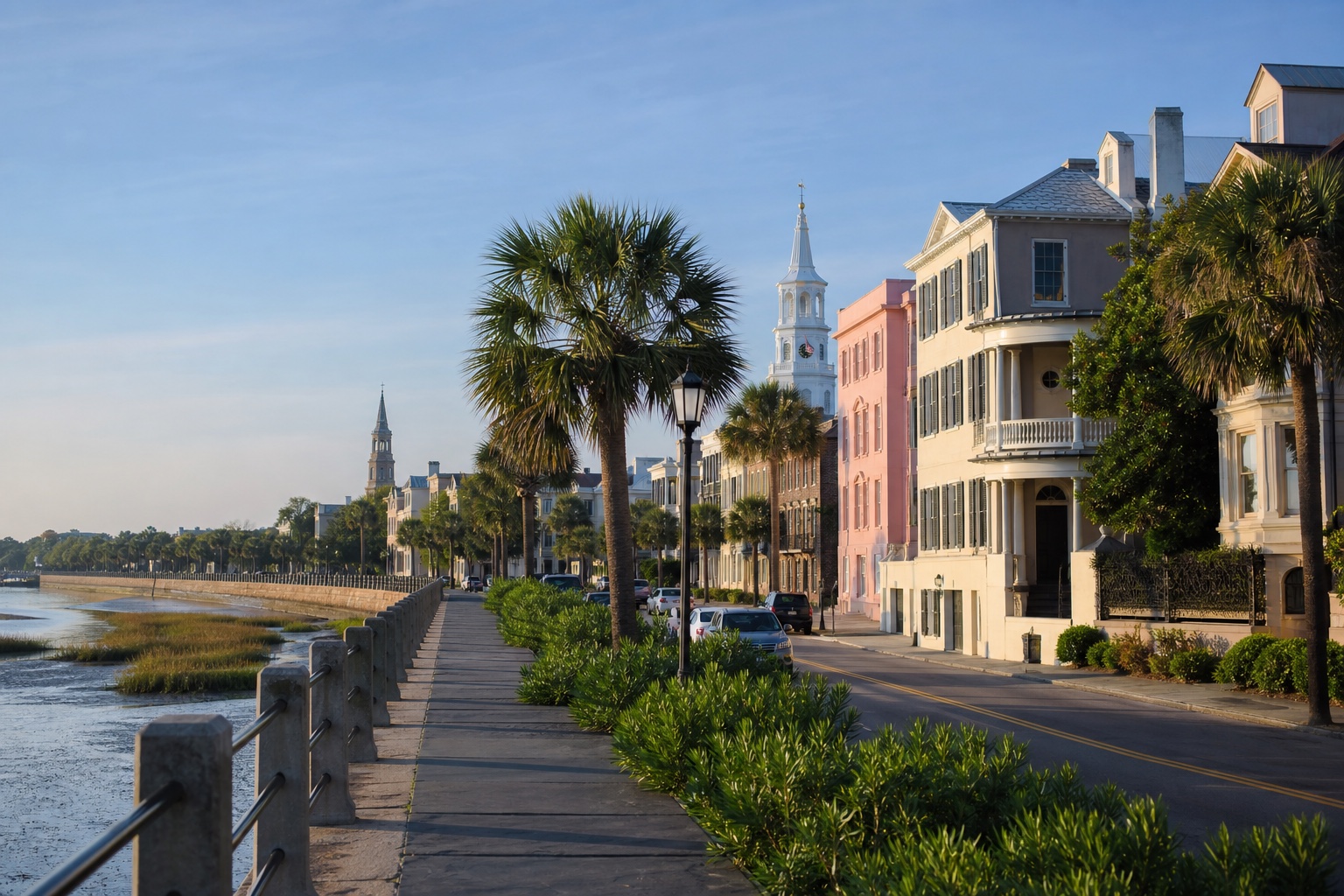
Charleston's historic peninsula is compact, but it deserves more than a loop of photogenic facades. Build one walking day around the waterfront, central streets and a museum or historic site that provides context. Use another for architecture, gardens and neighborhoods farther north, then decide whether the harbor, beach or a wider Lowcountry visit truly fits the remaining time.
Read the city beyond its surfaces
The Battery, Rainbow Row and church-lined streets are useful geographic anchors. Their beauty also sits within histories of slavery, the domestic trade, war, Reconstruction and Gullah Geechee culture. Choose interpretation that addresses those histories directly. Museums, preserved homes and public landscapes differ in what they explain; a thoughtful visit may require more time than a quick exterior walk.
The City Market and surrounding streets can become crowded, while quieter blocks near the harbor reward a slower pace. Heat, humidity, thunderstorms and uneven sidewalks matter when planning a long walking day. Begin earlier when conditions require it, carry water and preserve an indoor stop rather than forcing the original sequence.
Choose one Lowcountry extension
Fort Sumter, nearby beaches, barrier islands and plantation sites are different experiences with different transport and historical responsibilities. Select one according to your interests, check current access with official operators, and do not stack it onto an already full peninsula day. For plantation visits, favor interpretation that centers the lives and labor of enslaved people rather than treating the grounds only as decorative scenery.
The three-day Charleston itinerary offers a measured outline. Use the first-timer collection, then plan your Charleston trip with enough time for both the city and the history beneath it.