Boston is compact enough to reward walking, but the city is easier to understand when each day has a clear geographic center. The Freedom Trail gives a useful line through the historic core; it should be a framework rather than a race to every marker. Pair it with the North End and waterfront, then give Back Bay, Fenway, a major museum or Cambridge their own deliberate blocks of time.
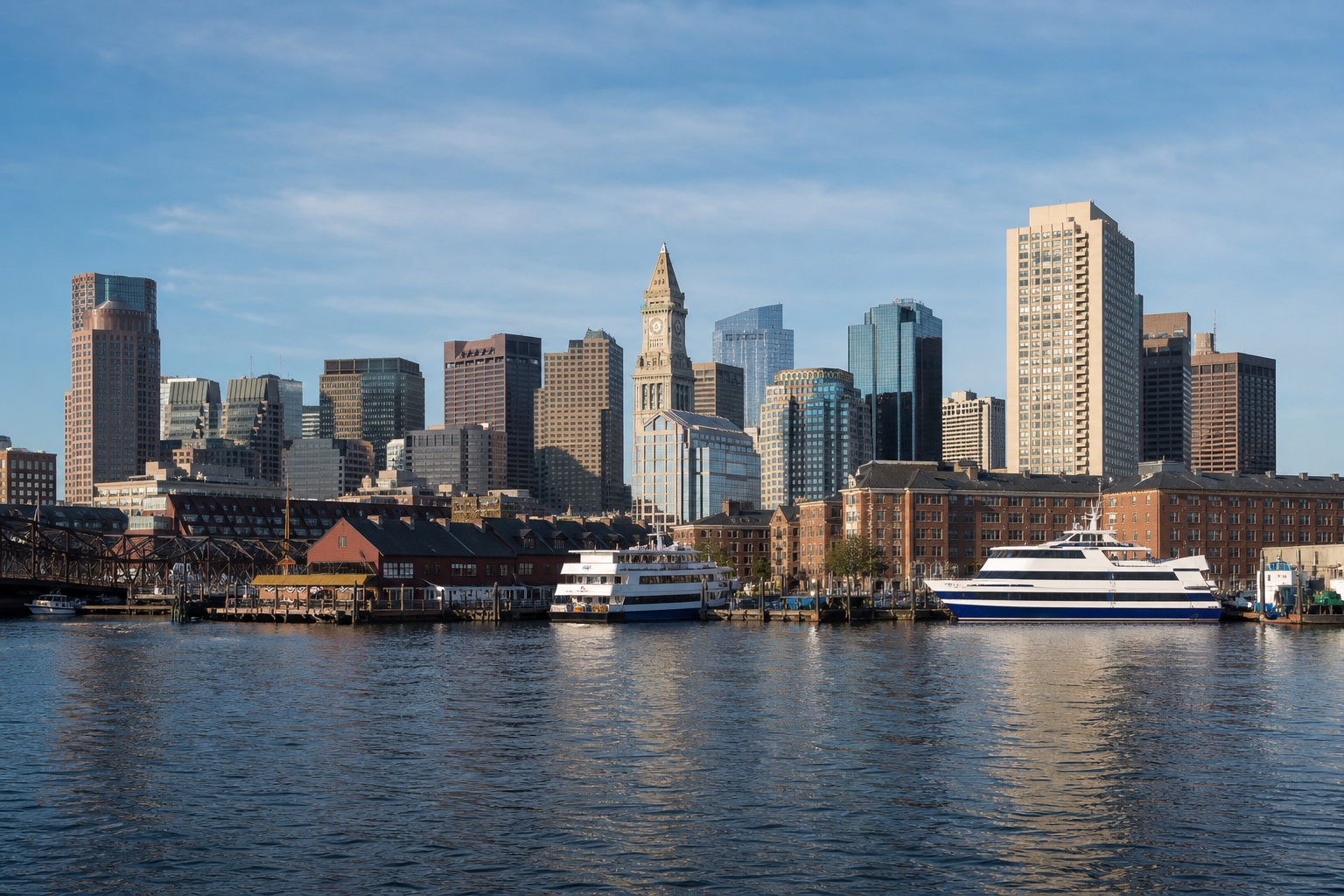
Use the harbor to orient the city
Downtown, Faneuil Hall, the North End and Long Wharf sit close together on the map, yet each can absorb more time than expected. The historic sites also vary in scale: some are quick exterior stops, while others invite a longer visit. Choose the stories that interest you and leave room for the working waterfront, parks and ordinary streets between them.
Back Bay and Beacon Hill suit a slower walking day, with the Public Garden as a natural pause. Fenway and the Museum of Fine Arts belong to another cluster. Across the Charles River, Cambridge is not simply a Harvard photo stop; its squares, bookstores and university museums can fill a substantial half-day. Use the subway and buses to bridge these districts instead of repeatedly returning to downtown.
Keep regional outings separate
Salem, Cape Ann, Cape Cod and the wider New England coast are different trips, not interchangeable additions to one Boston afternoon. Ferries and commuter rail can make selected outings practical, but schedules and seasonal service should be checked with their operators. Boston weather can change quickly near the water, so keep a flexible indoor option and wear shoes suited to brick and cobblestone streets.
The three-day Boston itinerary provides a workable sequence. Use the first-timer collection, then plan your Boston trip around the history, art and neighborhoods you most want to understand.