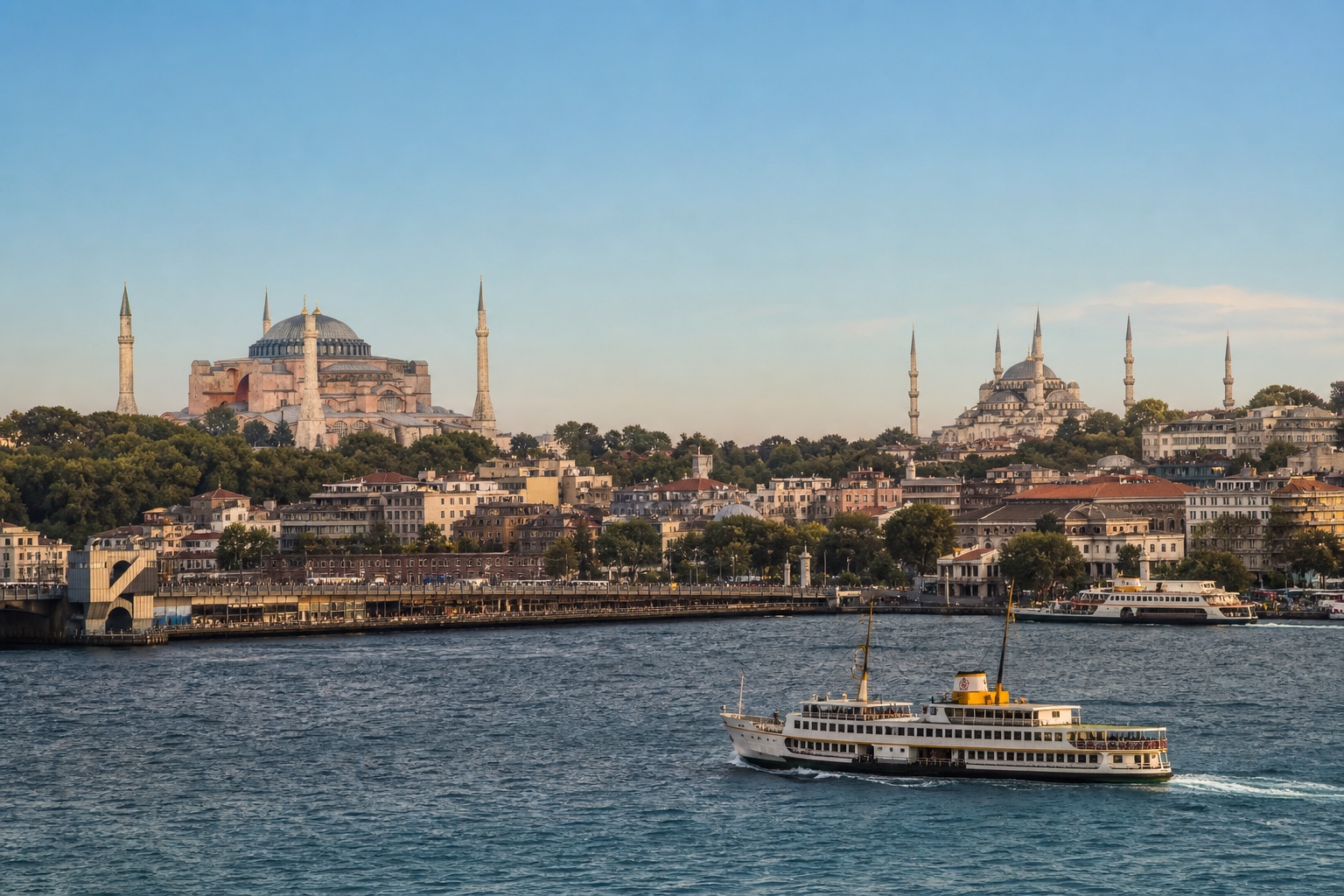
Istanbul's scale defeats plans built from a flat attraction list. Sultanahmet, the Grand Bazaar area, Galata and Beyoğlu, the Bosphorus villages, and the Asian side each form practical clusters. Ferries are useful transport and one of the best ways to understand the city, but crossings, walks, and traffic still need real time.
Respect living monuments
Hagia Sophia and the Blue Mosque operate within active religious life. Verify current visitor entrances, prayer-time closures, dress requirements, and access rules shortly before visiting. Topkapı Palace is extensive; choose its sections and avoid placing several major interiors behind it. Archaeological context and smaller institutions can provide depth when crowding changes the day.
Markets are commercial neighborhoods, not museum exhibits. Compare quality, understand bargaining customs where relevant, and protect belongings without treating ordinary interactions as threats. Food walks benefit from dietary and hygiene awareness as well as curiosity.
Allow extra time during religious holidays, major events, and peak summer heat. These can alter opening patterns, public transport, and comfort in exposed squares.
Use water to organize the wider city
Pair Galata with nearby Beyoğlu, or take a purposeful ferry to Kadıköy and build an Asian-side half-day around its market and streets. A Bosphorus cruise varies greatly by duration and endpoint; choose one that fits the itinerary instead of duplicating several ferry views. Airport transfers can be long and traffic-sensitive, so arrival day should remain modest.
The Istanbul and Cappadocia itinerary shows how the city can anchor a wider journey. Start with the first-timer collection, then plan your Istanbul trip around one geographic cluster at a time and current religious access.