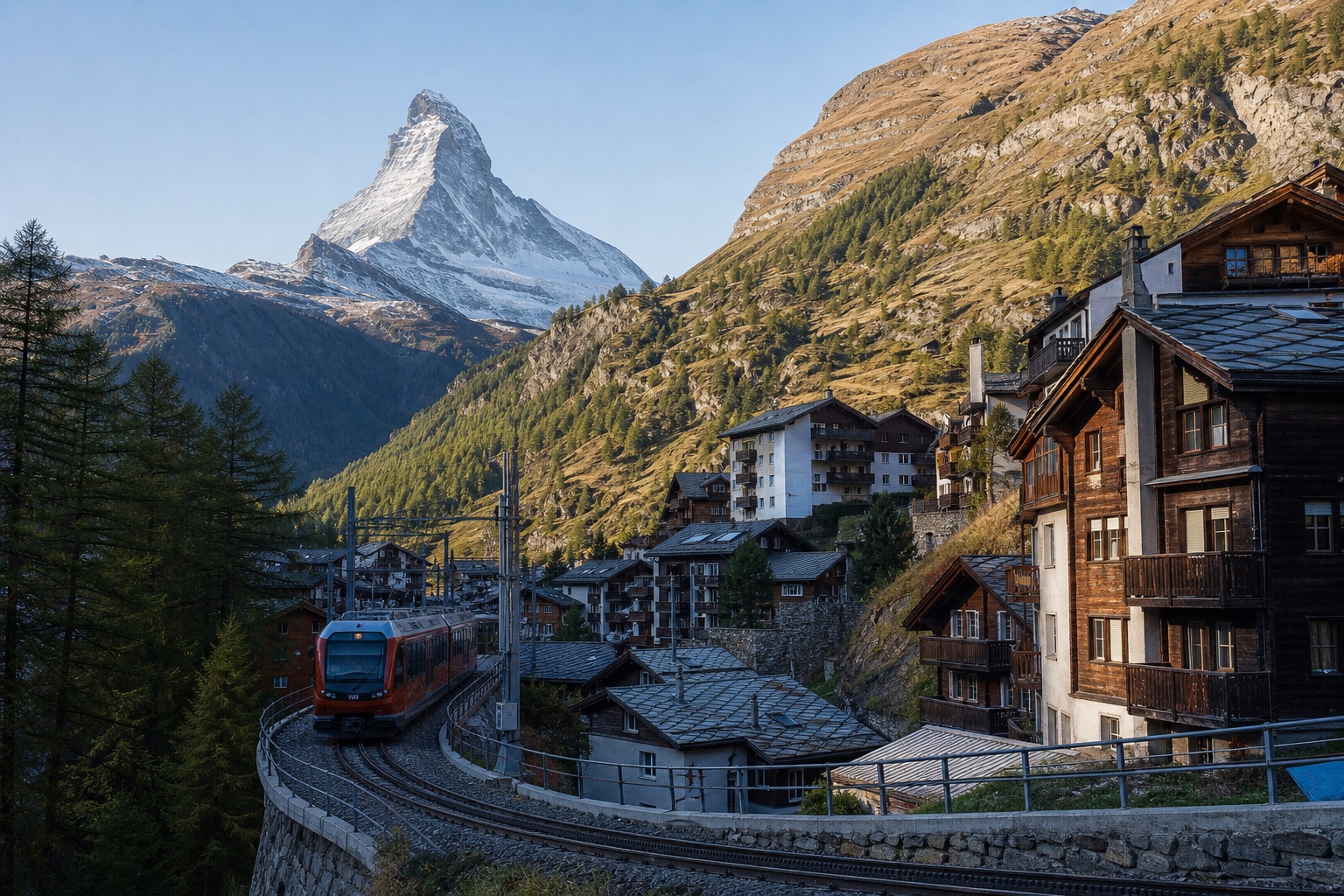
Zermatt cannot promise the Matterhorn on a particular afternoon. Keep the clearest forecast window available for a major mountain journey, then move village walks, museums and meals around it. Gornergrat and the Matterhorn Glacier Paradise are separate high-altitude experiences with different routes, views and costs; most short visits need one primary choice, not both.
Match the mountain to the traveler
Check operating calendars, live conditions and the final descent before buying transport. Altitude affects people differently, and snow, wind or storms can close lifts and trails even in an otherwise popular season. A marked hike still requires suitable footwear, water, sun protection and honest fitness. Never infer that a promotional panorama guarantees safe access.
Zermatt is largely car-free, but reaching it requires the correct rail or parking transfer. Accommodation location matters with luggage and slopes. Food and mountain transport are costly, so compare individual journeys with passes using the actual itinerary rather than assuming the broadest pass saves money. Build transfer margin when connecting from airports or international trains, especially during severe Alpine weather.
Keep one grounded day
Walk through the old village, learn about local mountaineering history, and use lower paths or nearby hamlets when clouds cover the peaks. Mountain restaurants can be destinations, but reservations and the last lift govern the schedule. Winter skiing and summer hiking require fundamentally different plans.
The Swiss Alps itinerary shows the wider rail sequence. Start with the first-timer collection, then plan your Zermatt trip with a weather hierarchy, one primary high route and a satisfying cloudy-day plan.