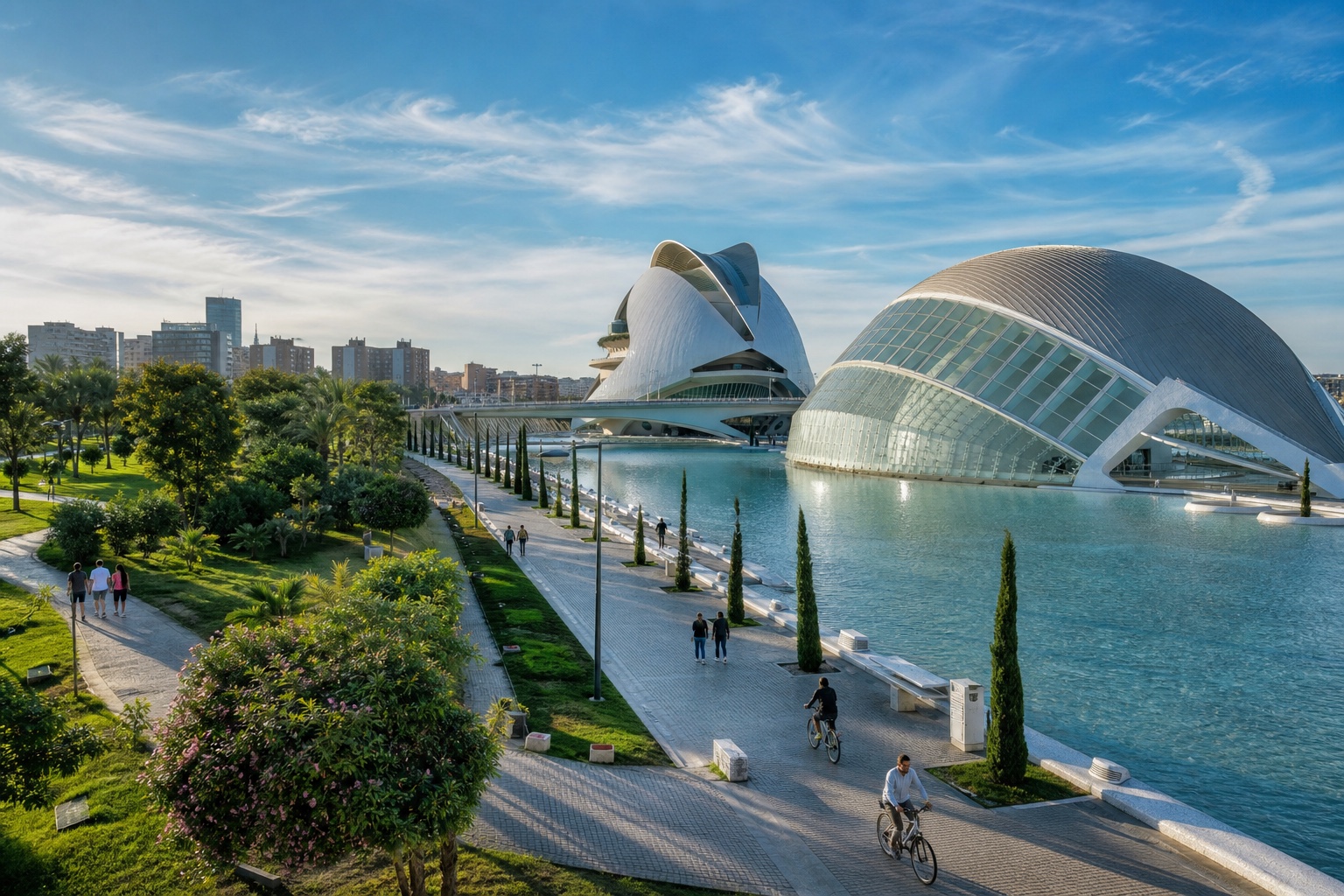
Valencia is easier to understand as three connected landscapes. The old center holds the market, cathedral, silk exchange, and compact historic streets. The former Turia riverbed creates a long green route toward the City of Arts and Sciences. The port and beaches form a third area with their own transport and meal rhythm. Give each a coherent block instead of crossing the city repeatedly.
Follow the Turia toward modern Valencia
Start a central day while the market and monuments are operating, then leave room for neighborhoods rather than stacking interiors. A bicycle can make the Turia gardens efficient, but pedestrians and families share the route; choose a pace and pickup location that fit the group. The City of Arts and Sciences is both architecture and a set of ticketed institutions. Decide which experience matters before buying a broad package or assigning only thirty minutes to the exterior.
Paella is traditionally a daytime meal and good rice restaurants may expect a reservation or preparation commitment. Choose one thoughtfully, particularly if the plan reaches Albufera, and ask directly about dietary needs. Beach time can sit on the same day only when transport, season, and meal timing support it.
Check the calendar before fixing the route
Las Fallas transforms movement, prices, noise, and public space. Summer heat can also shift the best walking hours. Verify dates and temporary closures, protect shade and rest, and keep a museum or market alternative for uncomfortable weather. Valencia has fast rail links, but station choice and transfers still belong in arrival-day planning.
The three-day Valencia itinerary provides a balanced city-and-sea sequence. Use the first-timer collection, then plan your Valencia trip around opening hours, one deliberate rice meal, and the actual season.