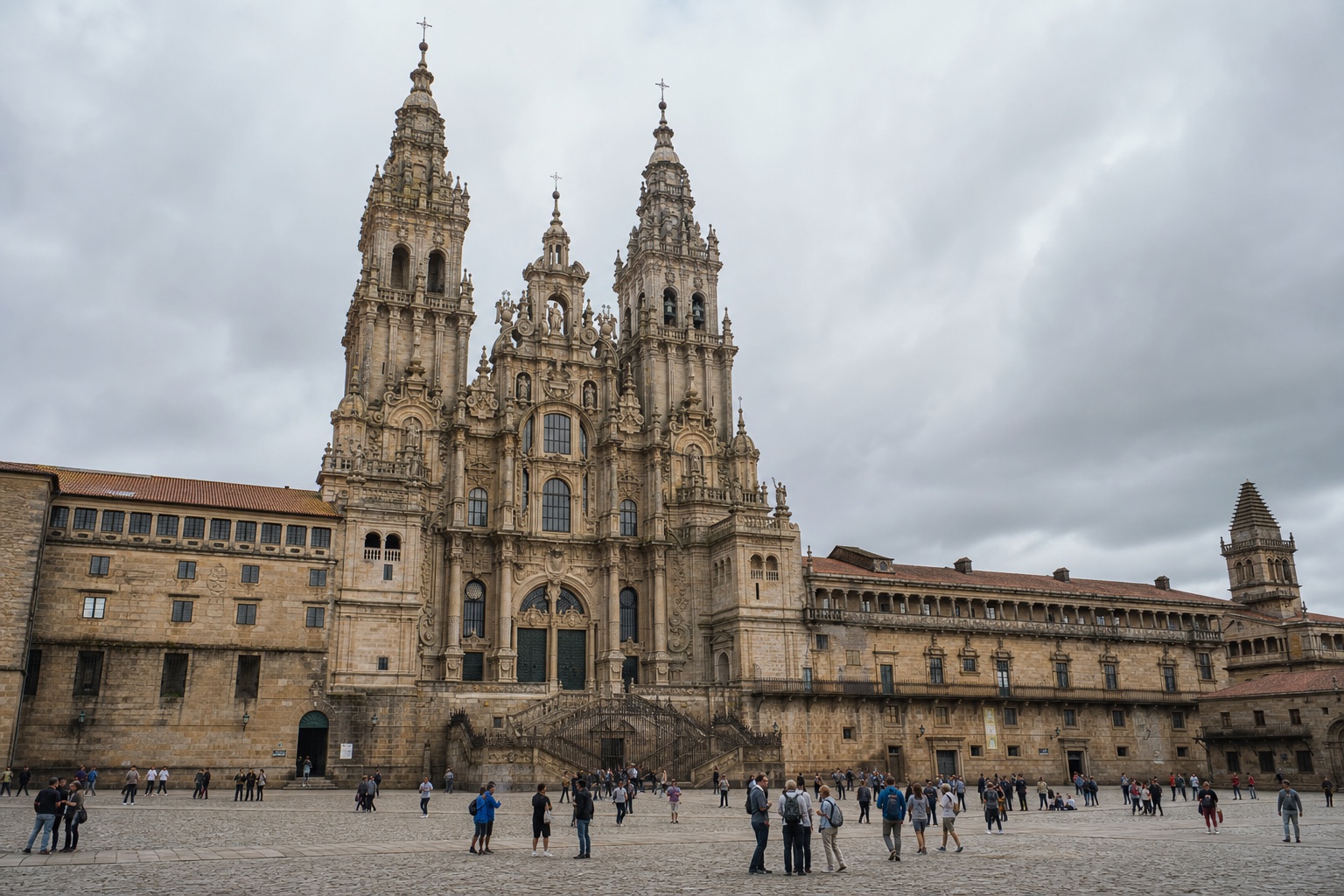
Santiago is simultaneously a pilgrimage destination, university city, regional capital and home. Begin in Praza do Obradoiro, but expect arrivals to be emotional and active rather than staged for visitors. Cathedral entry, museum areas, Mass and rooftop or tower experiences have distinct rules and schedules. Verify the official arrangements instead of assuming one queue serves every purpose.
Respect the end of the Camino
People reach Santiago for religious, personal, athletic and social reasons. Do not turn exhausted pilgrims into scenery or presume why someone walked. If you are collecting a Compostela or attending a service, learn the current requirements in advance. Visitors who did not walk are equally welcome in the city but should not simulate credentials or interrupt arrival rituals.
Give the cathedral complex enough time, then step into the arcaded old town, university streets and Mercado de Abastos. Galician seafood and octopus depend on season, source and preparation; dietary restrictions and shellfish allergies deserve direct questions. Rain is ordinary in Galicia, so carry a useful layer and build a route that still works when viewpoints are clouded.
Choose one Galicia beyond the city
Fisterra, A Coruña, the Rías Baixas and inland Camino towns point in different directions. A coast tour can be long and weather-dependent. Protect two Santiago days before adding one extension, and confirm whether your onward connection leaves by rail, bus or air because stations are not interchangeable.
The two-day Santiago trip keeps the city central. Use the first-timer collection, then plan your Santiago trip with cathedral access, weather, pilgrimage etiquette, and one regional direction settled.