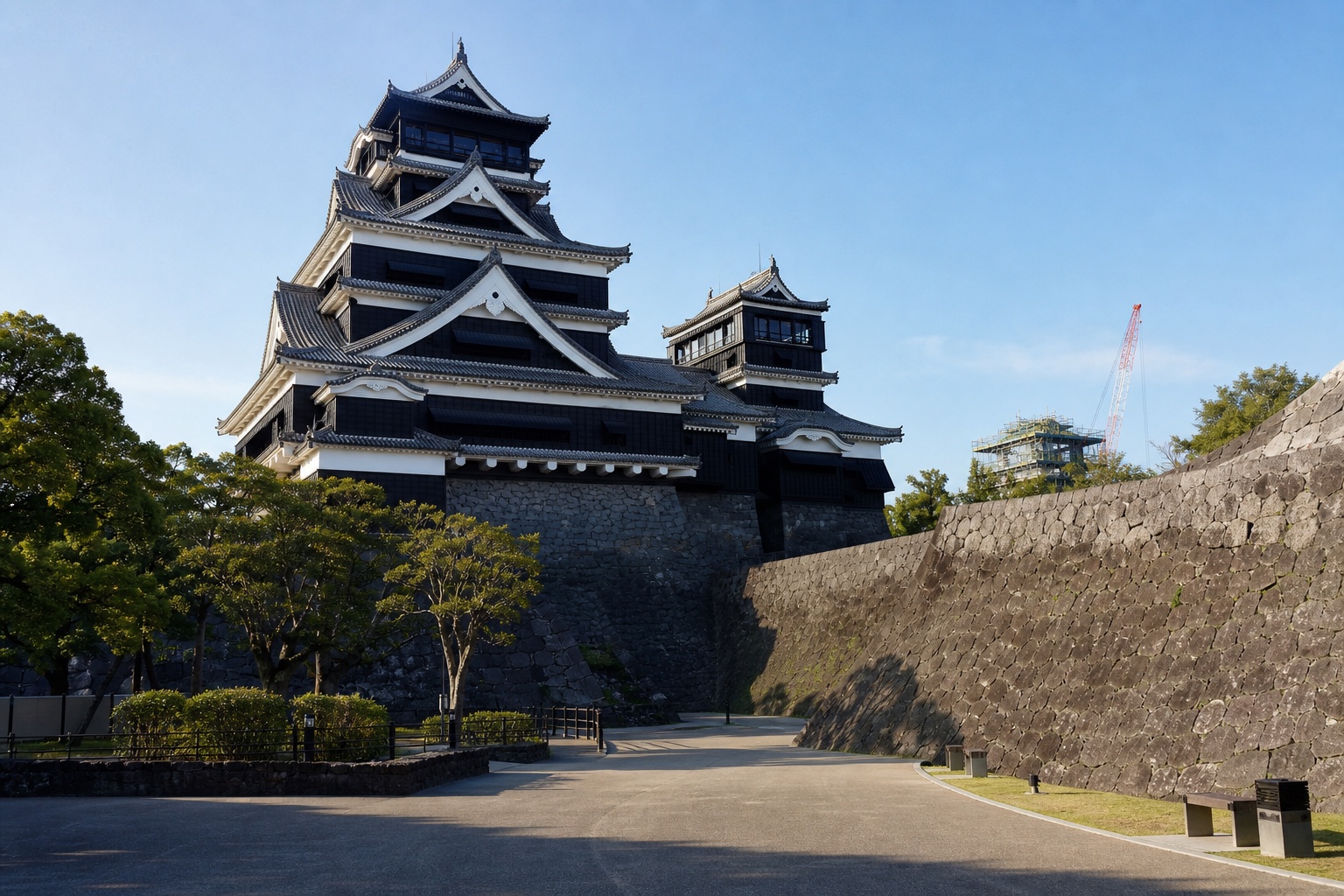
Kumamoto Castle should be planned with precise language. The main keep is a modern reconstruction, while original structures and celebrated stone walls survive across a complex still shaped by recovery from the 2016 earthquakes. Restoration and visitor routes can change, so current official access matters more here than an evergreen checklist.
Read the castle as a recovering complex
Allow time for the museum inside the reconstructed keep and for views of the walls, turrets, and restoration work from the designated visitor route. Do not describe damaged or inaccessible areas as if they are ordinary attractions. Check the official castle information close to the visit for open areas, route changes, and temporary restrictions.
The wider city adds context. Former clan sites, local museums, and the streets around the castle help explain why the fortification mattered beyond its skyline. Suizenji garden forms a separate, calmer block and is better paired with a meal or tram journey than squeezed into the end of the castle visit.
Place Kumamoto honestly within Kyushu
Kumamoto can stand alone for two or three days or connect to Fukuoka and other Kyushu stops. Mount Aso is a substantial excursion with weather, volcanic access, and transport dependencies; it should replace a city day and be verified for the specific date. Long regional loops also need lighter transfer days.
The three-day Kumamoto itinerary keeps recovery, architecture, and city life in balance. Read the restoration story collection, then plan your Kumamoto trip using current access information rather than assuming every part of the complex is open.