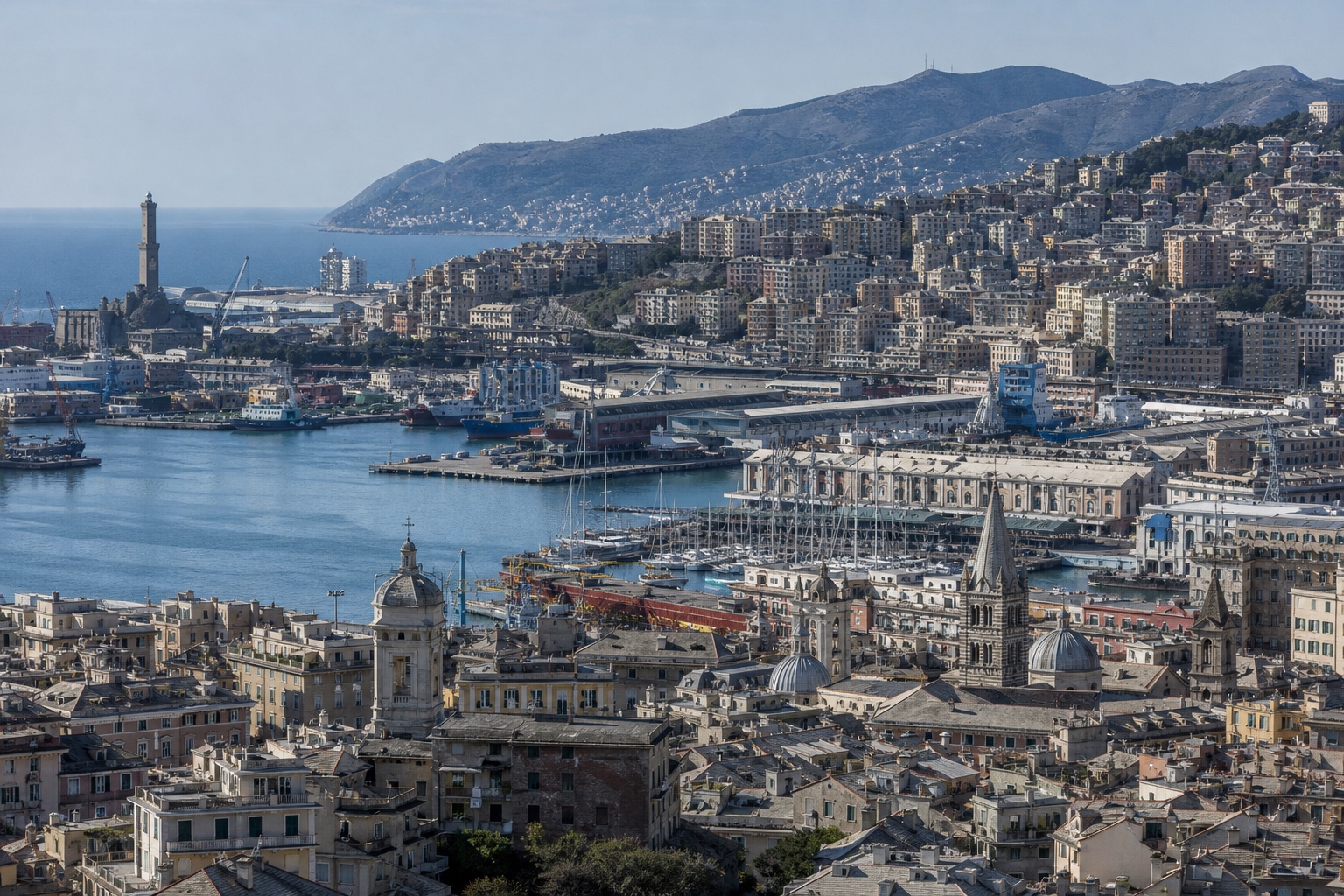
Genoa is a compressed, vertical city where elegant palaces, working streets and the port sit almost on top of one another. Begin on Via Garibaldi with a limited selection of Rolli interiors, then enter the caruggi toward San Lorenzo and the old port. Trying to visit every palace hides the contrast that makes the city interesting. Opening days vary, so verify the specific museums you value.
Read the lanes without romanticizing them
The historic center is lived-in and uneven, not a themed maze. Use ordinary awareness, respect residents, and do not treat laundry, doorways or working shops as props. Main routes can feel different one block apart. Daylight is useful for orientation; funiculars and public lifts help explain why neighborhoods rise so quickly behind the waterfront.
The Porto Antico contains major visitor institutions, including the aquarium, but Genoa's maritime identity is larger than that redeveloped zone. Choose the aquarium only if it is a real priority and give it adequate time. Balance it with a viewpoint, port history or the fishing village atmosphere of Boccadasse rather than stacking every waterfront attraction.
Pick one Ligurian extension
Portofino, Camogli and the Cinque Terre are not one convenient day. Seasonal crowds, train frequency, ferries and weather change the practical choice. Genoa deserves at least two days before becoming only a sleeping base for coastal excursions. When you do leave, select one corridor and keep a workable return.
The two-day Genoa trip shows the city first. Use the first-timer collection, then plan your Genoa trip around one palace cluster, the port, a vertical connection, and one Riviera decision.